
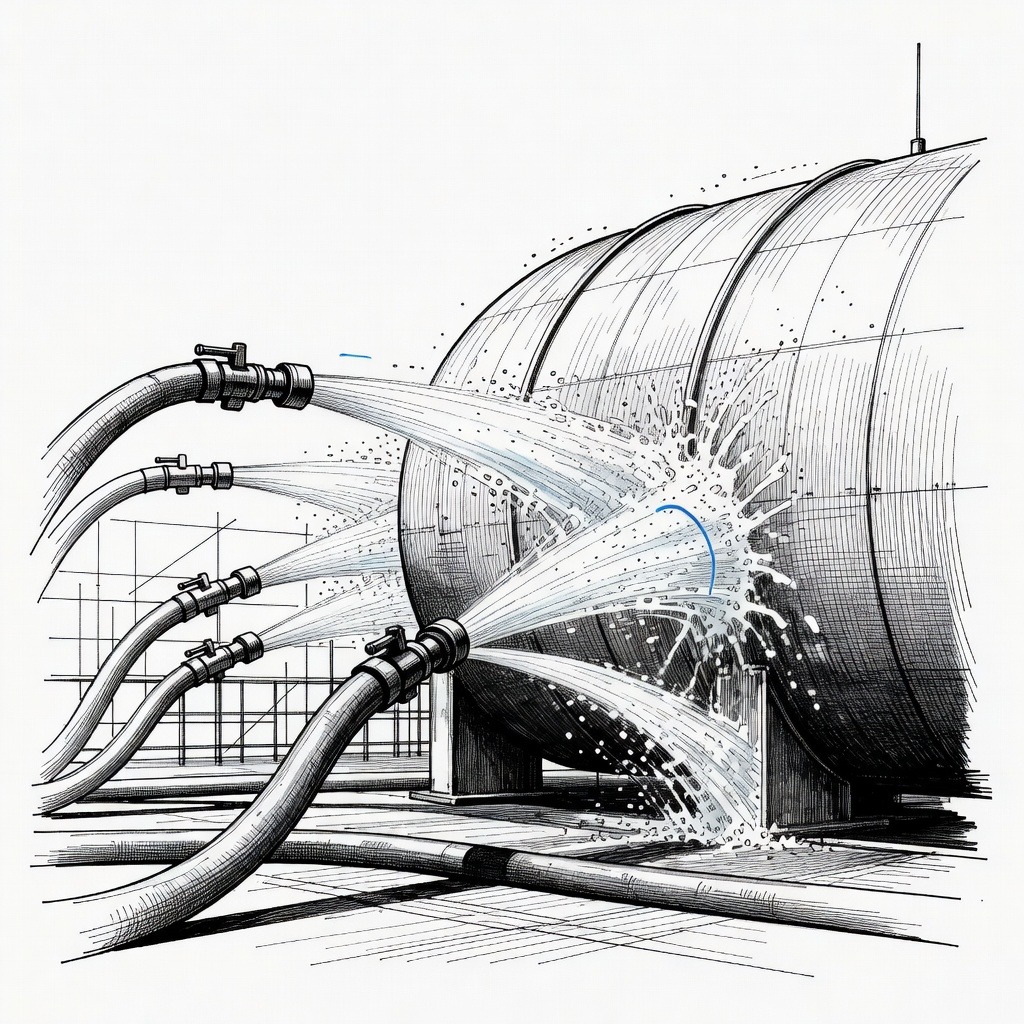
• Exposing Institutional Negligence Prioritizing community protection over corporate latitude, this view interprets the compromised GKN Aerospace tank as a severe failure of industrial oversight. The fact that up to 7,000 gallons of volatile methyl methacrylate cannot be secured points to systemic vulnerabilities in hazard protocols. The "inevitable failure" of the vessel is viewed not as a random disaster, but as an engineered risk unjustly imposed on surrounding neighborhoods by lax corporate accountability.
• Cascading Community Disruption Valuing social stability and the welfare of the vulnerable, this perspective highlights the immense, uncompensated human cost of industrial accidents. The displacement of over 40,000 residents and the sudden closure of 15 Garden Grove Unified schools represents a massive disruption to daily life and educational equity. The reliance on emergency shelters underscores how everyday citizens disproportionately bear the immediate trauma and logistical burdens of hazardous corporate operations.
• Precipice of Catastrophic Escalation Driven by a demand for systemic reform, this framework views the current holding pattern as a precarious gamble masking deeper zoning failures. The official warning that an explosion could ignite neighboring tanks of hazardous substances illustrates the unacceptable compounding risks inherent in grouping chemical storage near residential zones. The overarching fear is that authorities will treat this merely as an isolated logistical challenge rather than a mandate to permanently restructure how close toxic threats are allowed to operate near civilian centers.
How it may affect me
As a U.S. reader:
• In the short term, over 40,000 residents in affected Southern California municipalities face immediate displacement and the logistical burden of relocating to emergency shelters.
• Families in the Garden Grove area will experience direct educational disruptions due to the sudden and indefinite closure of 15 public school campuses.
• Surrounding neighborhoods remain at an immediate physical risk of a compounding disaster if the compromised tank explodes and ignites nearby hazardous material and fuel storage vessels.
• In the long term, this incident may prompt public mandates aimed at permanently restructuring local zoning laws to prevent toxic industrial operations from existing near civilian centers.
• In the long term, the coordinated response and deployment of outside experts may serve as a practical model for how other U.S. emergency management agencies handle large-scale evacuations and tactical hazard containment.