
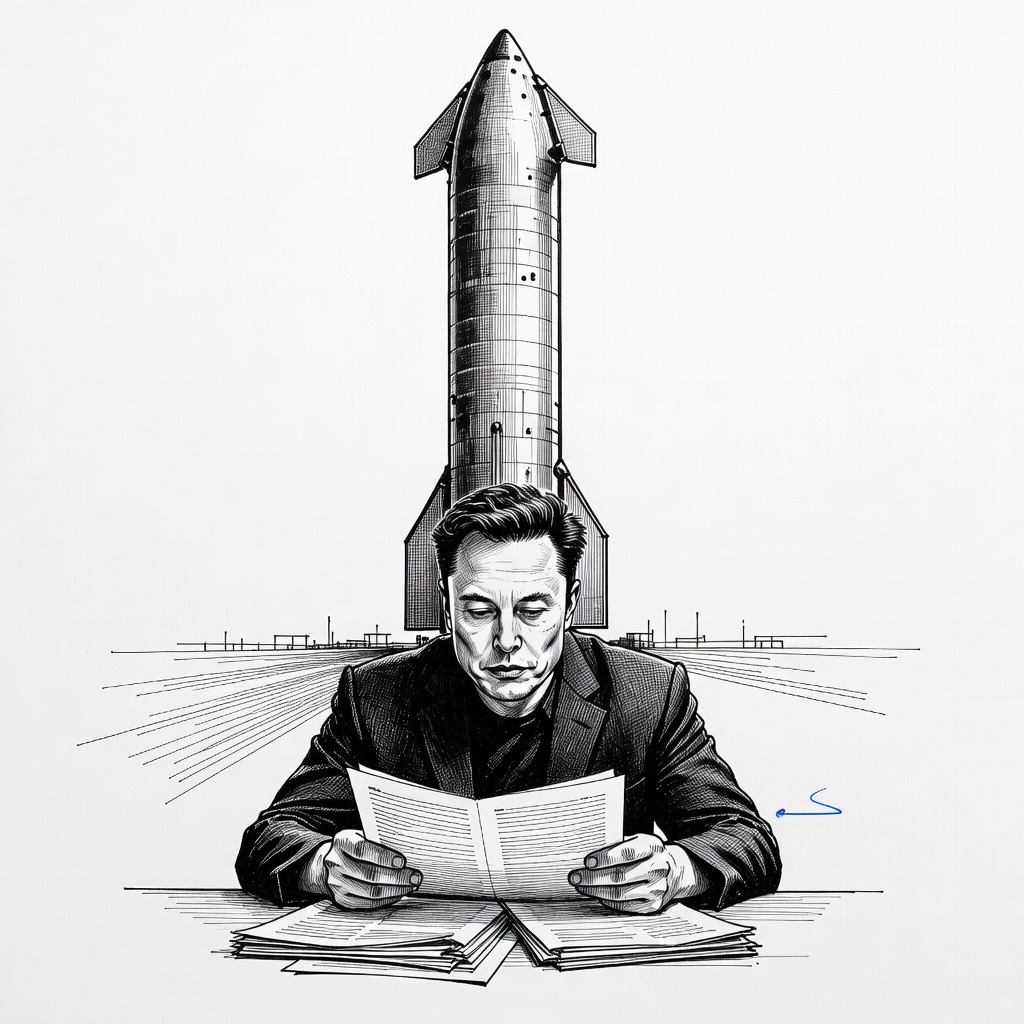
• Shielding Against Speculative Bubbles The projected $1 trillion valuation represents a dangerous disconnect between market hype and foundational financial realities. While Deutsche Bank analyst Adrian Cox notes the market's capacity to absorb the Nasdaq offering, SpaceX remains an unprofitable enterprise overall, burdened by a $657 million operating loss in its space segment last year. Consumer advocates view this IPO as a speculative environment where retail investors may ultimately bear the financial risk for capital-intensive, high-loss aerospace ventures.
• Challenging Public Sector Capture Outsourcing fundamental national scientific milestones to a single private entity raises severe concerns regarding the privatization of public goods. SpaceX has spent $15 billion on the Starship program, effectively embedding itself as the unavoidable bottleneck for NASA’s 2028 Artemis IV lunar mission. This dynamic risks transferring immense leverage to a private corporation, creating a permanent institutional dependency that prioritizes corporate profit over transparent, taxpayer-funded scientific exploration.
• Checking Massive Corporate Consolidation The speculative merger with Tesla and the joint $119 billion East Texas Terafab semiconductor plant signal a troubling concentration of industrial power. Intertwining multiple foundational tech enterprises under Chief Executive Officer Elon Musk stretches the limits of traditional corporate governance. Despite assurances of mutual board approval, advocates fear this level of centralized control bypasses standard market competition and exposes shareholders to deep, structural conflicts of interest.
How it may affect me
As a U.S. reader:
• In the short term, everyday retail investors will have the opportunity to purchase shares of SpaceX on the Nasdaq, exposing them to both the financial gains of its profitable Starlink unit and the risks of a company that remains unprofitable overall.
• Over the long term, taxpayer-funded space exploration will become heavily reliant on a single private entity, as NASA depends on SpaceX's Starship program to serve as the lunar lander for its 2028 Artemis IV mission.
• The domestic manufacturing sector could see expanded technological output due to the planned $119 billion Terafab semiconductor plant in East Texas, though this project will heavily concentrate industrial power between SpaceX and Tesla.
• Current and future shareholders of both SpaceX and Tesla may face financial and structural impacts from intercompany collaborations and a speculated future merger, relying on mutual board approvals to protect their investments from conflicts of interest.