
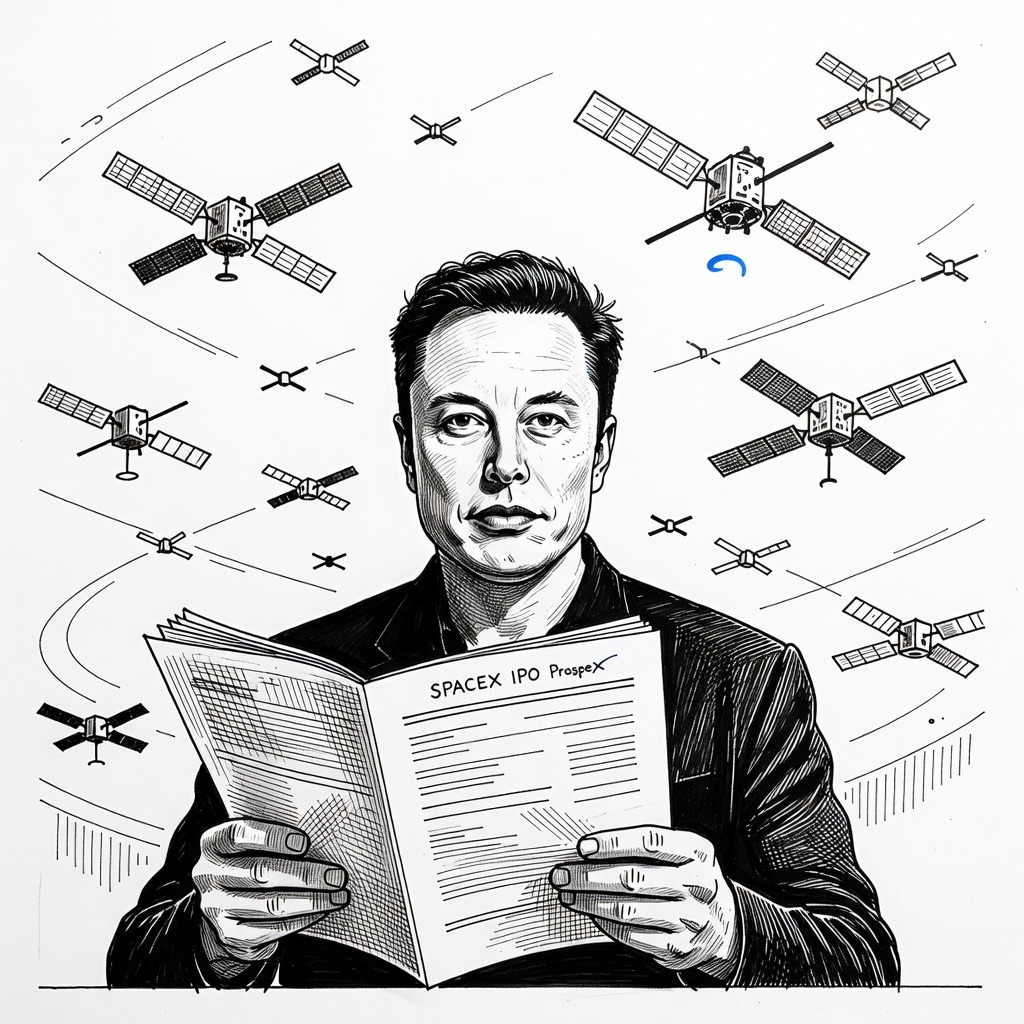
• Shielding Retail from Volatility Consumer advocates view the direct-to-retail share offering of this $75 billion IPO as a potential wealth extraction mechanism. By relying on a rumored low public float of just 5 percent, the structure threatens to manufacture intense stock volatility that disproportionately harms retail buyers. The staggering $6.35 billion losses in AI and $657 million deficits in rocket launches signal that working-class investors are being courted to subsidize massive speculative failures while early institutional backers limit their exposure.
• Stopping Orbital Commons Enclosure The planned deployment of one million additional satellites represents an aggressive corporate enclosure of a shared global resource. Prioritizing long-term ecological and public safety requires heeding scientists' warnings that this unprecedented density risks a catastrophic chain reaction of space collisions. Demands from groups like DarkSky for environmental assessments and invisibility standards highlight the necessity of regulating unchecked privatization before irreparable harm is done to the night sky and low Earth orbit.
• Challenging Unaccountable Corporate Power Sovereign resistance to the company's expansion demonstrates a necessary defense against monopolistic, borderless overreach. Namibia’s refusal to grant a license over local ownership rules and Taiwan’s rejection based on the CEO’s geopolitical ties reflect justified efforts to maintain democratic control over critical communications infrastructure. Allowing a single private entity to dominate global internet access without strict localized oversight poses severe risks to sovereign independence and equitable public accountability.
How it may affect me
As a U.S. reader:
• In the short term, retail investors will have the unprecedented opportunity to buy shares directly through consumer brokerages in the largest stock offering in national history, though they face exposure to stock volatility and financial risks linked to a low public float and billions in corporate losses in artificial intelligence and rocket launches.
• Over the long term, consumers could experience significantly expanded, decentralized internet access and new space-based data infrastructure by 2028 as the company utilizes its profitable Starlink unit to fund the deployment of up to one million additional satellites.
• The massive scale of the proposed satellite expansion carries long-term environmental and safety implications for the general public, including potential changes to the visibility of the night sky if invisibility standards are not implemented, and the risk of a catastrophic chain reaction of space collisions in low Earth orbit.