
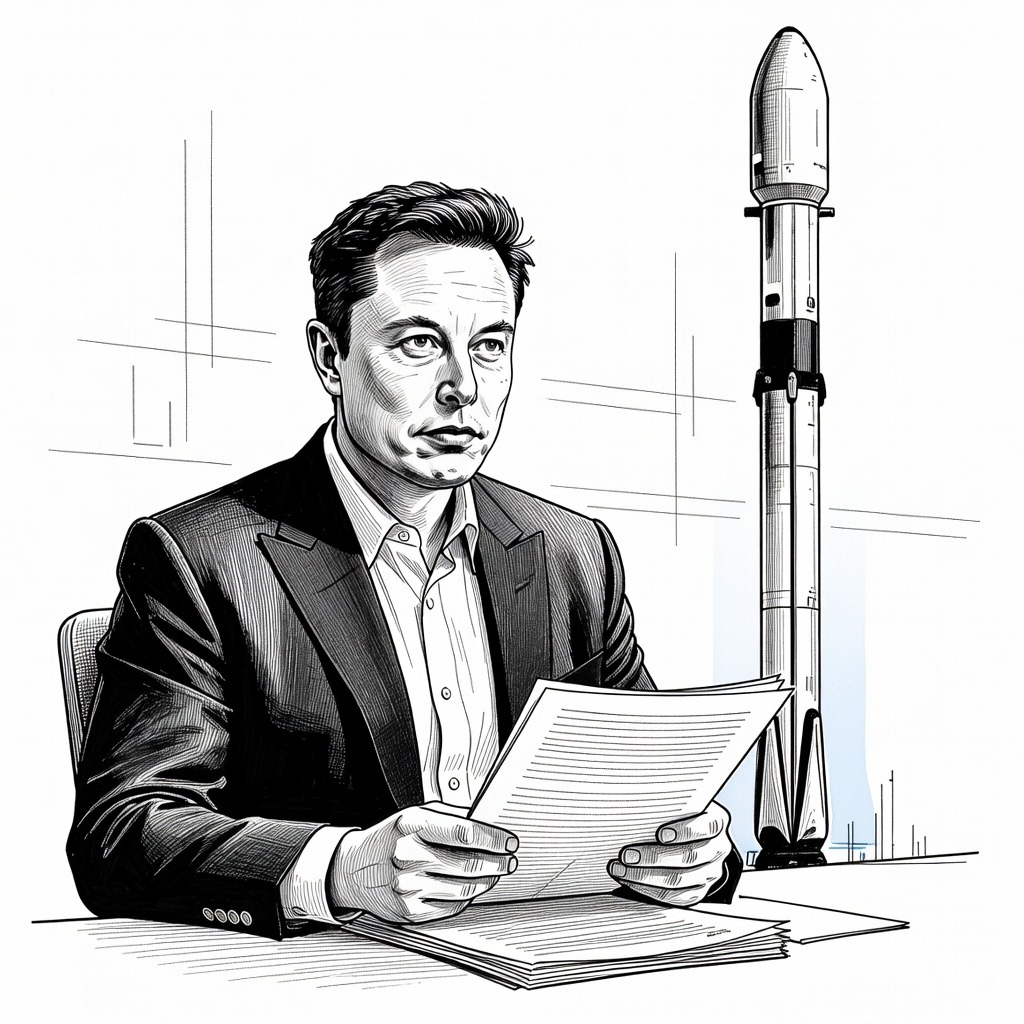
• Illusion of Infinite Growth Prioritizing grounded economic reality, this view sees the $1.75 trillion valuation as speculative excess masking systemic instability. The $2.6 billion operating loss against $18.7 billion in revenue suggests retail investors are being asked to absorb foundational financial risks while executives and early backers secure massive payouts. This dynamic reflects a wealth extraction model where hype supersedes sustainable fiscal health, funneling public capital into highly unprofitable corporate ventures.
• Monopoly Over Corporate Governance Valuing institutional accountability, this camp views Musk’s retention of majority voting power alongside the CEO, CTO, and Chairman titles as a dangerous erosion of corporate oversight. Centralizing total control in one individual removes necessary checks and balances, rendering the public shareholder structurally powerless to demand transparency. This consolidation allows unchecked decision-making, transforming a publicly traded entity into a personal fiefdom shielded from democratic market discipline.
• Privatization of the Cosmos Rooted in a desire for equitable technological development, the merger with xAI to build space data centers and colonies represents the privatization of future human infrastructure. Pushing computing power into orbit bypasses terrestrial regulation, grid oversight, and environmental accountability, creating an untouchable corporate hegemony in space. The reliance on Wall Street titans like Goldman Sachs to fund this expansion signals an entrenched alliance between mega-banks and tech oligarchs, sidelining broader public interests.
How it may affect me
As a U.S. reader:
• Retail investors will be able to purchase shares of SpaceX on the Nasdaq exchange, but they will assume the financial risk of the company's ongoing operating losses while lacking the voting power to influence corporate governance.
• In the long term, the company's plan to develop space-based data centers could benefit the public by alleviating the high energy demands and physical constraints currently straining terrestrial power grids.
• Moving computing power and infrastructure into orbit means these advanced technologies may operate outside the bounds of traditional terrestrial environmental regulations and standard grid oversight.
• Financing aerospace infrastructure, space colonies, and Mars missions through private capital markets allows these immense engineering projects to proceed without relying on public taxpayer funding.