
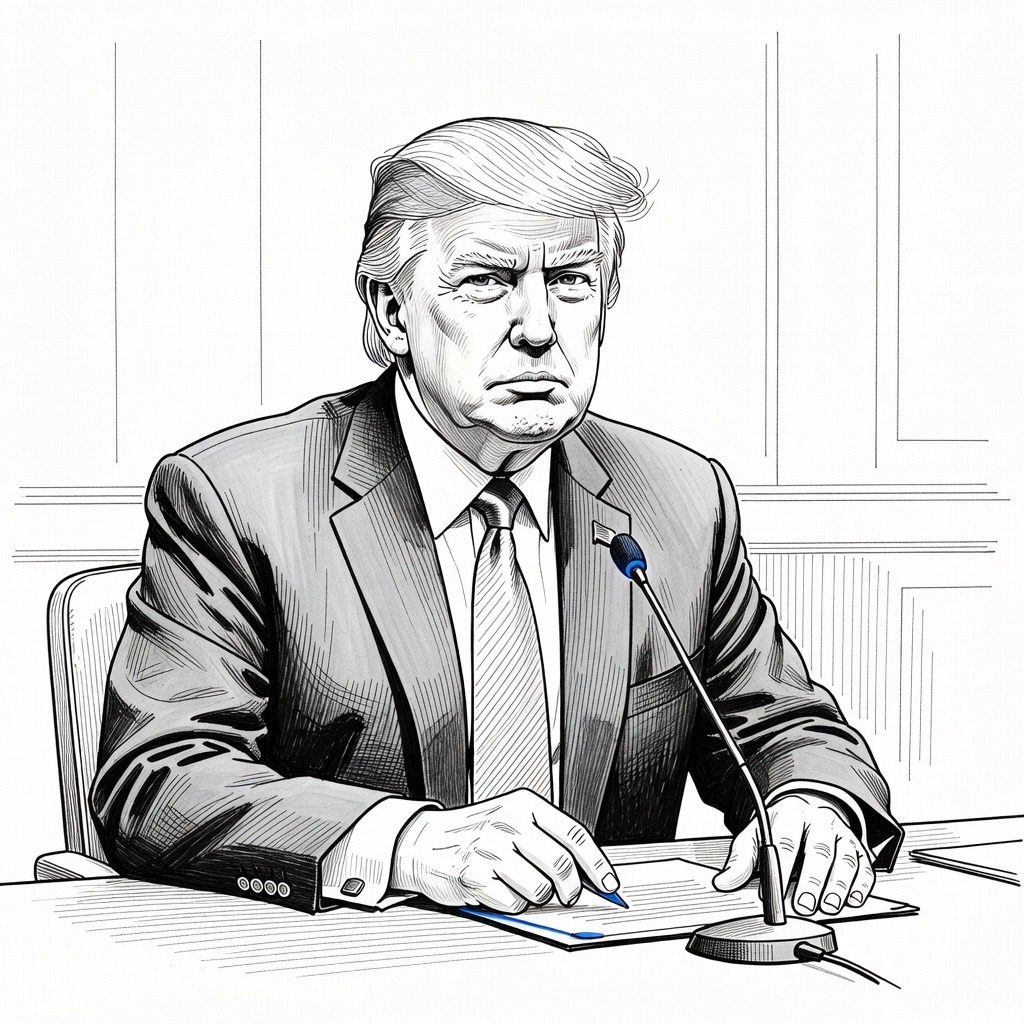
• Enforcing Strict Government Accountability The Left prioritizes rigid legislative oversight and views the unilateral deployment of a $1.7 billion settlement from a perpetual judgment fund as a dangerous subversion of the separation of powers. By circumventing congressional approval—as highlighted by Rep. Jamie Raskin’s legislation and former federal prosecutors—the executive branch is perceived as illegally weaponizing public resources. This financial maneuver is seen not as valid legal restitution, but as a mechanism to erode constitutional checks and balances and shield the executive from legislative restraint.
• Blocking State-Sponsored Impunity Valuing civil liberties and the protection of democratic institutions, this camp interprets the intended beneficiaries—specifically January 6 rioters and operatives like Michael Caputo, who is seeking $2.7 million—as evidence of an orchestrated institutional capture. The federal lawsuit filed by the two Capitol police officers underscores the Left's belief that compensating individuals who attacked civic order inherently betrays the rule of law. True government accountability requires ensuring the justice system cannot be retrofitted into a taxpayer-funded spoils system for political loyalists.
• Gamble of Institutional Capture The Left deeply fears the long-term establishment of a five-member commission operating through 2028 under acting Attorney General Todd Blanche. They view this extended timeline as cementing an unaccountable shadow-bureaucracy designed to bypass transparency and outlast immediate electoral cycles. The fundamental risk is a permanently degraded justice system where public funds are continuously diverted to insulate allies from legal consequences, entirely fracturing the public’s trust in objective government oversight.
How it may affect me
As a U.S. reader:
• In the short term, $1.7 billion in public taxpayer money will be drawn from a perpetual judgment fund to compensate individuals who claim they were improperly targeted by federal justice and administrative agencies.
• Citizens who paid legal fees to support Donald Trump, participated in the January 6 Capitol riot, or faced certain federal investigations will have a formalized, government-funded channel to seek financial restitution through the end of 2028.
• The public can expect immediate delays regarding any potential payouts, as pending federal lawsuits from Capitol police officers and newly introduced congressional legislation aim to block the fund's implementation and distribution.
• In the long term, the operation of a five-member compensation commission without direct congressional approval sets a new precedent for executive power, which could fundamentally alter public trust in the separation of powers and the broader federal justice system.