
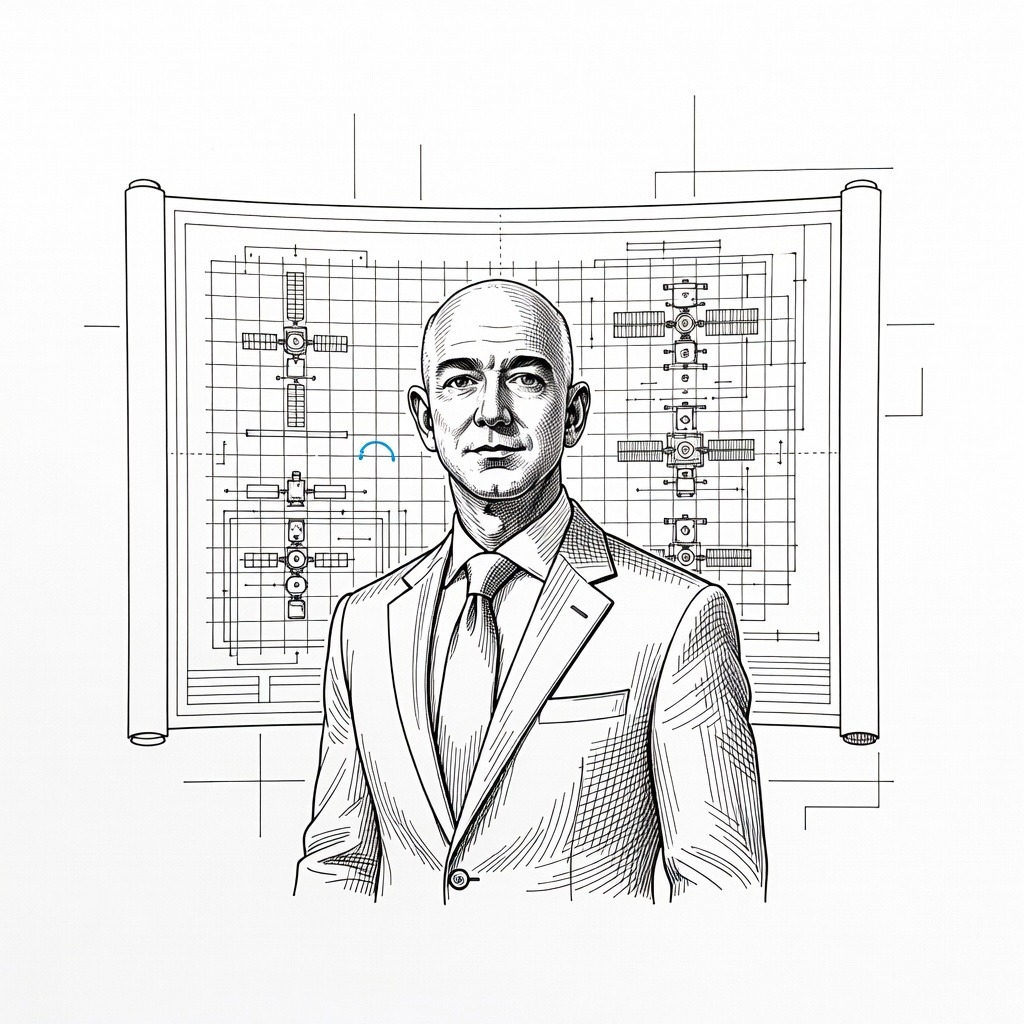
• Monopolize Orbital Real Estate The push to deploy 51,600 data center satellites by late 2027 represents a massive, unaccountable privatization of low Earth orbit by corporate giants. Bypassing Earth's land limitations allows mega-corporations like Blue Origin to extract value from unregulated domains without public oversight or equitable resource sharing. Framing this expansion as a mere logistical hurdle ignores the danger of transferring critical global infrastructure entirely into the hands of competing billionaires.
• Extract Massive Terrestrial Wealth The staggering $700 billion expected to be spent by tech giants this year on infrastructure highlights a severe misallocation of societal capital. Funneling these historic sums into artificial intelligence concentrates wealth at the very top, prioritizing elite technological supremacy over broad economic development and consumer needs. Bezos’s own $6.2 billion injection into Project Prometheus further illustrates how capital is hoarded for industrial manufacturing tools rather than distributed to empower the working class.
• Socialize the Bubble Risk Dismissing the current AI frenzy as beneficial technological progress masks the systemic risk imposed on everyday retail investors and the broader economy. Comparing the massive financial influx to the 1990s biotechnology boom glosses over the devastating impacts that inevitable market corrections and severe investor losses have on ordinary participants. As OpenAI's Sam Altman warns of unchecked exuberance, this camp fears tech titans are engineering a massive financial bubble where elites capture all the upside while the broader economy absorbs the eventual shock.
How it may affect me
As a U.S. reader:
• In the short term, retail investors and the broader economy could face financial risks and potential losses from market corrections if the current surge in artificial intelligence investments results in a financial bubble.
• In the long term, shifting data centers to space by the late 2020s could relieve pressure on terrestrial energy grids and land resources, though this transition places critical infrastructure under the control of private corporations with limited public oversight.
• Massive corporate spending on AI infrastructure and physical engineering tools may yield lasting industrial innovations, but it currently directs significant capital away from immediate consumer needs and broader economic development.