
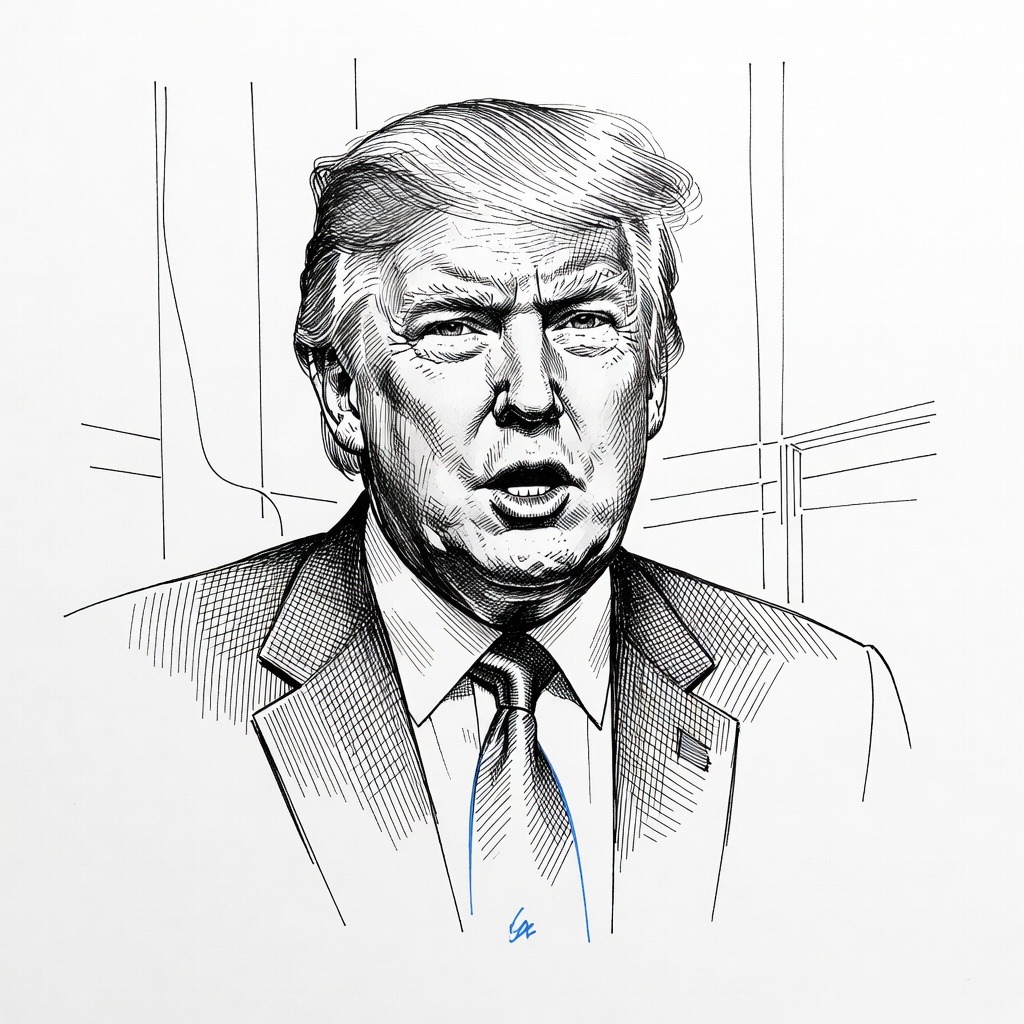
AI-generated illustration. Visual interpretation does not represent real individuals or scenes.
United States and Asian Markets Decline as 30-Year Treasury Yields Hit Near 19-Year Highs
2026-05-20
The BareStory
United States stock indices, including the S&P 500, posted a third consecutive losing session on Tuesday. The downturn was driven by a surge in Treasury yields and ongoing geopolitical tensions involving Iran. The market drops extended into Wednesday's trading across the Asia-Pacific region, with indices falling in Japan, South Korea, and Australia.
During Tuesday's trading, the yield on the 30-year U.S. Treasury bond rose to approximately 5.19 percent, its highest level in nearly 19 years. The bond sell-off coincided with investor concerns regarding potential inflation, rising interest rates, and elevated energy prices linked to uncertainty surrounding the Strait of Hormuz.
On the geopolitical front, U.S. President Donald Trump stated on Tuesday that he had been an hour away from authorizing a strike on Iran before deciding to postpone the action.
In corporate developments during the broader market decline, Alphabet shares dropped more than 1 percent as the company unveiled new artificial intelligence tools at its developer conference. Conversely, Eli Lilly shares gained over 2 percent after Citigroup analysts projected the company's new oral weight-loss medication could reach $2.8 billion in sales by 2026.
Left Perspective
Shielding the Vulnerable Consumer
Extracting Profit from Health
Gambling with Global Stability
Right Perspective
Enforcing Strict Capital Discipline
Pricing in Strategic Vulnerability
Rewarding Tangible Market Value
Left Perspective
• Shielding the Vulnerable Consumer
Rising interest rates and the 19-year high 30-year Treasury yield of 5.19 percent represent a structural transfer of wealth from everyday borrowers to institutional bondholders. This macroeconomic tightening deliberately suppresses wage growth to combat inflation, placing the burden of economic stabilization squarely on the working class. Coupled with elevated energy prices stemming from Strait of Hormuz uncertainties, the financial squeeze disproportionately impacts those who cannot absorb sudden cost-of-living spikes.
• Extracting Profit from Health
Market celebrations over pharmaceutical windfalls illustrate a hyper-capitalist distortion of societal priorities. Eli Lilly’s 2 percent stock surge, fueled by Citigroup’s $2.8 billion sales projection for a weight-loss medication by 2026, highlights an economic model that rewards lucrative lifestyle treatments over systemic healthcare equity. The financial sector champions monopolistic pricing power and corporate extraction from patients rather than broad, accessible public health solutions.
• Gambling with Global Stability
Military brinkmanship actively sabotages global economic security for ordinary citizens. The market instability rippling through U.S. and Asia-Pacific indices is directly exacerbated by sudden geopolitical volatility, such as President Trump advancing to within an hour of authorizing an Iranian strike. This reliance on militarized posturing threatens to ignite severe energy inflation, proving that aggressive foreign policy inherently jeopardizes the economic survival of the global working class.
Right Perspective
• Enforcing Strict Capital Discipline
The surge of the 30-year Treasury yield to 5.19 percent acts as a necessary, market-driven immune response to long-term inflation fears. This 19-year high signals an end to the era of artificially cheap money, forcing institutional and national actors to prioritize fiscal responsibility. Markets are rationally demanding higher risk premiums to protect capital, ensuring that investment is directed only toward genuinely productive and solvent enterprises rather than debt-fueled expansion.
• Pricing in Strategic Vulnerability
Global capital flows require decisive security frameworks to maintain stable supply chains and energy costs. The three-day losing streak across the S&P 500 and Asia-Pacific markets reflects the immediate economic cost of geopolitical ambiguity surrounding the Strait of Hormuz. When deterrent actions, such as the postponed strike on Iran, are delayed, the market immediately prices in the escalating risk of future disruptions to critical international trade and energy infrastructure.
• Rewarding Tangible Market Value
The disparate corporate stock movements reflect an efficient, deeply rational allocation of capital in a tightening macroeconomic environment. Investors rewarded Eli Lilly with a 2 percent gain because Citigroup’s $2.8 billion projection offered a concrete, highly profitable commercial horizon. Conversely, Alphabet’s 1 percent decline despite unveiling new AI tools demonstrates a healthy, disciplined market skepticism toward speculative technological hype that lacks immediate, measurable revenue streams.
How it may affect me
As a U.S. reader:
• The surge in 30-year Treasury yields and rising interest rates signals an end to an era of cheap money, meaning everyday borrowers will likely face higher long-term costs for mortgages, auto loans, and credit card debt.
• Geopolitical instability involving Iran and the Strait of Hormuz increases the risk of supply chain and trade disruptions, which could cause immediate short-term spikes in energy prices and general daily living costs.
• Broader macroeconomic tightening intended to curb inflation may slow corporate expansion and reduce business reliance on debt, potentially leading to suppressed wage growth and a cooler job market for workers.
• The consecutive days of market decline across major indices like the S&P 500 will translate to short-term decreases in the value of personal investment portfolios and retirement accounts for retail investors.
• Strong market financial rewards for lucrative lifestyle and weight-loss medications suggest a long-term healthcare trend where emerging treatments are priced for high profitability, potentially leading to steep out-of-pocket costs for patients rather than broad affordability.