
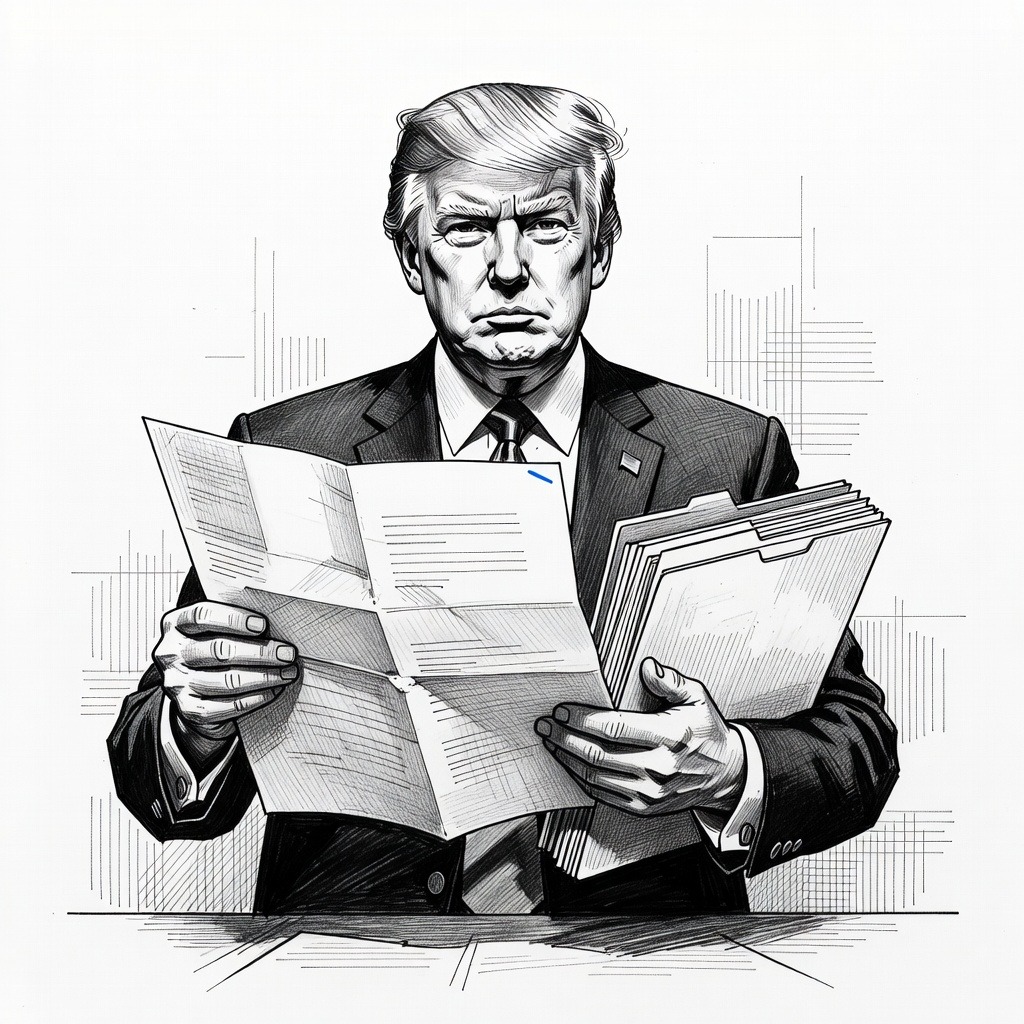
• Dismantling Institutional Accountability Guardrails Granting the executive and his family permanent immunity from prior IRS audits violates the foundational principle of equal justice under the law. Democratic Senator Ron Wyden’s assertion that this breaches a federal statute highlights the severe risk of placing individuals above standard bureaucratic oversight. This move is interpreted not as a customary waiver, but as a deliberate subversion of government accountability that prevents legitimate investigations into a leader’s financial history.
• Funding Ideological Foot Soldiers The prospect of utilizing a government-established fund to compensate individuals convicted of assaulting police during the Jan. 6 breach or violating the FACE Act is viewed as an assault on civil liberties and the judicial process. This framework transforms a legal settlement into a financial vehicle to incentivize and validate extreme, disruptive behavior against vulnerable populations and public servants. Paying out those who block healthcare access fundamentally conflicts with the priority of protecting civic safety and human rights.
• Extracting Treasury for Patronage Dropping a $10 billion personal lawsuit in exchange for a $1.8 billion, taxpayer-backed compensation fund represents a severe misuse of institutional resources. Lawmakers perceive this as a mechanism of political patronage, where the public treasury is raided to reward political allies rather than serve the common good. The ultimate fear is that this settlement creates a precedent where state power and public finances are routinely weaponized for private and partisan enrichment.
How it may affect me
As a U.S. reader:
• Approximately 1.8 billion dollars in public funds will be allocated to a newly established government compensation program rather than other federal operations.
• Citizens who believe they were unfairly targeted by federal law enforcement during past administrations are eligible to apply to this fund for financial restitution, with cases evaluated on an individual basis.
• In the short term, potential financial payouts to individuals convicted of blocking health care facilities under the FACE Act may impact the frequency and nature of protests or civic actions at medical centers.
• Over the long term, the permanent waiver of pending IRS audits for the president and his businesses establishes a new precedent regarding how federal agencies manage the financial oversight and investigations of executive branch officials.