
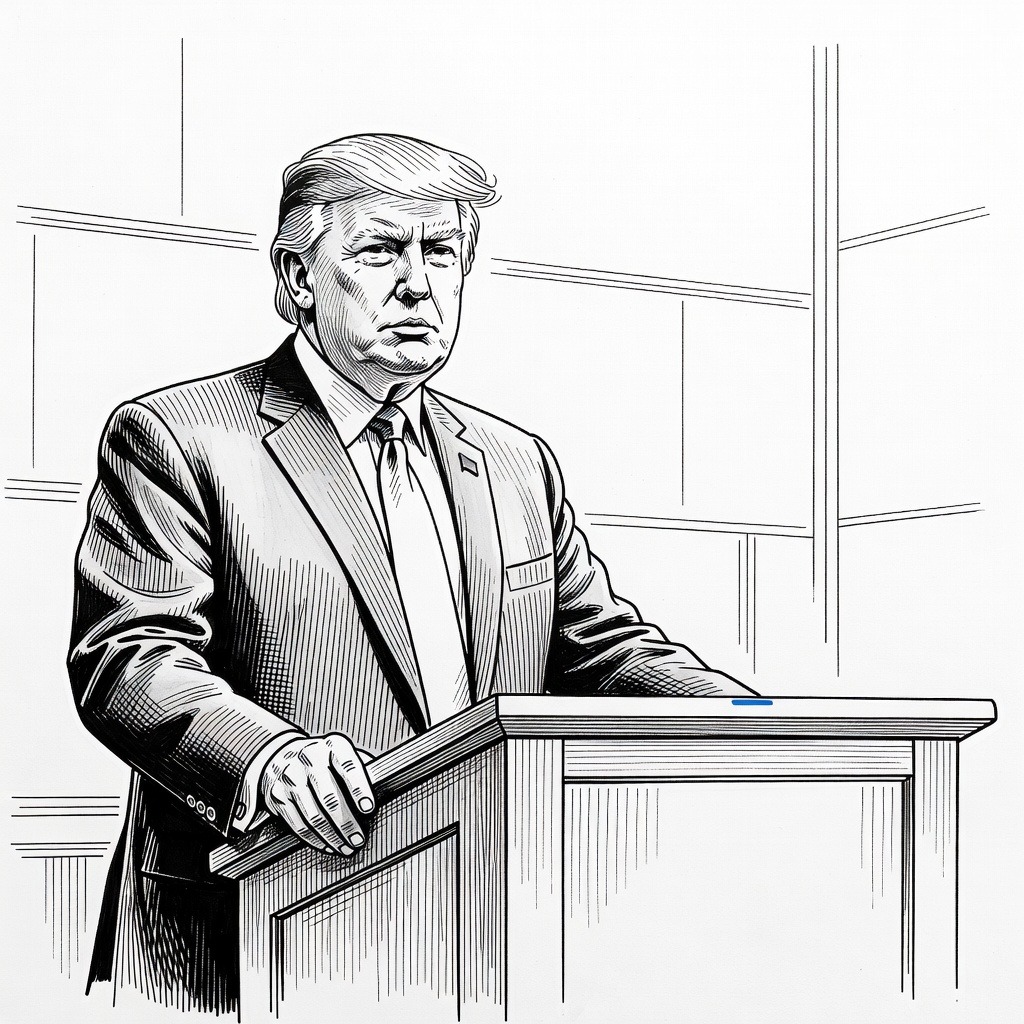
AI-generated illustration. Visual interpretation does not represent real individuals or scenes.
US Postpones Planned Military Strike Against Iran Amid Regional Negotiations
2026-05-19
The BareStory
President Donald Trump announced on Monday that he postponed a United States military attack on Iran originally scheduled for Tuesday. Trump stated the decision followed requests from the leaders of Qatar, Saudi Arabia, and the United Arab Emirates to delay the operation for several days to allow for ongoing negotiations.
According to the president, the Gulf leaders indicated that an acceptable agreement preventing Iran from acquiring nuclear weapons is imminent. Concurrently, Iranian officials claimed they have transmitted an amended set of negotiation terms to the U.S. administration through Pakistani mediators. Trump noted that he has also indefinitely extended an existing April ceasefire following a separate request from leaders in Pakistan.
Following the postponement, Trump directed Defense Secretary Pete Hegseth and Chairman of the Joint Chiefs of Staff Gen. Daniel Caine to stand down from the planned attack. However, Trump stated that the U.S. military has been ordered to remain prepared to execute an immediate, large-scale assault if a finalized agreement is not reached.
The military delay occurs against the backdrop of a broader stalemate between the two nations. The Strait of Hormuz remains effectively closed by dueling measures, which include a U.S. blockade of Iranian ports and Tehran restricting access to the shipping route. These ongoing blockades have heavily disrupted the global oil market, though global crude prices declined following the announcement of the delayed strike.
Left Perspective
Triumph of Multilateral Restraint
Validating Back-Channel De-escalation
Shielding Global Economic Stability
Right Perspective
Leverage Through Credible Threat
Strategic Realignment and Patience
Sustaining Maximum Economic Strangulation
Left Perspective
• Triumph of Multilateral Restraint
Emphasizing international cooperation, this perspective views the postponement of Tuesday's strike as a vital victory for regional diplomacy. By honoring direct requests from Qatar, Saudi Arabia, and the UAE to delay the operation, the administration successfully prioritized collaborative de-escalation over unilateral aggression. This approach validates the belief that empowering regional stakeholders is the safest, most effective path to securing an "imminent" nuclear agreement without triggering catastrophic bloodshed.
• Validating Back-Channel De-escalation
Prioritizing conflict resolution over military posturing, this camp sees the indefinite extension of the April ceasefire as proof that non-violent off-ramps work. The transmission of amended Iranian negotiation terms through Pakistani mediators demonstrates that vital communication channels are actively functioning. Relying on these diplomatic mediators rather than armed force aligns with the core value that sustained engagement consistently outpaces kinetic action in producing durable peace.
• Shielding Global Economic Stability
Focusing on the broader civilian impact, this view highlights the immediate decline in global crude prices following the announcement of the delayed strike. Easing the immediate threat of war in the heavily contested Strait of Hormuz prevents the current shipping blockades from exploding into a devastating global energy crisis. The lingering order for military leaders to prepare for an "immediate, large-scale assault" remains a highly dangerous gamble that could instantly shatter this fragile economic relief and punish global populations.
Right Perspective
• Leverage Through Credible Threat
Anchored in the doctrine of "Peace through Strength," this perspective argues that the willingness to execute Tuesday's military strike is exactly what forced Iran to the table. Directing Defense Secretary Hegseth and General Caine to remain prepared for an "immediate, large-scale assault" provides the ultimate diplomatic leverage. Gulf leaders signaling an "imminent" nuclear agreement is not a product of goodwill, but the direct result of cornering Tehran with overwhelming, ready-to-deploy military superiority.
• Strategic Realignment and Patience
Valuing absolute national security objectives over immediate kinetic action, this camp interprets the delay as a calculated tactical pause rather than a concession. Accommodating the specific requests of strategic allies like Saudi Arabia, the UAE, and Qatar ensures regional coalition unity while placing the burden of finalization entirely on Iran. This Realpolitik maneuver effectively utilizes Gulf partners to apply the final diplomatic squeeze while keeping American military assets fully weaponized in reserve.
• Sustaining Maximum Economic Strangulation
Prioritizing systemic deterrence, this framework views the ongoing U.S. blockade of Iranian ports as an essential instrument of geopolitical power. While acknowledging the resulting disruptions in the Strait of Hormuz and global oil markets, restricting Tehran's capital is viewed as a necessary cost to prevent nuclear proliferation. The primary risk now lies in accepting diluted negotiation terms through Pakistani mediators; prematurely lifting this economic siege without ironclad compliance would squander hard-won strategic dominance.
How it may affect me
As a U.S. reader:
• In the short term, the delayed military strike has led to a decline in global crude oil prices, which may temporarily stabilize or lower gasoline and energy costs for American consumers.
• Over the long term, the continued closure of the Strait of Hormuz and ongoing port blockades will maintain disruptions in the global oil market, leaving consumers vulnerable to energy price spikes if negotiations collapse.
• U.S. military personnel and their families will experience a temporary reprieve from immediate combat, but they must remain prepared for a sudden, large-scale assault if diplomatic efforts fail.
• General national security may be impacted by the outcome of these extended, multi-nation negotiations, which aim to establish a finalized agreement that prevents Iran from acquiring nuclear weapons without initiating a new war.