
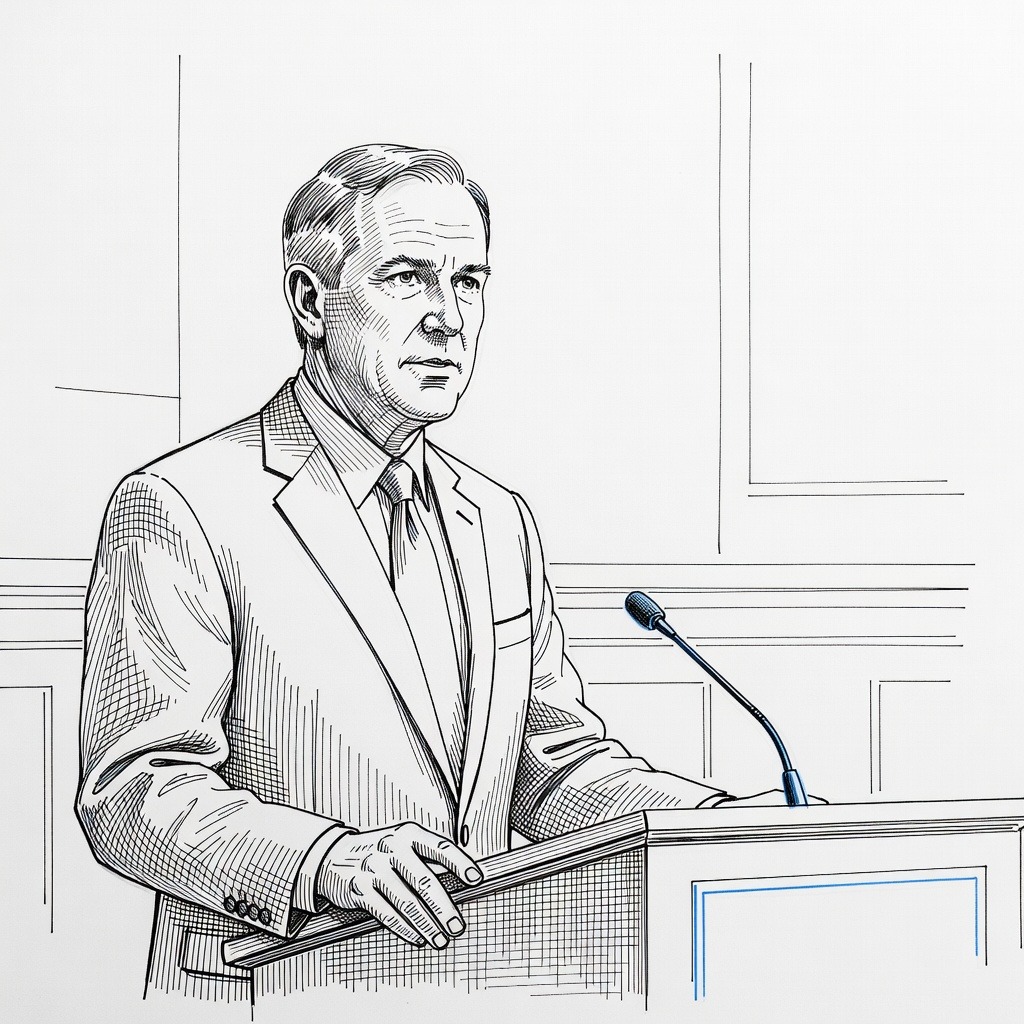
• Punishing Constitutional Accountability Government accountability requires legislators to challenge executive overreach, regardless of their own party affiliation. Cassidy’s 2021 vote to convict Donald Trump during the impeachment trial is fundamentally viewed as an exercise of vital constitutional duty and a defense of the rule of law. His subsequent third-place finish, securing less than 25 percent of the vote, illustrates a political environment where prioritizing institutional checks and balances over factional loyalty is actively penalized by the primary electorate.
• Defending Electoral Integrity Norms Protecting the democratic apparatus from baseless delegitimization remains a paramount priority for maintaining civil stability. Cassidy’s concession speech, explicitly emphasizing that losing candidates must thank voters rather than claim elections are stolen, underscores a commitment to safeguarding institutional trust. The primary defeat of a candidate who actively reinforces these foundational democratic norms signals a troubling shift where standard civic grace is marginalized.
• Weaponizing Procedural Electoral Shifts Systemic election rule changes are heavily scrutinized for their capacity to artificially narrow the electorate and empower ideological extremes. Senator John Kennedy’s observation that the state legislature's shift to a closed primary system caused voter frustration highlights how structural mechanics are used to engineer outcomes. This procedural pivot restricts participation to a rigid, partisan base, intentionally boxing out the broader, moderate coalition required to sustain pragmatic lawmakers.
How it may affect me
As a U.S. reader:
• In the short term, national healthcare legislation will remain under Cassidy's direction, but his long-term departure from the Senate Health Committee chairmanship means future health policies will likely be guided by new, strictly party-aligned leadership such as Senator Roger Marshall.
• Voters in states transitioning to closed primary systems may experience restricted ballot access, as these procedural shifts limit primary election participation to rigid partisan bases and exclude moderate voting coalitions.
• The public may observe a long-term shift in legislative representation, with elected officials becoming less likely to challenge executive leaders or break party cohesion due to the severe electoral consequences demonstrated by this race.
• Citizens may witness a decline in traditional post-election civic norms, as candidates who use concession speeches to defend election integrity and reject claims of stolen results face marginalization in favor of unified party discipline.