
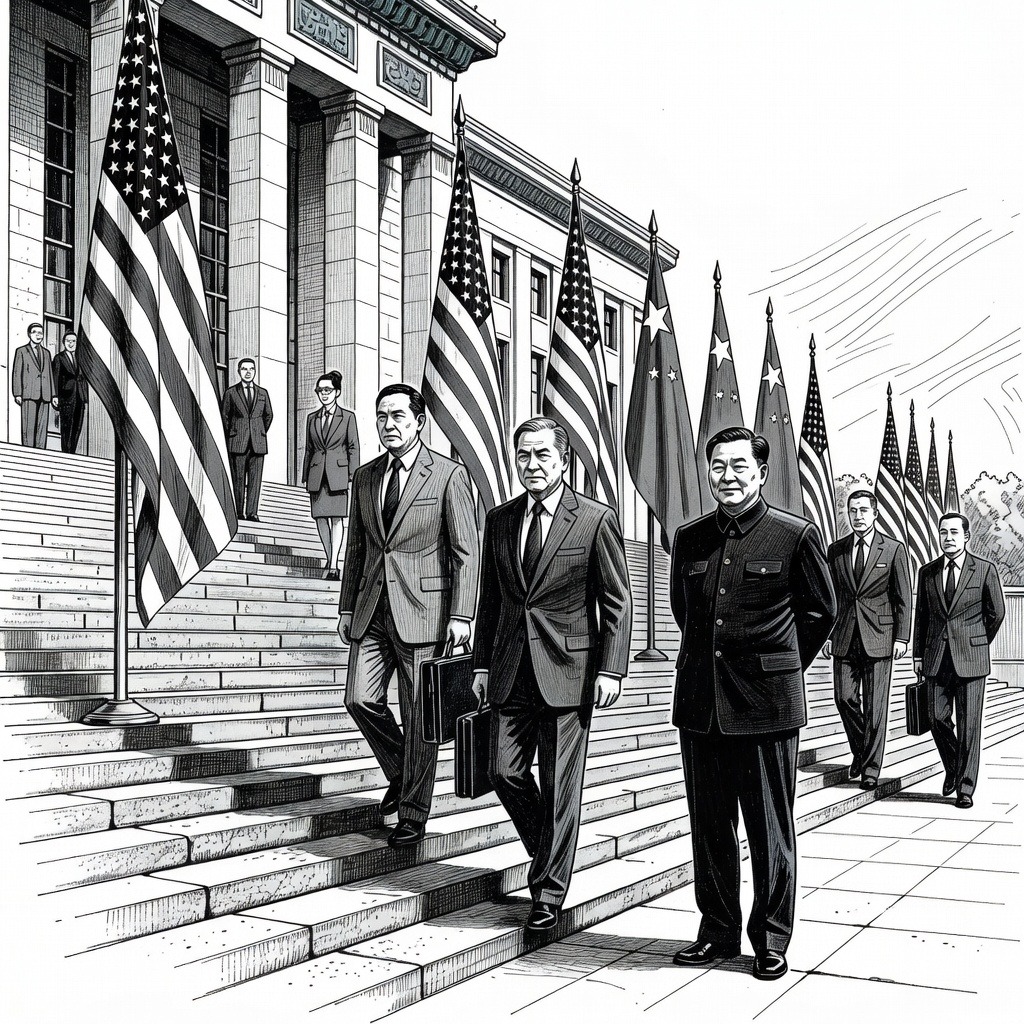
• Façade of Diplomatic Progress Valuing concrete de-escalation and international accountability, this camp views the three-year stabilization framework as a superficial victory that masks systemic failures. The decision to refer to the Chinese leader as a "friend" during a lavish state banquet is seen as a capitulation, especially when fundamental disputes like rare earth export controls remain entirely unresolved. For diplomatic institutionalists, performing diplomatic theater at the Temple of Heaven without securing binding behavioral changes rewards authoritarianism while degrading the credibility of global norms.
• Corporate Appeasement Over Accountability Prioritizing human welfare and equitable institutional guardrails, critics argue that the summit inappropriately commodified American foreign policy. By centering the delegation around CEOs from Tesla, Apple, and Nvidia to secure purchases of Boeing aircraft and agricultural products, the administration signaled that corporate extraction supersedes international law. This transactional approach is viewed as a failure because it surrenders crucial diplomatic leverage in exchange for corporate market access, abandoning the moral authority required to challenge institutional abuses.
• Abdication of Global Stability Driven by a focus on the humanitarian costs of conflict, this framework interprets the summit as a missed opportunity to address urgent global crises. The fact that the ongoing war in Iran—which is causing widespread economic disruption across Asia—overshadowed the meeting highlights a severe lack of diplomatic leadership. Furthermore, allowing the Chinese president to dictate the terms of the Taiwan dispute, with unchallenged warnings of potential clashes, suggests a dangerous retreat from the hard work of genuine, systemic conflict prevention.
How it may affect me
As a U.S. reader:
• In the short term, Americans working in or tied to the energy, agriculture, and aerospace sectors may see increased domestic economic activity and job stability due to China's new commitments to purchase U.S. oil, farm products, and Boeing aircraft.
• Consumers could continue to face supply chain constraints or price pressures on advanced electronics, as the summit failed to resolve ongoing trade disputes regarding rare earth restrictions and export controls.
• Over the long term, the proposed three-year stabilization framework may provide the public with a temporary buffer against wider global volatility by preventing the economic disruptions currently caused by the Iran war from escalating into a dual-front crisis involving China.
• Employees and investors associated with major American technology and automotive firms might see expanded business opportunities, driven by the direct involvement of U.S. corporate executives in securing wider market access in China.
• Despite the cooperative trade agreements, the American public remains exposed to long-term international security and economic risks, as explicit Chinese warnings regarding potential clashes over Taiwan were left unresolved.