
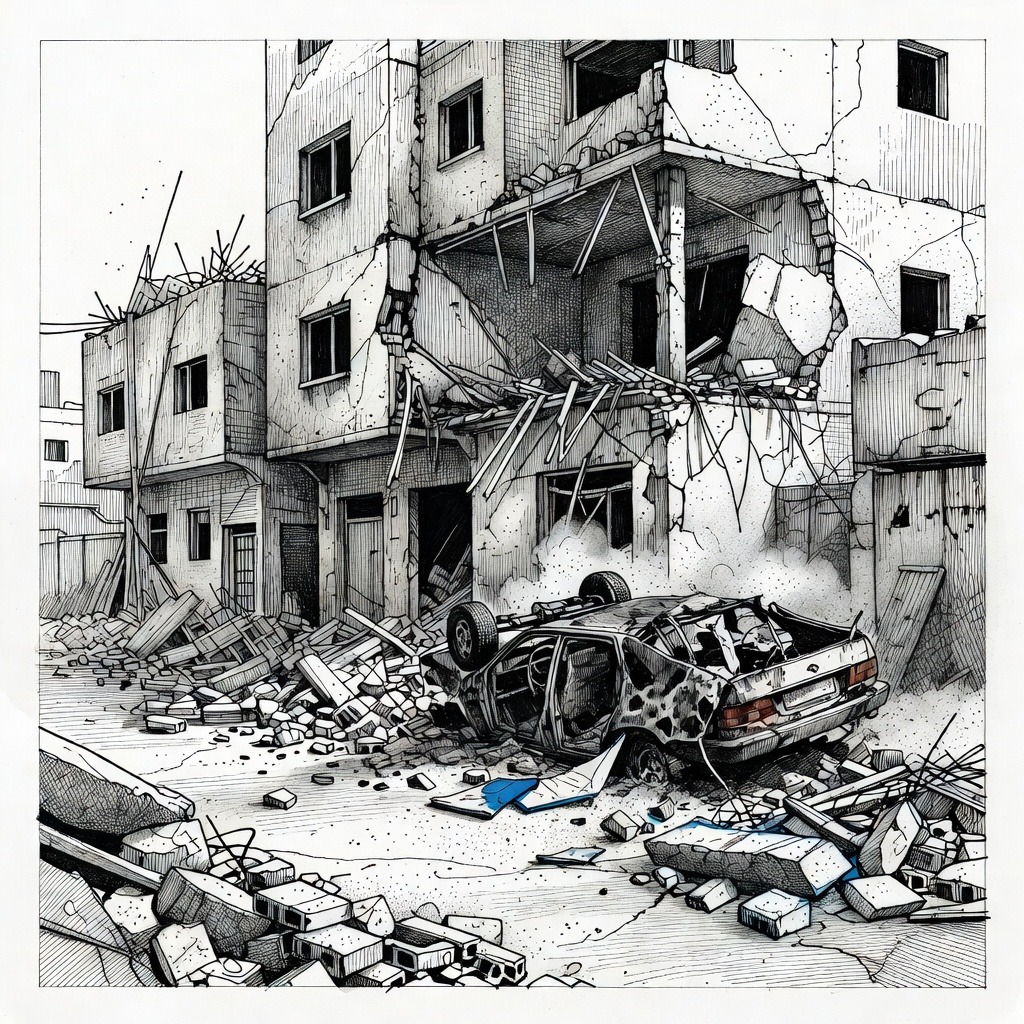
• Illusion of Precision Targeting Prioritizing the absolute protection of civilian life directly challenges the military framing of this operation as a "precise strike." While the intended commander was eliminated, the collateral damage—seven total fatalities, including Haddad’s wife and daughter, alongside dozens of wounded civilians in an urban environment—demonstrates the inherent, indiscriminate lethality of such airstrikes. This framework views the acceptable threshold for civilian casualties in targeted assassinations as fundamentally flawed, arguing that such operations inevitably violate international standards of proportionality.
• Sabotage of Fragile Diplomacy Valuing diplomatic resolution over perpetual conflict frames this assassination as a reckless destabilization tactic. Executing a high-profile, lethal strike during an active, albeit fragile, ceasefire directly jeopardizes the stalled negotiations over disarmament and hostage release. From this perspective, utilizing military force at a delicate diplomatic juncture prioritizes short-term tactical victories over the long-term strategic necessity of securing a negotiated, sustainable peace agreement.
• Perpetuating the Hydra Effect Analyzing the historical trajectory of leadership decapitation reveals a concerning cycle where kinetic force creates more long-term harm than security. The fact that Haddad himself only assumed command following the death of his predecessor, Mohammed Sinwar, illustrates that eliminating individual commanders rarely dismantles a broader insurgency. There is a deep institutional fear that this ongoing reliance on militarized solutions simply breeds further radicalization, guaranteeing the emergence of new militants to fill the leadership vacuum.
How it may affect me
As a U.S. reader:
• Based on the provided information, this event is not expected to have a significant or direct practical impact on the general public in the United States, as the details focus strictly on regional military operations, localized casualties, and regional ceasefire negotiations without any mention of U.S. involvement.