
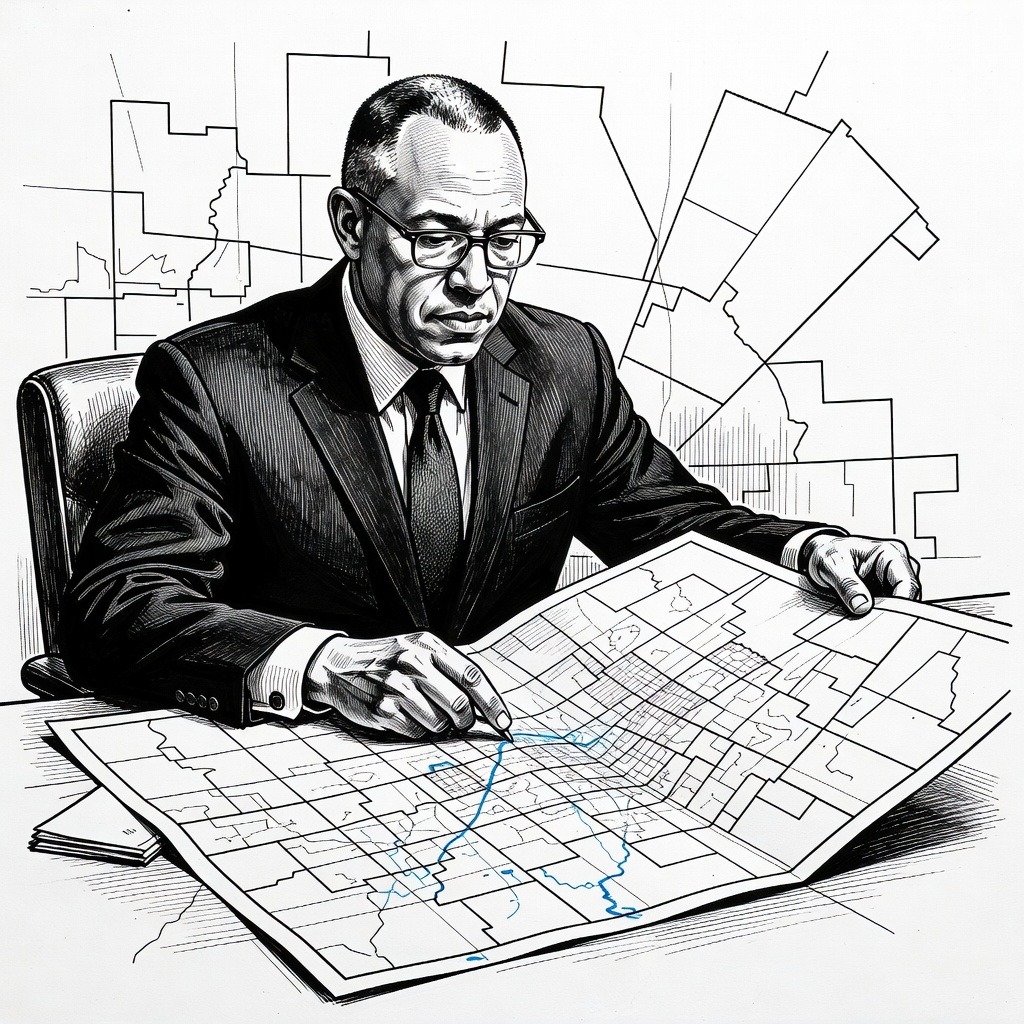
• Shielding Minority Voting Power The Left views the Republican-led redistricting in Southern states like Tennessee and Alabama as a direct assault on civil liberties and minority representation. Because the new maps jeopardize 19 of the 62 Congressional Black Caucus members, reformers interpret this maneuver as targeted historical disenfranchisement rather than routine map-drawing. The underlying priority is protecting vulnerable communities from being structurally locked out of political participation by entrenched state powers.
• Pivoting to Tactical Realpolitik While traditionally opposing partisan gerrymandering, Democrats are adopting aggressive countermeasures in states like New York, New Jersey, and Illinois out of perceived existential necessity. Representative Greg Meeks’ strategy of extending diverse city districts into white suburbs is rationalized as fighting fire with fire to successfully counter Republican tactics. The Left accepts this ideological contradiction because preserving broader democratic safeguards and maintaining House control supersedes the purity of localized map boundaries.
• Preventing Systemic Democratic Erosion The core fear for this camp is that continuous mid-decade map manipulation will permanently institutionalize minority voter suppression. As the Congressional Black Caucus coordinates legal challenges, the Left warns that unchecked state-level redistricting aimed at consolidating partisan power threatens the foundational democratic principle of equal representation. If federal courts fail to intervene, they foresee a long-term chilling effect where minority political agency is systematically dismantled.
How it may affect me
As a U.S. reader:
• In the short term, voters in several states, including Alabama, Tennessee, South Carolina, New York, New Jersey, and Illinois, may be placed in redrawn congressional districts that alter the partisan makeup of their local representation.
• Residents in Alabama will face immediate changes to their voting schedules due to special primary elections established for four newly redrawn districts.
• Minority communities in Southern states may experience long-term shifts in their voting influence, as the new maps place the seats of 19 Congressional Black Caucus members at risk before the 2028 election cycle.
• Suburban voters in states like New York may find their districts merged with heavily diverse urban areas as Democratic lawmakers alter boundaries to challenge Republican incumbents.
• The broader public could experience ongoing electoral uncertainty as these district maps face expected federal legal challenges and continuous mid-decade revisions by both parties vying for control of the U.S. House.