
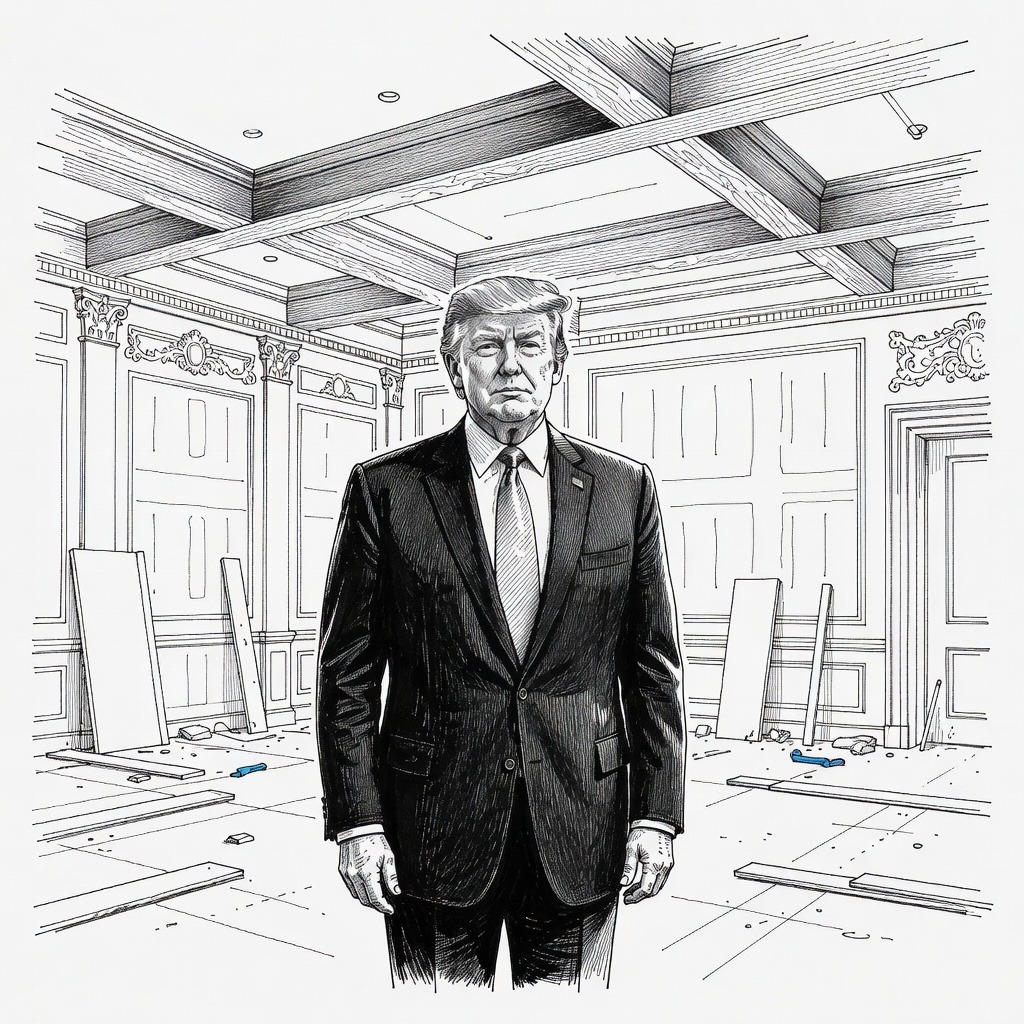
• Subverting Procedural Guardrails Valuing legislative transparency and strict oversight, this camp views the insertion of a $1 billion construction provision into a reconciliation bill as an abuse of parliamentary loopholes. Bypassing standard appropriations debates to fast-track a 90,000-square-foot ballroom degrades institutional accountability. Relying on internal procedural rulings to secure massive executive funding undermines the Senate's deliberative function and limits public scrutiny.
• Signaling Authoritarian Entrenchment Grounded in a commitment to constitutional limits, this perspective interprets the massive, rushed infrastructure project as a physical manifestation of executive overreach. Commentator Larry McKelvey's assertion that the ballroom foreshadows a constitutionally prohibited third term reflects deep anxieties about democratic backsliding. The administration’s aggressive timeline to complete construction before the current term ends is viewed not as efficiency, but as an attempt to cement permanent monuments to individual power.
• Weaponizing Security Narratives Prioritizing civil trust and open governance, reformers see the administration's defensive rhetoric as a tool to deflect legitimate political criticism. When Hogan Gidley claims that questioning the project's motives could incite violence against the administration, it is interpreted as a tactic to silence opposition under the guise of safety. This dynamic risks chilling free speech and weaponizing the very concept of presidential security to avoid answering for extravagant taxpayer expenditures.
How it may affect me
As a U.S. reader:
• You will see 1 billion in taxpayer funds allocated toward White House executive security and construction, directly impacting federal budget expenditures.
• In the short term, you may experience delays in the passage of broader national legislation, as the internal Senate debate over this specific funding provision is temporarily stalling a pending reconciliation bill.
• The Senate's strategy to use budget reconciliation rules for this project may bypass standard appropriations debates, which limits public scrutiny and transparency regarding how these federal funds are approved.
• In the long term, high-risk diplomatic engagements will be moved from commercial venues like Washington hotels to a dedicated facility on White House grounds, altering the physical security footprint and public access around the executive branch.
• You will encounter increasingly polarized public discourse, as the project fuels ongoing civic debates regarding constitutional term limits, executive overreach, and the boundaries of safe free speech.