
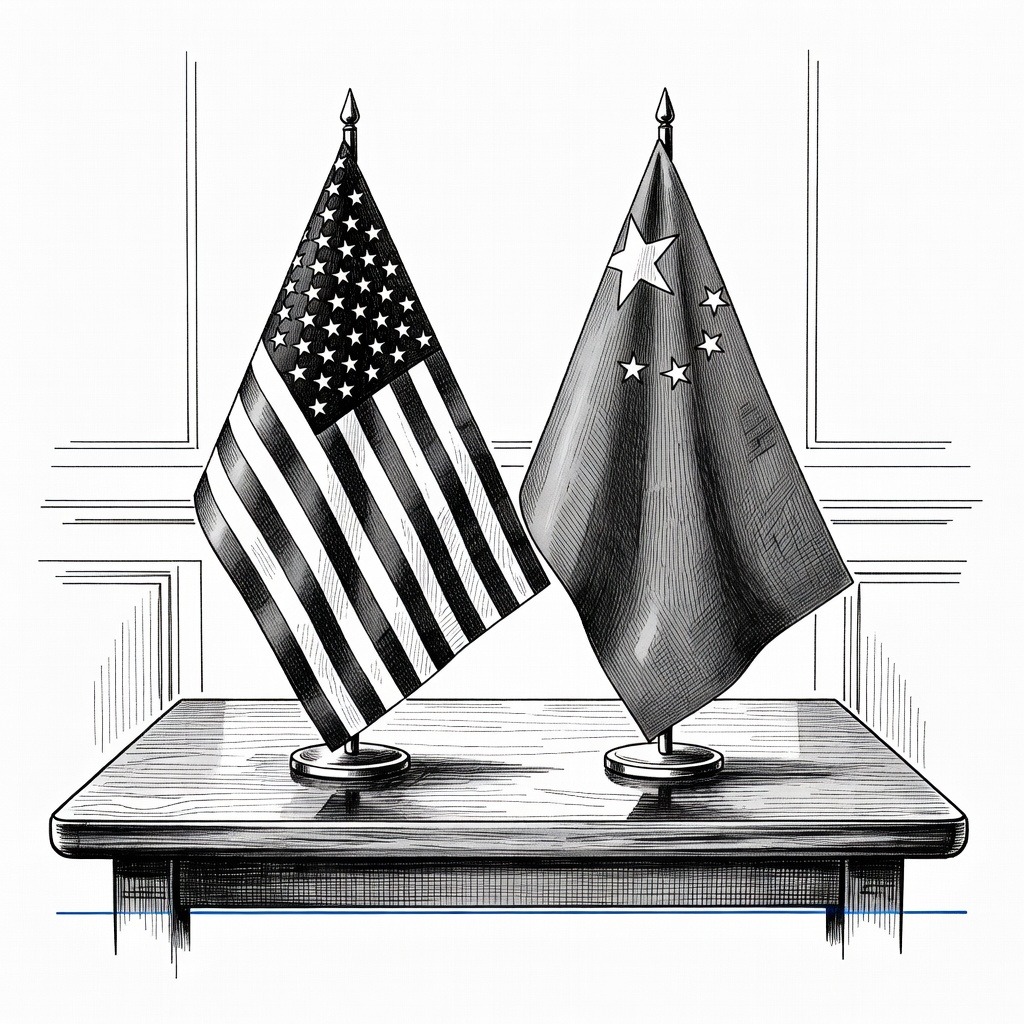
• Illusion of Corporate Statecraft Prioritizes equitable economic progress over superficial, top-down corporate victories. The administration's announcement of a 200-jet Boeing deal, brokered with CEO Kelly Ortberg in attendance, is viewed as a performative gesture rather than a structural diplomatic achievement. The subsequent four percent drop in Boeing shares and the lack of specific aircraft details validate the belief that these executive-driven agreements fail to deliver underlying economic substance or resolve systemic trade imbalances.
• Mandate for Institutional Accountability Values constitutional checks and balances as a necessary constraint on unilateral authority. The 6-3 Supreme Court decision invalidating the administration's use of the International Emergency Economic Powers Act is interpreted as a crucial defense of the rule of law against executive overreach. The White House’s immediate pivot to alternative statutes like Section 301 and its reliance on temporary Section 122 measures are seen as troubling attempts to circumvent judicial oversight and maintain controversial policies without democratic consensus.
• Hazard of Combative Diplomacy Prioritizes international cooperation and views aggressive economic nationalism as a fundamentally destabilizing force. The Chinese Ministry of Foreign Affairs' statement that trade wars produce no winners aligns with concerns that combative tariff policies ultimately inflict unnecessary harm on the global economy. Attempting to force concessions on market access and rare earth materials through friction, rather than utilizing established institutional frameworks or true joint oversight boards, risks prolonged economic volatility and diplomatic isolation.
How it may affect me
As a U.S. reader:
• The agreement to sell 200 Boeing jets to China could support long-term production and employment in the domestic aerospace manufacturing sector, even though a lack of specific aircraft details caused a short-term drop in corporate stock values.
• Consumers and businesses may face continued short-term pricing volatility and trade disruption as the government attempts to maintain existing tariff policies using alternative legal measures following a recent Supreme Court ruling.
• Ongoing negotiations targeting rare earth materials and agricultural purchases may improve long-term supply chain independence for domestic technology and farming industries, though continued trade friction risks broader economic instability.
• Workers and companies reliant on international commerce will likely experience immediate regulatory uncertainty while the administration's temporary tariff measures face ongoing legal challenges in the courts.