
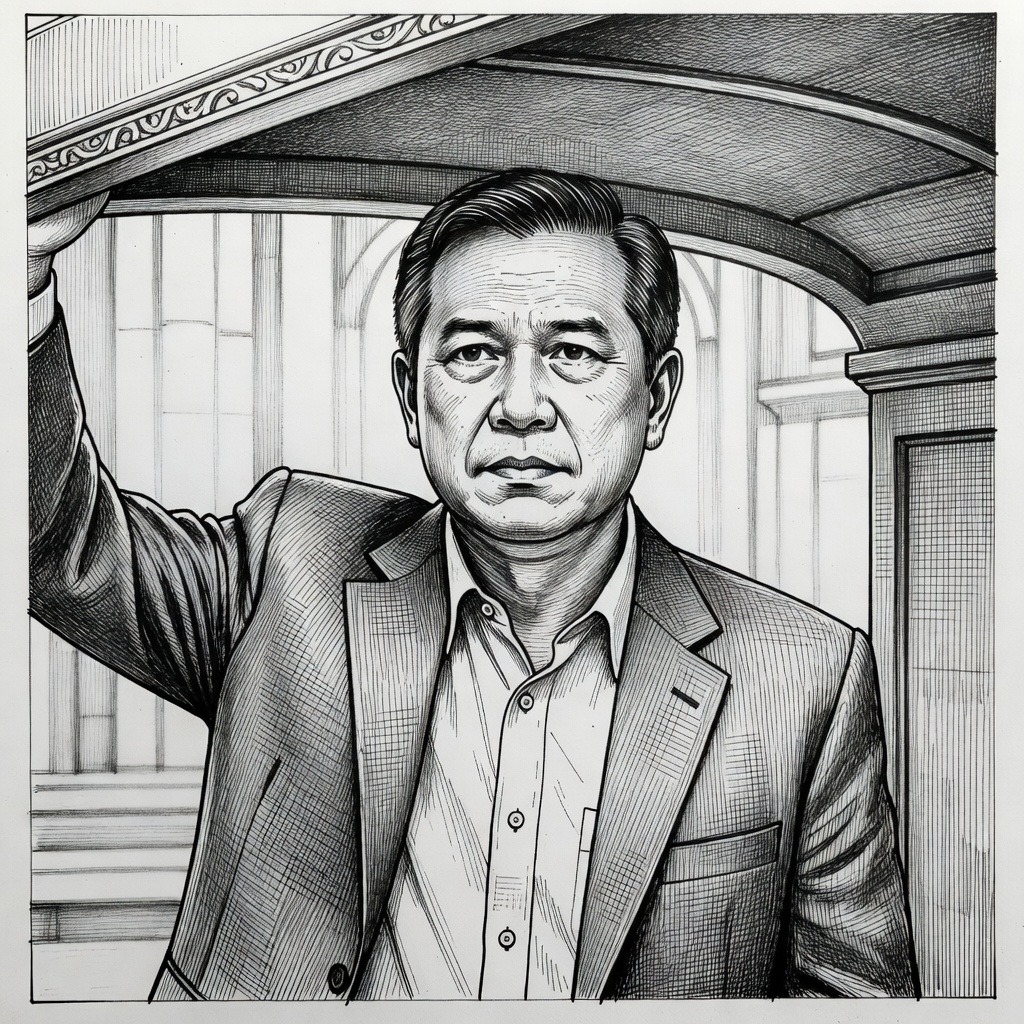
Gunfire Erupts in Philippine Senate During Standoff Over Senator's Arrest Warrant

Illustration for: Gunfire Erupts in Philippine Senate During Standoff Over Senator's Arrest Warrant
AI-generated illustration. Visual interpretation does not represent real individuals or scenes.

THE BARE STORY

Gunfire broke out inside the Philippine Senate late Wednesday amid a standoff over the attempted arrest of Senator Ronald dela Rosa. Following the incident, armed security personnel secured the legislative building, and government officials reported no injuries.

The tensions follow the unsealing of an International Criminal Court (ICC) arrest warrant on Monday. The court charged dela Rosa with crimes against humanity, alleging his involvement in the murder of at least 32 individuals between July 2016 and April 2018 during his tenure as the national police chief. Dela Rosa denied condoning extrajudicial killings, stating he would only submit to Philippine courts, and called on his supporters to assemble at the Senate to prevent his detention.

The senator has remained sheltered inside the building under the protective custody of allied lawmakers after evading an initial arrest attempt by National Bureau of Investigation agents on Monday. In response to the operation, Senate President Alan Cayetano claimed the Senate was under attack and stated his intention to cite the involved government agents for contempt.

Interior Secretary Juanito Victor Remulla Jr. announced an investigation into the gunfire, stating his personnel were deployed to protect the senators rather than to execute the arrest warrant. Following the unrest, President Ferdinand Marcos Jr. issued an appeal for the public to remain calm.

Same Facts. Different Perspectives.

Two AI models. Two viewpoints. One factual foundation.

• Defending Domestic Jurisprudence The Traditionalist prioritizes national sovereignty, arguing that international bodies must never override local legal and constitutional systems. Dela Rosa’s assertion that he will only submit to Philippine courts aligns with the foundational belief that an independent nation must strictly govern its own justice system. Bypassing domestic legal frameworks to execute an unsealed ICC warrant fundamentally undermines the authority and autonomy of the Philippine state.

• Shielding Legislative Independence Institutional continuity requires protecting the separation of powers from aggressive external or executive enforcement. Senate President Cayetano’s declaration that the Senate is "under attack" reflects the absolute priority of maintaining the legislature as a secure, independent branch of government. To this camp, the NBI's attempted arrest within the Senate chambers sets a highly destabilizing precedent of physical coercion against elected representatives.

• Catalyzing Civil Unrest The primary risk perceived here is the violent breakdown of social order driven by overzealous, externally mandated enforcement. The gunfire inside the legislative building and the mobilization of political supporters highlight the chaotic consequences of forcing an international directive onto a complex domestic environment. President Marcos Jr.'s appeal for calm and Secretary Remulla's defensive deployment illustrate the urgent necessity of prioritizing systemic stability over foreign arrest mandates.

How it may affect me

As a U.S. reader:

• There is no significant public impact expected for the general public in the United States, as the provided details describe a localized political, legal, and institutional dispute entirely within the Philippines and its relations with the International Criminal Court.

Read the story at

Note: All TheBareNews content is AI-generated. For additional context, reporting, and updates, you are invited to explore the news outlets linked above.