
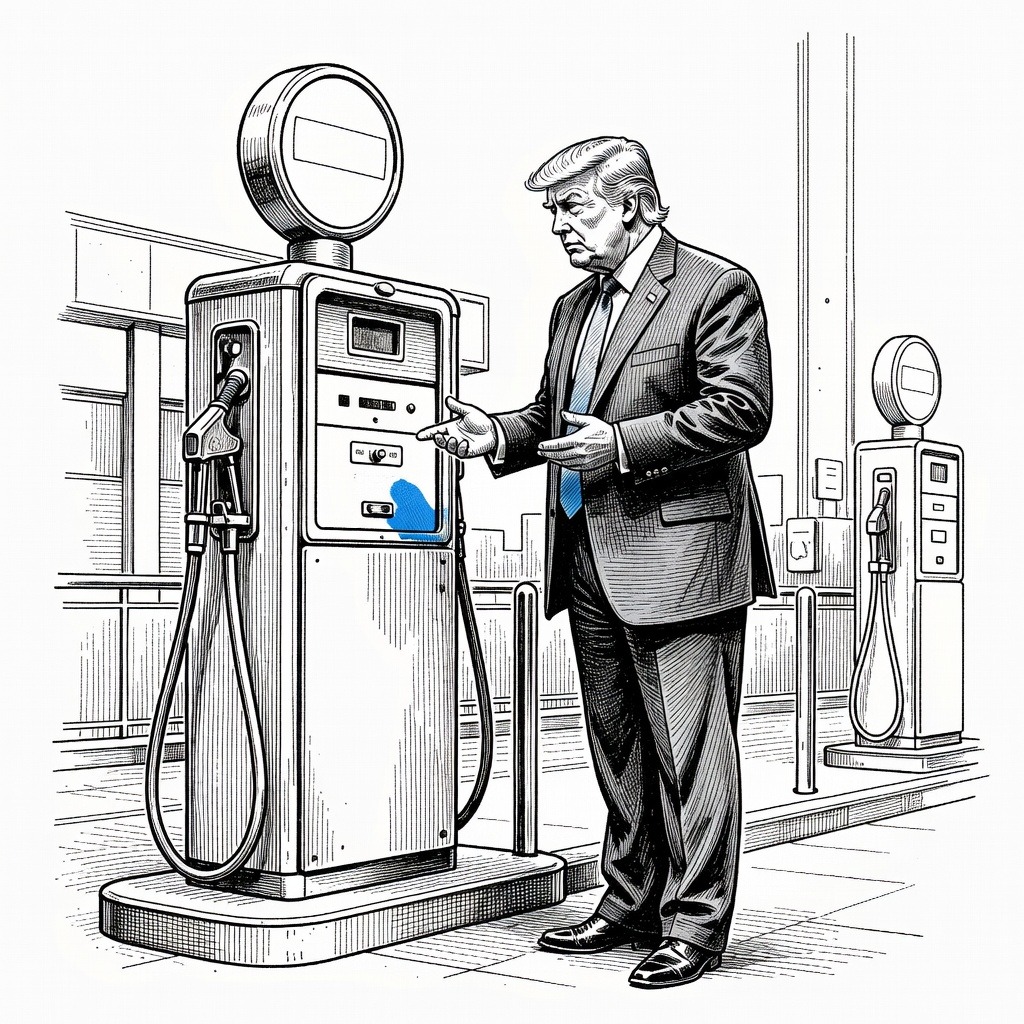
AI-generated illustration. Visual interpretation does not represent real individuals or scenes.
Lawmakers Consider Federal Gas Tax Suspension Amid Surging Fuel Prices
2026-05-13
The BareStory
President Donald Trump and several congressional lawmakers have proposed suspending the federal gas and diesel taxes to address rising fuel costs. The national average for gasoline reached $4.50 per gallon in mid-May, marking a 50 percent increase since late February following the outbreak of war in Iran and subsequent disruptions in the Strait of Hormuz.
The federal fuel tax currently stands at 18.4 cents per gallon for gasoline and 24.4 cents for diesel. Following Trump’s endorsement of a tax pause, Republican Senator Josh Hawley introduced a bill to suspend the levy for at least 90 days, while Representative Anna Paulina Luna announced plans for a similar measure in the House. Lawmakers from both parties have introduced varying proposals to address fuel costs, though any federal tax reduction requires congressional approval.
The proposal faces pushback from policy experts, economists, and trade organizations, including the American Trucking Associations and the Associated General Contractors of America. Critics argue that a suspension would deplete the Highway Trust Fund, potentially hindering federal highway construction, maintenance, and public transit projects. Additionally, the Committee for a Responsible Federal Budget projected that a three-month pause could add $10.5 billion to the federal deficit if alternative revenue is not established.
Analysts and industry representatives also cautioned that a tax holiday would offer drivers minimal relief. Because the tax is applied at the wholesale level, economists estimate retail prices might only drop by 10 to 12 cents per gallon. Senate Minority Leader Chuck Schumer and Senate Majority Leader John Thune both raised questions about whether the proposed tax savings would reach consumers or adequately offset the recent price spikes.
Left Perspective
Exposing the Corporate Windfall
Shielding Essential Public Infrastructure
Masking Deep Systemic Vulnerabilities
Right Perspective
Absorbing Macroeconomic Supply Shocks
Prioritizing Private Sector Liquidity
Weighing Long-Term Fiscal Hazards
Left Perspective
• Exposing the Corporate Windfall
The proposed tax holiday targets wholesale levies, meaning the savings are structurally prone to corporate capture rather than benefiting the public. Economists warn that only 10 to 12 cents of the 18.4-cent gas and 24.4-cent diesel tax suspensions will actually reach the retail level. This frames the policy not as genuine relief from $4.50 gasoline, but as a mechanism that allows energy suppliers to pad their profit margins while absorbing the difference.
• Shielding Essential Public Infrastructure
Suspending the fuel tax directly starves the Highway Trust Fund of the revenue required to maintain vital public goods. Stripping $10.5 billion from federal highway construction, maintenance, and public transit over just 90 days cannibalizes systems working-class citizens rely on daily. Advocates view this as a deeply regressive trade-off that sacrifices long-term societal assets for a negligible, temporary illusion of price reduction at the pump.
• Masking Deep Systemic Vulnerabilities
Attempting to counteract a 50 percent price spike caused by war in Iran with a fractional domestic tax cut ignores the underlying fragility of fossil fuel reliance. Focusing legislative energy on a 90-day pause fails to insulate consumers from future disruptions in the Strait of Hormuz. The long-term risk lies in normalizing the depletion of critical public funds to subsidize an inherently volatile commodity market, rather than transitioning toward structural energy independence.
Right Perspective
• Absorbing Macroeconomic Supply Shocks
The 50 percent surge in fuel prices following the outbreak of war in Iran poses an immediate, cascading threat to broader economic stability. Suspending the 24.4-cent diesel and 18.4-cent gas taxes functions as an emergency shock absorber for commercial transport and private enterprise. By removing this government-imposed friction, policymakers can help mitigate compounding inflationary pressures across the entire supply chain during a severe geopolitical disruption.
• Prioritizing Private Sector Liquidity
Market advocates view the retention of capital within the private economy as the most effective countermeasure to the $4.50 per gallon spike. Even if retail prices only drop by 10 to 12 cents initially, that marginal relief prevents further wealth extraction from businesses and drivers. Pausing immediate tax collection ensures the productive sectors of the economy are not unnecessarily burdened by federal levies while navigating an external crisis.
• Weighing Long-Term Fiscal Hazards
Despite the immediate economic benefits, the policy introduces severe structural risks to the national balance sheet that violate core fiscal discipline. Adding $10.5 billion to the federal deficit over three months without securing alternative revenue artificially distorts the market. Furthermore, alienating vital logistics stakeholders like the American Trucking Associations and commercial builders highlights the danger of sacrificing the Highway Trust Fund, potentially degrading the physical infrastructure required for future market efficiency.
How it may affect me
As a U.S. reader:
• In the short term, drivers may experience minor relief at the pump, with retail prices estimated to drop by only 10 to 12 cents per gallon rather than the full 18.4-cent gas or 24.4-cent diesel tax amounts.
• Because the tax applies at the wholesale level, consumers may not receive the full financial benefit if energy suppliers absorb the difference to increase their own profit margins.
• A tax pause could ease immediate operational costs for commercial transport and businesses, which may help limit compounding inflation across the broader supply chain.
• In the long term, a 90-day suspension would deprive the Highway Trust Fund of 10.5 billion dollars in revenue, which could delay or degrade federal highway construction, maintenance, and public transit projects that citizens rely on daily.
• Without alternative revenue sources, the three-month tax holiday would add 10.5 billion dollars to the federal deficit, introducing structural risks to the national economy.