
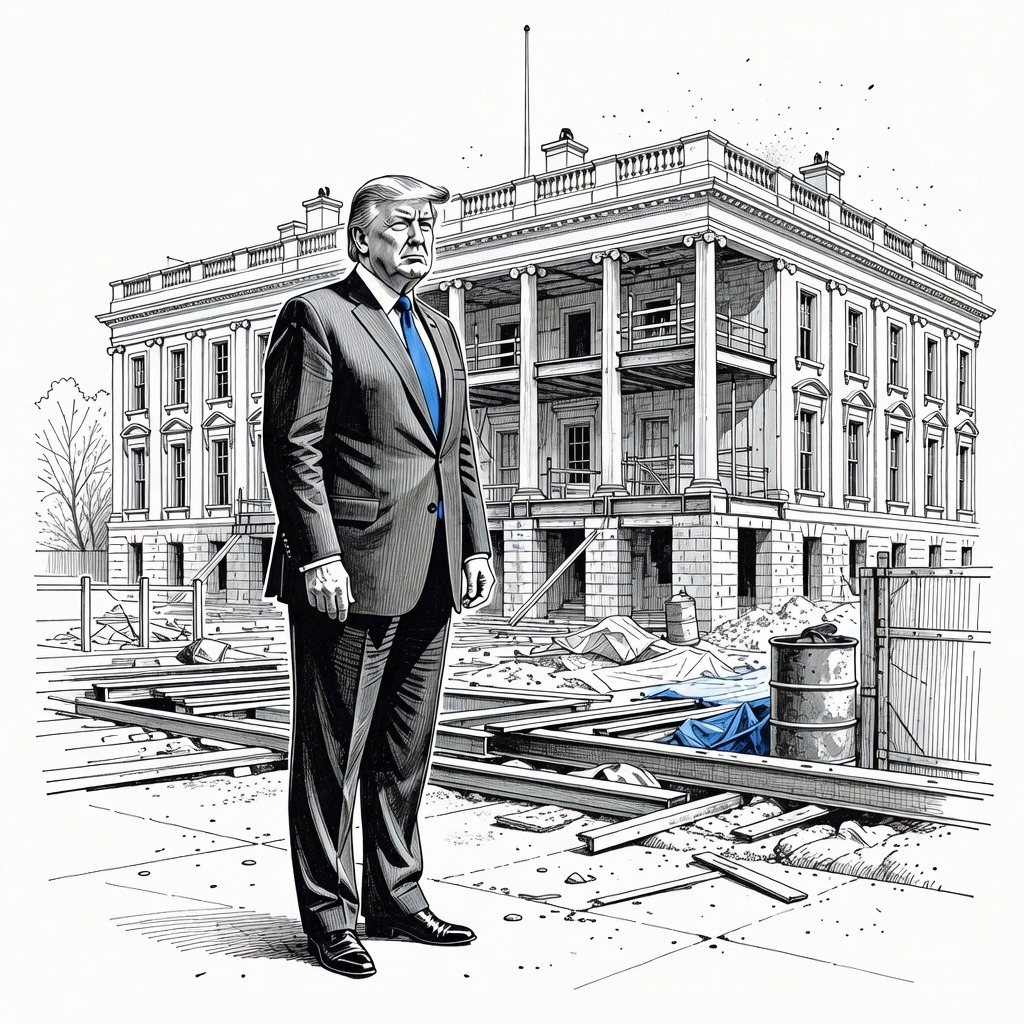
• Shielding Executive Self-Dealing Public funds must remain strictly separate from political legacy projects to maintain strict government accountability. Although the legislative text restricts the $1 billion to "surface and subterranean security upgrades," the Reformer views tying these public funds directly to the East Wing ballroom project as a backdoor taxpayer subsidy. By intertwining necessary safety measures with privately funded construction, this camp perceives a deliberate attempt to force taxpayers to subsidize the broader footprint of an executive vanity project.
• Subverting Legislative Oversight Institutional accountability requires transparent, bipartisan scrutiny before authorizing massive homeland security expenditures. By utilizing the budget reconciliation process to bypass Democratic support on a $72 billion package, the Reformer sees a subversion of systemic legislative checks. Holding closed-door lunches with Secret Service Director Sean Curran further signals to this camp that the 53-seat Republican majority is deliberately shielding executive spending from proper public oversight.
• Eroding Judicial and Public Trust Proceeding with massive structural changes despite ongoing legal disputes signals a dangerous disregard for judicial processes and institutional norms. The Reformer interprets the legislative rush to fund this project before the scheduled early June court hearing as an aggressive attempt to outpace legal accountability. They fear that bulldozing ahead with construction sets a precedent where an executive branch can leverage "national security" to justify opaque, legally contested vanity projects.
How it may affect me
As a U.S. reader:
• In the short term, public funds will be directed to a $72 billion package for federal agencies including Immigration and Customs Enforcement, which will impact the resources available for homeland security and border operations.
• Taxpayer money will also finance $1 billion in structural security upgrades at the White House, resulting in public infrastructure spending occurring alongside privately funded event space construction.
• In the long term, passing this massive spending package through the budget reconciliation process without minority party support could set a precedent that alters the level of bipartisan oversight on future federal expenditures.
• Ongoing legal disputes and an upcoming June court hearing could either delay or validate the White House construction, affecting the timeline, physical readiness, and transparency of government security infrastructure projects.