
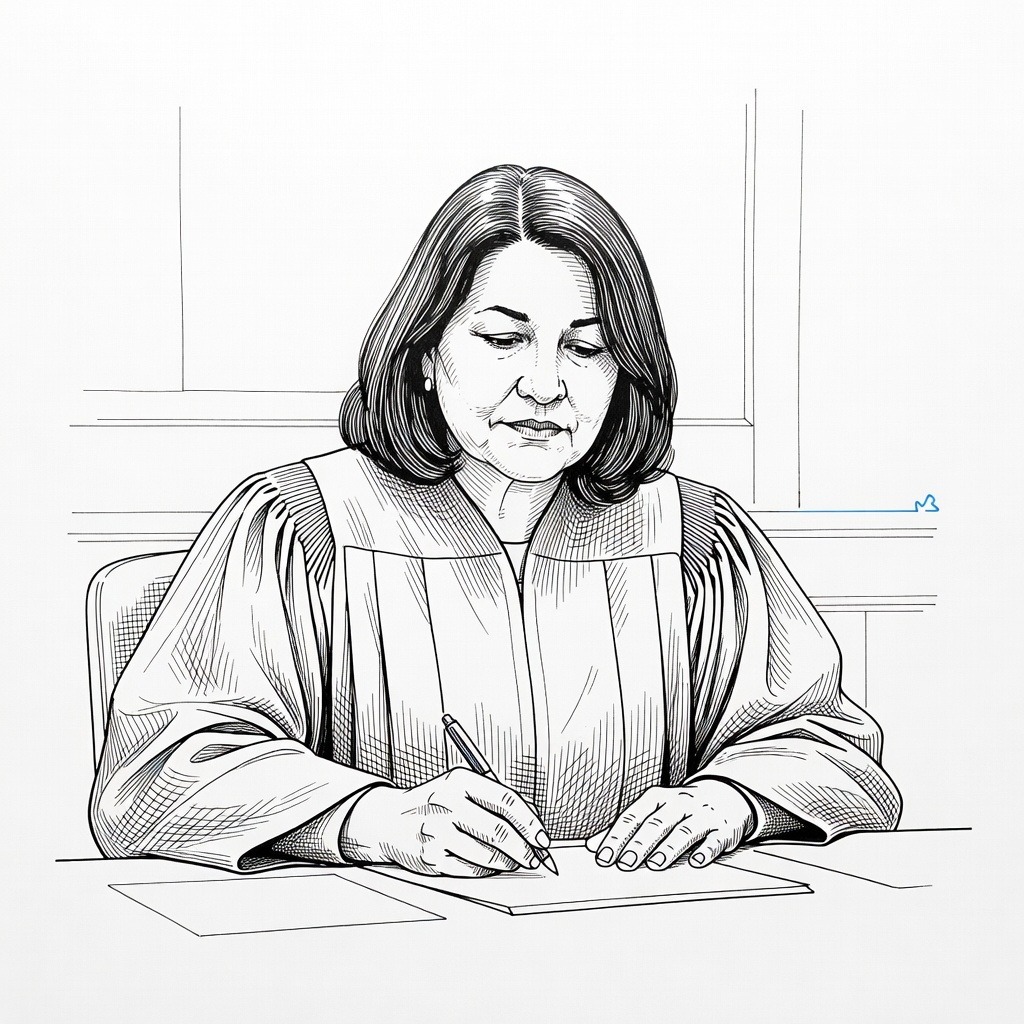
AI-generated illustration. Visual interpretation does not represent real individuals or scenes.
U.S. Supreme Court Clears Path for Alabama to Redraw Congressional Map
2026-05-12
The BareStory
The U.S. Supreme Court has set aside lower court orders that required Alabama to use a congressional map containing two majority-Black districts. In a divided decision, the justices sent the case back to a lower court for reconsideration, clearing the way for the state to adopt new boundaries ahead of the upcoming midterm elections.
The decision follows a separate Supreme Court ruling last month regarding a Louisiana congressional map, which altered the application of the federal Voting Rights Act. Alabama officials argued the Louisiana precedent justified abandoning the court-imposed map, claiming their 2023 district lines followed traditional redistricting principles and minimized county splits.
The ruling permits Alabama to potentially implement a map approved by its Republican-led legislature in 2023, which includes only one majority-Black district out of seven. Justices Sonia Sotomayor, Elena Kagan, and Ketanji Brown Jackson dissented. Sotomayor wrote that discarding the lower court's orders would cause confusion for voters ahead of approaching elections, noting that the lower court could still evaluate if intentional discrimination occurred under the 14th Amendment.
In preparation for the ruling, Governor Kay Ivey signed legislation allowing the state to void the results of a scheduled May 19 primary in affected districts. State officials are now authorized to schedule a special primary election to accommodate the newly configured boundaries.
Left Perspective
Shielding Marginalized Voting Power
Eroding Civil Rights Protections
Risking Systemic Voter Disenfranchisement
Right Perspective
Restoring State Legislative Sovereignty
Prioritizing Geographic Administrative Order
Securing Institutional Electoral Integrity
Left Perspective
• Shielding Marginalized Voting Power
Equitable representation for vulnerable populations is a foundational pillar of democratic legitimacy. The Supreme Court setting aside the lower court requirement for a second majority-Black district in Alabama is viewed as a structural failure that directly dilutes minority electoral influence. By clearing the path for a map with only one majority-Black district out of seven, the decision actively restricts the ability of marginalized communities to challenge the legislative status quo.
• Eroding Civil Rights Protections
Social progress relies on robust federal safeguards to prevent localized discriminatory practices. Invoking the recent Louisiana precedent to alter the Voting Rights Act's application signals a systematic rollback of historic civil rights achievements. This framework perceives Alabama's defense of "traditional redistricting principles" and minimized county splits as an institutional pretext used to systematically sideline equitable racial representation.
• Risking Systemic Voter Disenfranchisement
Electoral legitimacy requires stability, transparency, and clear access to the ballot box for all citizens. As highlighted by Justice Sotomayor's dissent, discarding the lower court's orders and voiding the scheduled May 19 primary threatens to inject severe logistical confusion into the impending midterm elections. The long-term implication is a continuous, resource-intensive reliance on 14th Amendment litigation to prove intentional discrimination just to maintain basic voting rights.
Right Perspective
• Restoring State Legislative Sovereignty
The rule of law dictates that redistricting is fundamentally a state legislative duty, not a federal judicial prerogative. Allowing Alabama to potentially implement the boundaries approved by its 2023 legislature represents a successful defense of decentralized, constitutional authority. This outcome curtails federal judicial overreach and ensures that local democratic processes—rather than distant courts—dictate state electoral structures.
• Prioritizing Geographic Administrative Order
Institutional continuity demands that electoral maps rely on objective, geographic standards rather than race-conscious mandates. Applying the Louisiana precedent to justify the state's map affirms that minimizing county splits and following traditional redistricting principles should supersede forced demographic quotas. This logic views the return to a single majority-Black district as a necessary legal correction toward colorblind, administratively coherent governance.
• Securing Institutional Electoral Integrity
Preserving established systems requires adapting to constitutional clarifications, even when logistical adjustments are necessary. Governor Ivey’s legislation to void the scheduled May 19 primary and authorize a special election ensures the state can fully comply with the updated Supreme Court guidance. The primary risk mitigated here is holding an illegitimate election under a legally flawed, court-imposed map, prioritizing long-term systemic stability over short-term scheduling convenience.
How it may affect me
As a U.S. reader:
• In the short term, voters in affected Alabama districts will experience schedule disruptions and potential logistical confusion, as the state is now authorized to void the upcoming May 19 primary and schedule a special primary to accommodate the new boundaries.
• Residents will likely vote under the state legislature's 2023 redistricting map, which reduces the number of majority-Black districts from two to one and prioritizes geographic standards, such as minimizing county splits.
• Over the long term, the application of this legal precedent indicates that citizens nationwide may see state legislatures exercise greater authority over redistricting with fewer federal court mandates requiring race-conscious district lines.
• Citizens and advocacy groups challenging future electoral maps may face a more resource-intensive legal process, as they will increasingly need to rely on 14th Amendment litigation to prove intentional discrimination rather than utilizing prior Voting Rights Act demographic requirements.