
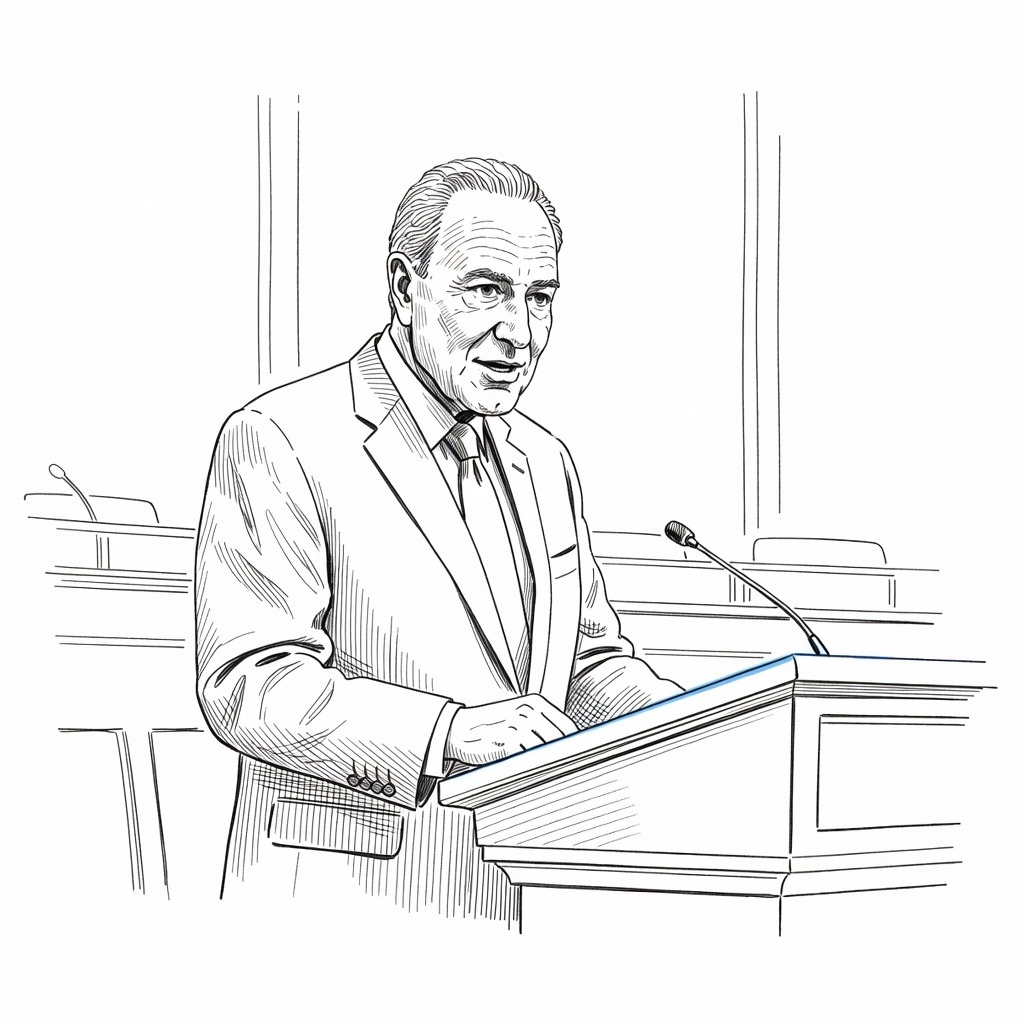
• Demand Institutional Financial Accountability Government accountability demands that taxpayer funds serve public needs rather than finance executive extravagance. By supporting Senate Democratic Leader Chuck Schumer’s push to remove the $1 billion Secret Service allocation for the planned White House ballroom, this camp views the expenditure as a failure of institutional oversight. Protecting public resources from being redirected toward administrative vanity projects is prioritized over the localized security enhancements praised by spokesperson Davis Ingle.
• Shield Vulnerable Housing Markets Protecting citizens from corporate extraction is central to ensuring an equitable society. The Senate provision restricting large institutional investors and corporations from owning single-family homes is viewed as a necessary defense against monopolistic practices in the housing market. House Republican efforts to amend this affordability package are seen as enabling a status quo that permanently prices vulnerable individuals out of homeownership to benefit corporate consolidation.
• Resist Escalating Enforcement Mandates Protecting civil liberties requires challenging rigid, punitive approaches to domestic policy. The spending bill's primary focus on restoring immigration enforcement funding is interpreted as a regressive measure that targets marginalized populations rather than addressing systemic root causes. Tying these controversial enforcement priorities to the June 1 budget deadline is viewed as an attempt to leverage essential government operations to force compliance on divisive, anti-progressive policies.
How it may affect me
As a U.S. reader:
• Short-term disruptions to essential government operations may occur if lawmakers fail to meet the June 1 spending deadline, which will also determine whether taxpayer funds are directed toward broader public needs or specific immigration enforcement and executive security projects.
• Your ability to purchase a home may be impacted by the stalled housing affordability package, as the final legislation will dictate whether large corporations and institutional investors are restricted from buying single-family homes.
• Short-term shifts in domestic security and civil liberties are possible if Congress misses the mid-June deadline to reauthorize government surveillance powers due to the ongoing legislative delays.
• Long-term implications for your personal financial privacy depend on the resolution of a proposed ban on a central bank digital currency, which would preemptively block potential centralized federal tracking of private transactions.