
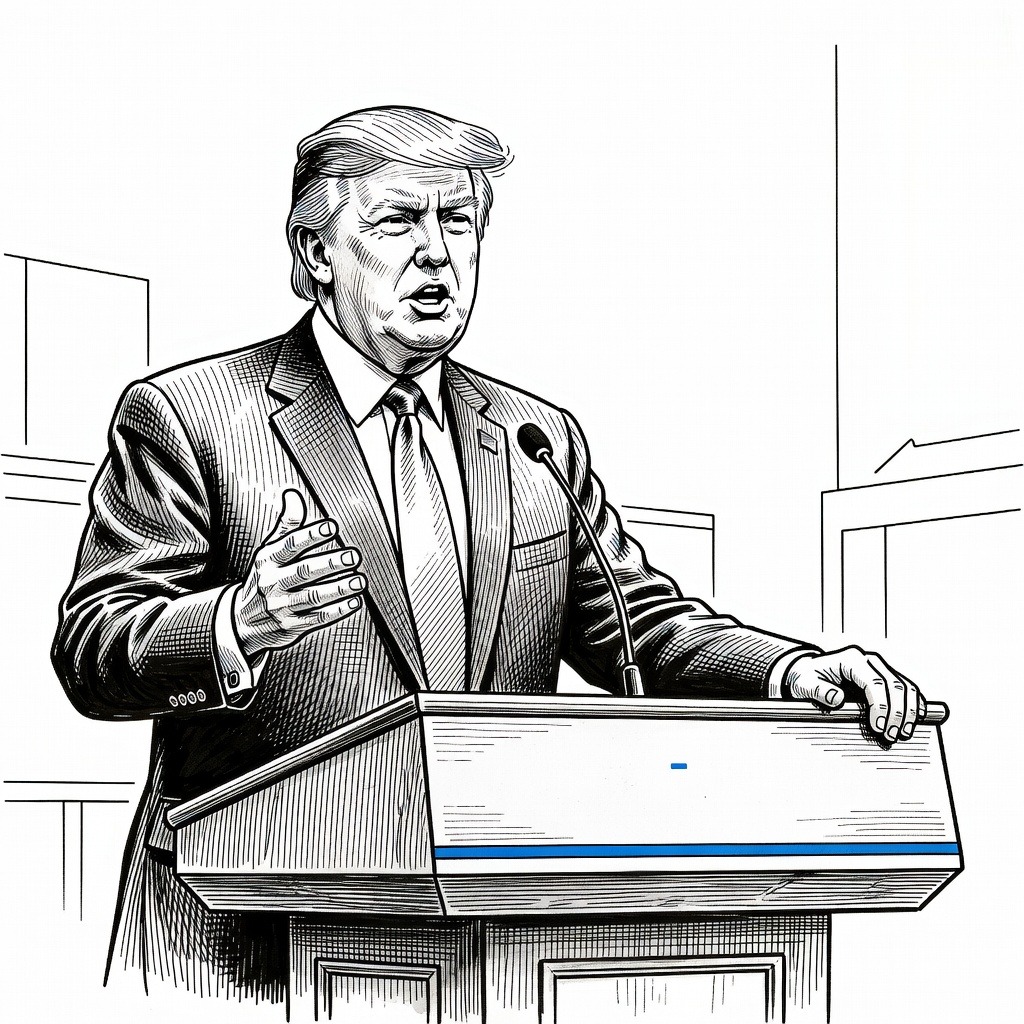
AI-generated illustration. Visual interpretation does not represent real individuals or scenes.
US Markets Reach Record Highs as Consumer Sentiment Drops Amid Iran Conflict
2026-05-10
The BareStory
U.S. stock indexes, including the S&P 500 and Nasdaq, closed at record highs on Friday, extending a six-week winning streak. The market gains contrasted with a preliminary survey showing consumer sentiment falling to a new record low in early May. Meanwhile, government labor data revealed that the U.S. added 115,000 nonfarm payroll jobs in April, with the national unemployment rate holding steady at 4.3 percent.
The decline in consumer optimism was largely driven by rising gasoline prices connected to the ongoing war in Iran. Survey director Joanne Hsu stated that inflation and high fuel costs are heavily pressuring households, noting that sentiment is unlikely to recover until supply disruptions in the Middle East are resolved. The national average for a gallon of regular gas reached $4.54, an increase of nearly 40 cents from the previous month. Survey respondents also cited recent tariffs enacted by President Donald Trump as a primary economic concern.
The economic indicators arrive alongside continued military and diplomatic developments in the Middle East. Both the United States and Iran reported an exchange of fire in the Strait of Hormuz on Thursday. Despite the clash, U.S. Secretary of State Marco Rubio stated on Friday that officials anticipated updates regarding a potential peace proposal. Additionally, Treasury Secretary Scott Bessent indicated that the conflict will be a topic of discussion at an upcoming Beijing summit between President Trump and Chinese President Xi Jinping.
Left Perspective
Exposing the Wall Street Disconnect
Regressive Taxation Through Tariffs
Compounding Vulnerability in Conflict
Right Perspective
Validating Structural Market Resilience
Isolating External Supply Shocks
Leveraging Friction for Strategic Advantage
Left Perspective
• Exposing the Wall Street Disconnect
This framework views the divergence between record stock highs and record-low consumer sentiment as definitive proof of systemic wealth inequality. When the S&P 500 and Nasdaq extend a six-week winning streak while households are suffocated by $4.54 gasoline, capital gains are entirely divorced from material reality. From this perspective, financial markets measure corporate extraction rather than broad societal health or living standards.
• Regressive Taxation Through Tariffs
From a social equity standpoint, the tariffs enacted by President Trump function as a direct, regressive tax on everyday consumers rather than a penalty on foreign powers. Survey respondents explicitly citing these tariffs as a primary economic concern validates the view that protectionist trade policies exacerbate the cost-of-living crisis. The underlying priority is shielding working-class purchasing power from the fallout of top-down trade disputes.
• Compounding Vulnerability in Conflict
Highlighting 115,000 new jobs and a 4.3 percent unemployment rate masks the severe downstream economic impacts of geopolitical militarism. The military clash in the Strait of Hormuz and the subsequent 40-cent fuel spike demonstrate how global escalations disproportionately drain the resources of domestic consumers. This side fears that prioritizing geopolitical brinkmanship over immediate diplomatic de-escalation will continually erode household stability and trap vulnerable populations in inflationary cycles.
Right Perspective
• Validating Structural Market Resilience
This framework interprets the S&P 500 and Nasdaq reaching record highs as a definitive signal of underlying macroeconomic strength and corporate efficiency. Maintaining a steady 4.3 percent unemployment rate while adding 115,000 jobs proves that domestic capital structures remain robust despite global volatility. This camp prioritizes aggregate market indicators over subjective sentiment surveys to measure the true trajectory of institutional stability.
• Isolating External Supply Shocks
Declining consumer optimism and the 40-cent spike in gasoline to $4.54 are diagnosed as temporary, external supply-chain disruptions rather than domestic economic failures. Because survey director Joanne Hsu explicitly ties these inflationary pressures to the conflict in Iran, they represent an isolated geopolitical friction point. The logic dictates that once supply bottlenecks in the Middle East are resolved, consumer confidence will naturally recalibrate to match objective market performance.
• Leveraging Friction for Strategic Advantage
Utilizing tariffs and maintaining a firm security posture in the Strait of Hormuz are viewed as calculated tools to secure long-term national and economic interests. As officials like Marco Rubio and Scott Bessent prepare to negotiate peace proposals and address the conflict at the upcoming Trump-Xi summit, this camp accepts short-term consumer discomfort as the necessary cost of global leverage. The priority is establishing enduring trade dominance and systemic security, which ultimately protects long-term prosperity.
How it may affect me
As a U.S. reader:
• In the short term, households will face immediate financial pressure and higher daily transportation expenses as the national average for regular gasoline has reached $4.54 per gallon due to supply disruptions in the Middle East.
• Consumers may experience reduced purchasing power and increased prices for everyday goods, as recently enacted trade tariffs are expected to further impact the domestic cost of living.
• Individuals with stock portfolios or retirement funds may see financial gains from record highs in major indexes like the S&P 500 and Nasdaq, while the general public maintains access to a stable job market with a steady 4.3 percent unemployment rate.
• In the long term, relief from high fuel costs and domestic inflation is tied to international developments, meaning household budgets will likely remain strained until peace proposals or upcoming diplomatic summits successfully resolve the overseas conflict.