
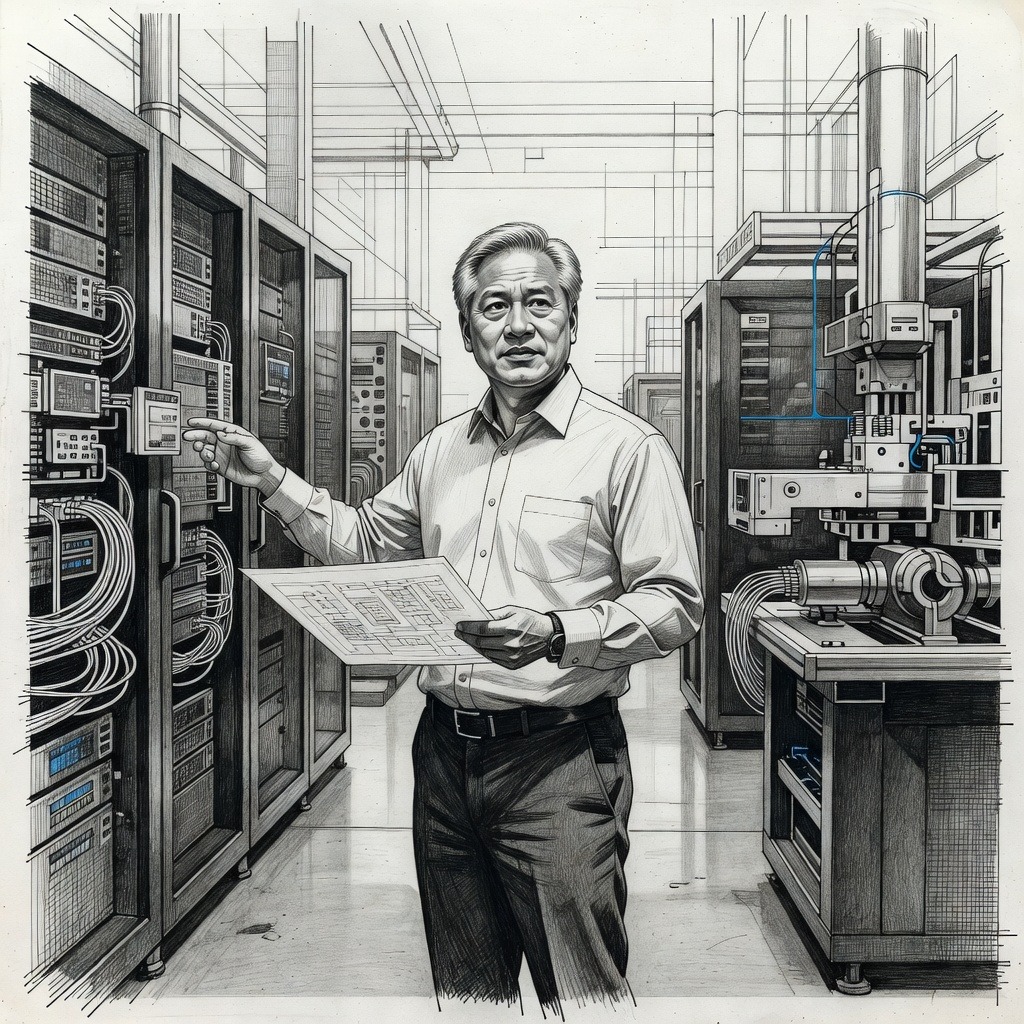
• Empower the Labor Force Prioritizing fair wages and worker leverage, this perspective views the creation of 3,000 domestic jobs in Texas and North Carolina as a baseline requirement, not the finish line. Jensen Huang's lament over "shortages of skilled labor," specifically regarding electricians and construction workers, is interpreted as a structural failure by corporations to properly compensate and train the working class. True revitalization of American manufacturing requires equitable wealth distribution, ensuring the massive capital flowing into AI infrastructure directly enriches the tradespeople building it rather than just shareholders.
• Check Corporate Wealth Concentration Valuing broad-based economic equity, this camp approaches the massive stock surges for Corning and Nvidia with intense skepticism regarding who actually benefits. While interconnected industries like cloud infrastructure and semiconductors experience rapid equity expansion, these financial windfalls disproportionately reward executives and institutional investors. The immediate 12 percent and 6 percent stock jumps following the partnership announcement highlight a highly concentrated tech oligopoly that extracts vast market wealth while socializing the heavy physical infrastructure and labor demands of silicon photonics.
• Shield Against Tech Bubbles Guarding against speculative market behavior and systemic risk, this view challenges the narrative that AI-driven expansion is an inherently stable economic pillar. Market analysts characterizing stock index declines in the Dow, Nasdaq, and S&P 500 as a mere "healthy pause" often ignore the vulnerabilities of a top-heavy market overly reliant on artificial intelligence hype. Pushing domestic manufacturing capacity up tenfold to replace copper with optical connectivity represents a massive speculative gamble that could leave local economies in Texas and North Carolina exposed to sudden industrial collapse if the AI boom fails to deliver sustainable consumer value.
How it may affect me
As a U.S. reader:
• In the short term, job seekers and residents in Texas and North Carolina will see direct employment opportunities through the creation of over 3,000 new roles at three upcoming optical manufacturing facilities.
• Tradespeople across the country, particularly electricians and construction workers, will experience an immediate increase in demand for their labor to build out the physical infrastructure required for new artificial intelligence data centers.
• Over the long term, the public will rely on a localized domestic supply chain for critical computing architecture, insulating essential technologies like silicon photonics from international market disruptions.
• Americans with retirement accounts or stock market investments may see short-term portfolio growth tied to expanding technology and cloud infrastructure sectors, but they also risk financial losses if the massive capital influx into artificial intelligence proves to be an unsustainable speculative bubble.
• Communities hosting these newly built manufacturing hubs face a long-term risk of localized industrial and economic decline if the artificial intelligence market fails to deliver sustainable value to consumers and the industry contracts.