
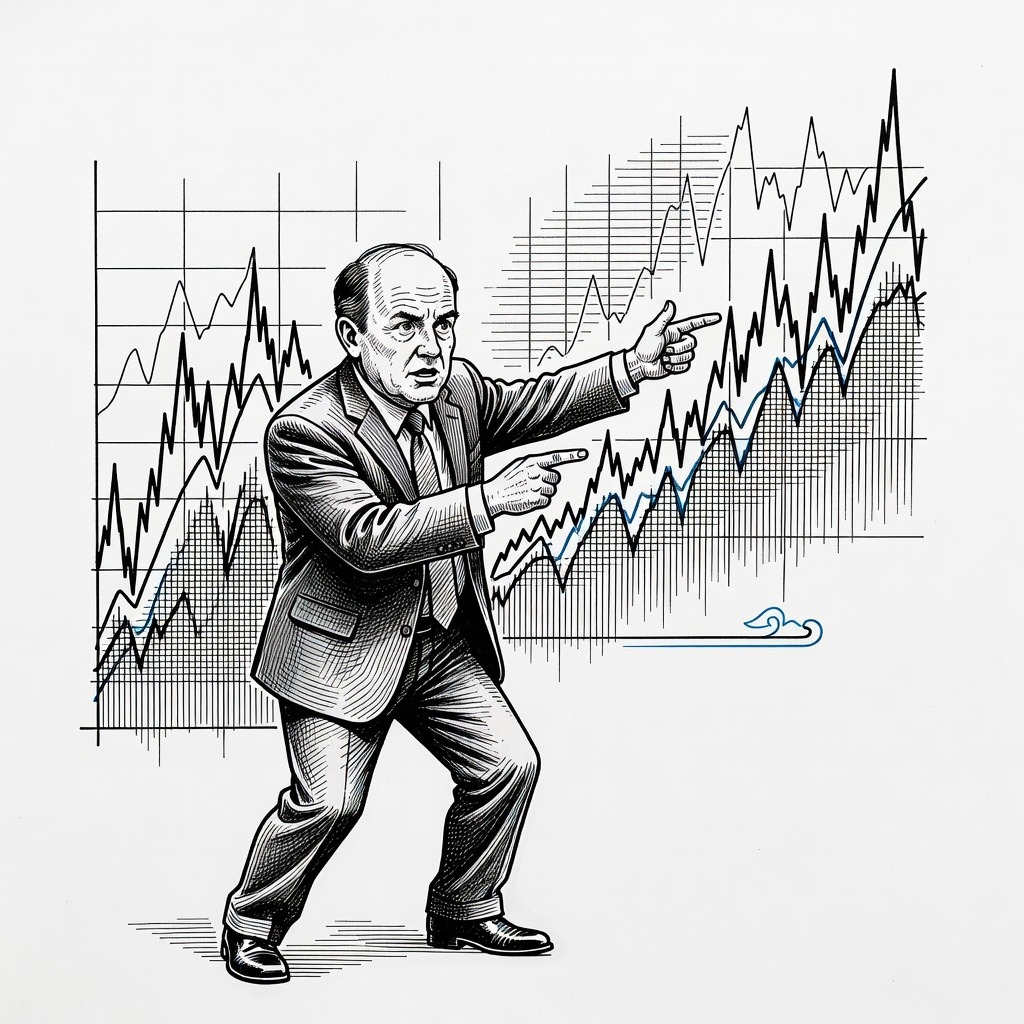
• Speculative Mirage Over Reality Prioritizing equitable economic health reveals a disturbing disconnect between Wall Street exuberance and everyday consumer struggles. The broader market pushing the S&P 500 to record highs and Arm to a $237 pre-earnings peak relies heavily on abstract AI promises rather than tangible, ground-level economic strength. The fact that Arm's royalty revenues missed expectations specifically due to "smartphone market weakness" indicates that everyday consumer purchasing power is faltering while institutional capital pumps an insulated tech bubble.
• Monopolistic Concentration of Power Safeguarding the public from corporate extraction requires skepticism when a single architectural framework dominates global infrastructure. CEO Renee Haas’s confirmation that major accelerators from Nvidia, Google, and Amazon all connect to Arm processors highlights a dangerous centralization of technological power. Holding over 50 percent of the market share among top hyperscalers transforms this company into an unaccountable structural chokepoint, allowing a single entity to dictate the terms, costs, and access to the impending AI transition.
• Exposing Systemic Supply Fragility Protecting the broader economy from sudden shocks demands resilient systems over hyper-optimized, profit-driven supply chains. The swift 6 percent after-hours stock drop underscores the inherent volatility of an industry overly dependent on fragile hardware networks. Citing memory shortages to justify a conservative $1 billion outlook—despite having $2 billion in actual customer demand—demonstrates how prioritizing lean, short-term manufacturing efficiency has left critical tech infrastructure highly vulnerable to external disruptions.
How it may affect me
As a U.S. reader:
• In the short term, ongoing memory shortages and hardware supply chain vulnerabilities could disrupt the availability or pricing of everyday consumer electronics, reflecting current weaknesses in consumer purchasing power.
• Over the long term, the reliance of major tech companies on a single structural architecture for artificial intelligence development could centralize market power, potentially allowing one entity to dictate the consumer costs and accessibility of future technological tools.
• Heavy capital investments into data center infrastructure and energy-efficient processors are funding innovations that could eventually introduce widespread productivity gains across the general economy.
• Individuals with investments tied to the broader stock market may face ongoing portfolio volatility as technology valuations rapidly fluctuate between high artificial intelligence expectations and actual supply-side manufacturing limitations.