
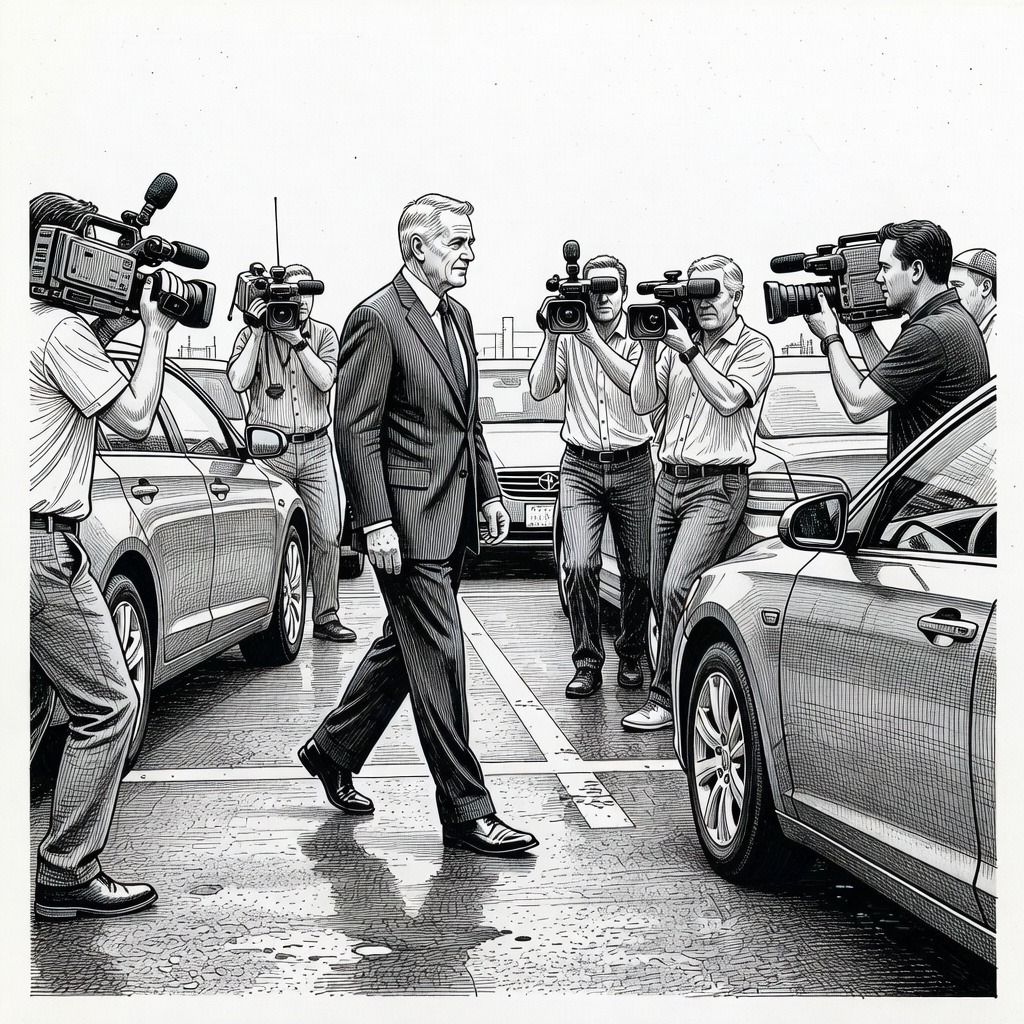
• Check on Institutional Power Prioritizes the physical safety and civil liberties of protesting voices against institutional authority. Interprets Kotlikoff maneuvering a vehicle through a crowd—resulting in a demonstrator shouting their foot was run over—as a reckless prioritization of executive convenience over basic physical safety. Views this vehicular movement not as a defensive retreat, but as an act of institutional violence meant to physically brush aside dissent.
• Shielding Legitimate Dissent Values direct democratic accountability and the necessity of challenging the status quo. Rejects the administration's framing of being followed, filmed, and questioned in a parking lot as "harassment" or "intimidation." Instead, views these actions by Students for a Democratic Cornell as legitimate, essential tactics to force engagement from an insulated leadership that routinely uses suspensions to silence nonviolent protesters.
• Risk of Internal Whitewashing Fears that internal administrative systems are inherently biased toward protecting the institution and its executives at the expense of students. Demands an independent investigation because relying on the university to police its own president while simultaneously penalizing demonstrators creates a systemic conflict of interest. Warns that labeling activists as "banned" or "disruptive" is a convenient pretext to justify cracking down on protected speech.
How it may affect me
As a U.S. reader:
• In the short term, the public could see universities tighten campus security and strictly enforce trespassing policies to prevent non-students and previously banned individuals from participating in campus demonstrations.
• Long-term administrative policies may be revised to clearly distinguish protected free speech from harassment, potentially altering the physical tactics that activists are permitted to use during protests.
• The demand for independent inquiries could establish new accountability standards across institutions, shifting how universities evaluate the safety measures and physical responses of executives during crowd confrontations.
• Stricter enforcement of suspensions and behavioral codes may become standard practice to deter perceived intimidation, directly impacting the academic standing and civil liberties of students involved in demonstrations.