
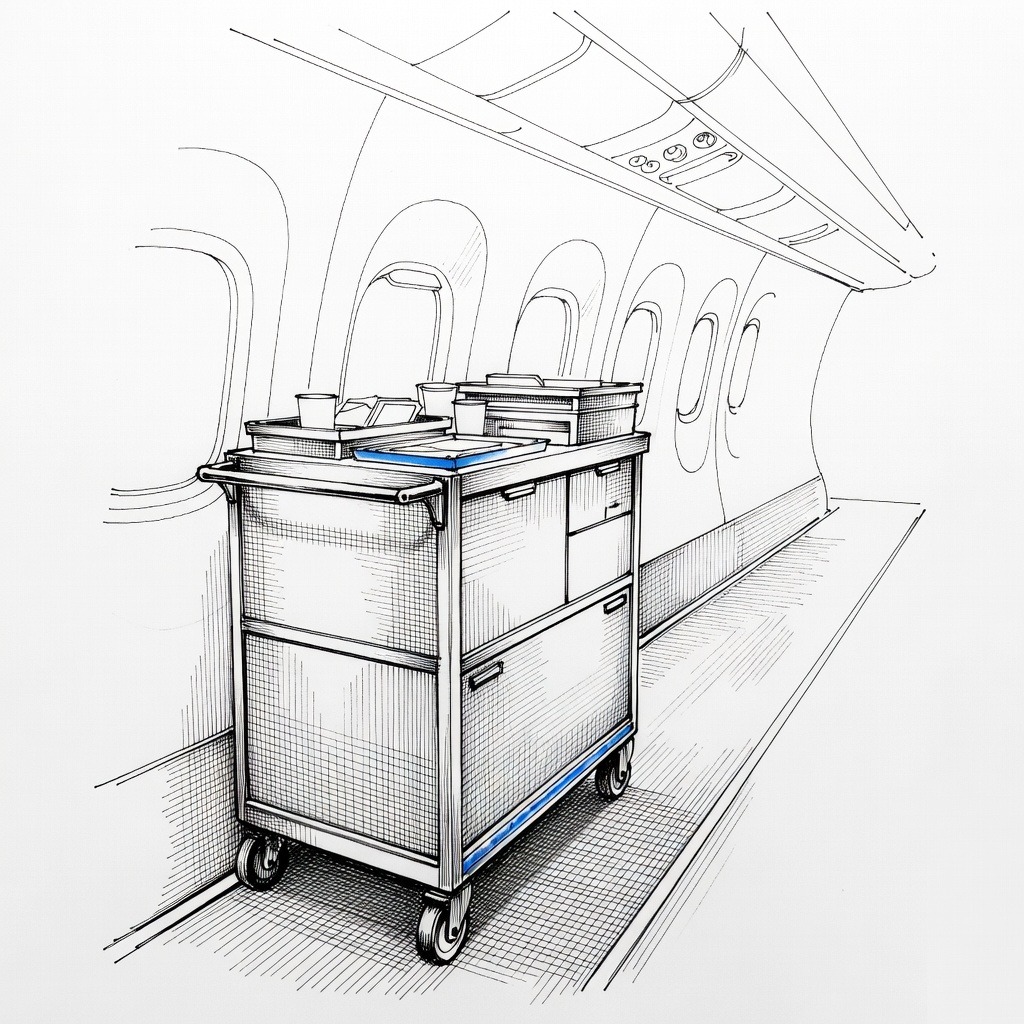
AI-generated illustration. Visual interpretation does not represent real individuals or scenes.
Delta Air Lines to End Food and Beverage Service on Flights Under 350 Miles
2026-05-06
The BareStory
Delta Air Lines will eliminate food and beverage service in standard cabins for flights under 350 miles, effective May 19. First-class passengers on these shorter routes will be exempt from the change and will continue to receive full service.
The airline stated the policy adjustment is designed to establish a more consistent experience across its network. According to the company, the change will halt service on approximately nine percent of its flights, while 14 percent of daily departures—those covering 350 miles or more—will gain full service. Delta also affirmed that flight crews will remain visible and available to assist passengers on the affected routes.
The service reduction occurs alongside broader industry shifts. Analysts indicate that airlines are increasingly implementing cost-cutting measures in response to rising jet fuel prices and reduced market competition following the recent collapse of Spirit Airlines.
Delta's new 350-mile threshold is higher than those of other major carriers. Currently, American Airlines and Southwest Airlines provide service on flights exceeding 250 miles, while United Airlines sets its minimum threshold at 300 miles.
The policy update has generated a divided response among travelers. Critics argue the move prioritizes cost-cutting and unfairly squeezes passengers, while supporters note that flight crews frequently lack sufficient time to complete beverage services on trips under 350 miles.
Left Perspective
Capitalize on Market Consolidation
Entrench Cabin Class Inequity
Camouflage Extractive Cost Cuts
Right Perspective
Optimize Short-Haul Logistics
Absorb Macro-Economic Shocks
Reallocate High-Value Resources
Left Perspective
• Capitalize on Market Consolidation
The reduction of standard service directly reflects monopolistic opportunism following the collapse of Spirit Airlines. Without robust low-cost competitors to anchor industry standards, legacy carriers face zero market penalty for degrading the basic product. This move illustrates how consolidated corporate power extracts higher margins from captive consumers rather than innovating or competing on baseline quality.
• Entrench Cabin Class Inequity
Exempting first-class passengers from this May 19 policy exposes the logistical excuse regarding time constraints as fundamentally hollow. By preserving full amenities for premium ticket holders while stripping them from the standard cabin, the airline is aggressively reinforcing a tiered class system. The underlying priority is protecting the luxury experience for elite consumers while systematically eroding the baseline dignity and value for average travelers.
• Camouflage Extractive Cost Cuts
Framing a service elimination across nine percent of flights as a drive for "consistency" is a textbook corporate obfuscation of pure cost-shifting. Pushing the service threshold to 350 miles—well above the 250 to 300-mile standards of American, Southwest, and United—forces the consumer to individually bear the burden of rising jet fuel prices. The overarching threat is a race to the bottom where basic passenger amenities are continually sliced away to artificially inflate corporate balance sheets.
Right Perspective
• Optimize Short-Haul Logistics
Removing beverage service on flights under 350 miles is a necessary operational correction to physical time constraints. Flight crews frequently lack the necessary runway-to-descent window to safely and effectively complete a full standard cabin service on brief routes. Prioritizing crew visibility and general assistance over a rushed, chaotic beverage cart delivery ultimately yields a safer and more orderly cabin environment.
• Absorb Macro-Economic Shocks
This policy adjustment represents responsible fiscal stewardship in an environment of escalating operational expenses. Facing rising jet fuel prices and broader industry volatility, the airline must implement surgical cost-cutting measures to maintain systemic stability. Trimming high-overhead, low-yield operations on brief hops prevents these severe macro-economic pressures from necessitating aggressive base fare hikes for all passengers.
• Reallocate High-Value Resources
Establishing a 350-mile threshold allows the carrier to deploy its capital and labor where it generates the highest return on operational investment. Upgrading 14 percent of longer daily departures to full service proves this is a strategic reallocation toward routes where service matters most. Retaining first-class amenities simply honors the market reality that premium pricing dictates premium product differentiation, ensuring the overarching business model remains financially sound.
How it may affect me
As a U.S. reader:
• Starting May 19, standard cabin passengers on Delta flights under 350 miles will no longer receive food or beverage service, though flight crews will remain available in the cabin for general assistance.
• Travelers on longer Delta flights of 350 miles or more will see increased amenities, as the airline is reallocating resources to provide full service on these longer daily departures.
• Consumers purchasing first-class tickets on affected short-haul routes will retain full service, resulting in a more noticeable contrast in the onboard experience between premium and economy seating.
• In the short term, standard cabin flyers may avoid aggressive base fare hikes, as the airline uses these service reductions to offset escalating operational costs like rising jet fuel prices.
• Over the long term, travelers might experience a broader industry trend of reduced baseline flight amenities, as the recent collapse of Spirit Airlines leaves major carriers with less competitive pressure to maintain standard economy perks.