
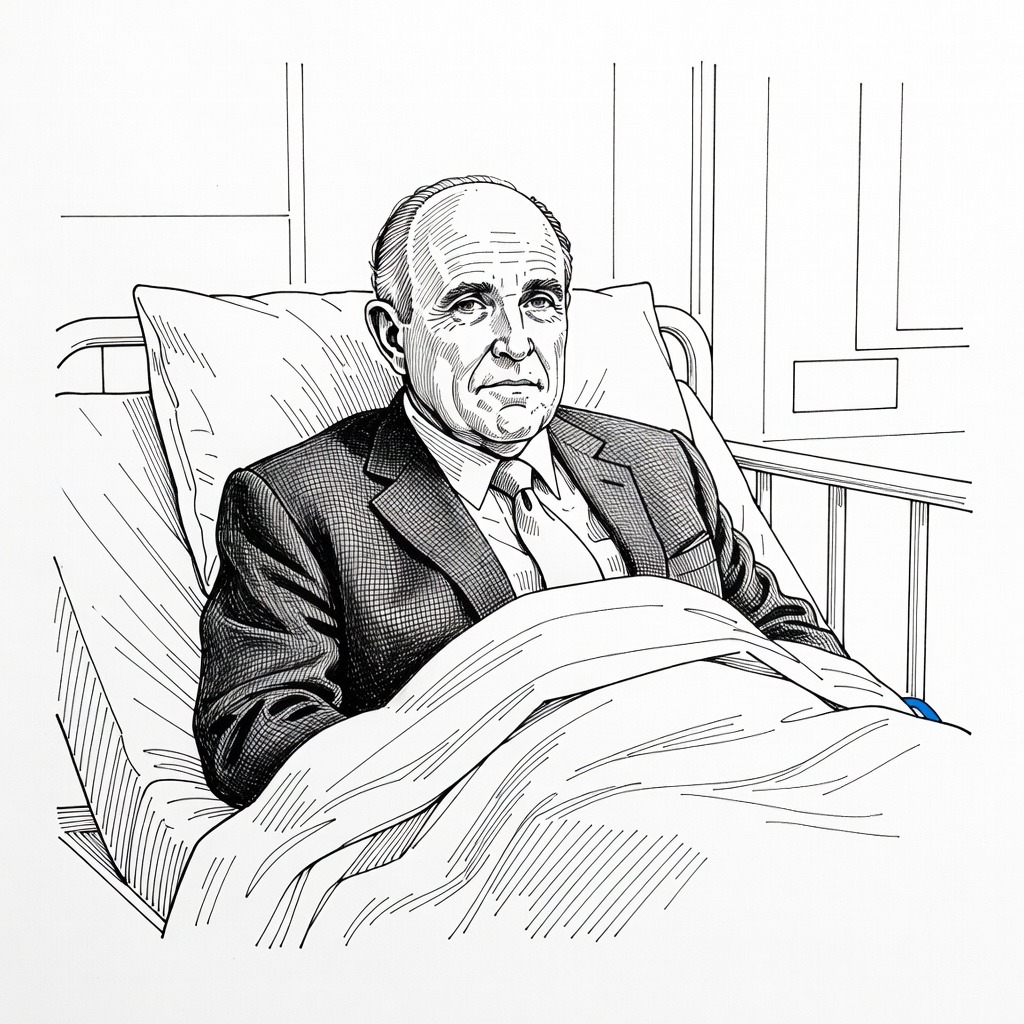
• Enforcing Democratic Institutional Accountability Government accountability demands that no individual is insulated from the consequences of subverting electoral systems. The Left views Giuliani’s disbarment in New York and Washington, D.C., alongside the $150 million defamation judgment, as essential mechanisms for protecting vulnerable citizens—like the Georgia election workers—from institutional abuse. Holding a former national figure legally responsible affirms that the justice system can successfully defend democratic processes against high-level manipulation.
• Rejecting Weaponized Victimhood Narratives Social progress requires a foundation of shared, objective reality rather than partisan distortion. When former President Trump utilizes Giuliani’s hospitalization to blame Democrats and reiterate claims of election cheating, Reformers interpret this as a dangerous deflection tactic. This rhetorical strategy attempts to replace factual legal accountability with a manufactured narrative of political persecution, threatening the public’s trust in verified election outcomes.
• Exposing the Cost of Complicity The historical arc of Giuliani’s career serves as a stark cautionary tale regarding the erosion of institutional integrity. While acknowledging his past role in the 9/11 response, the Left focuses on his subsequent indictments in Georgia and Arizona as proof that prioritizing proximity to power over the rule of law corrupts public servants. The ultimate risk here is the normalization of electoral interference, demonstrating how past civic contributions cannot excuse present-day attacks on the constitutional status quo.
How it may affect me
As a U.S. reader:
• In the short term, public confidence in election systems may continue to be impacted as political figures use the news of this hospitalization to publicly reiterate claims of electoral cheating.
• Long-term public trust in the U.S. legal system could be shaped by whether citizens view the nearly $150 million defamation judgment as a necessary protection for vulnerable election workers or as a weaponized effort to bankrupt a political opponent.
• The enforcement of disbarment and state-level indictments against a former national leader may provide long-term assurance to the public that legal institutions can effectively hold powerful individuals accountable for electoral interference.
• The contrast between Giuliani's recognized health sacrifices during the 9/11 attacks and his current legal standing may impact the future pool of public servants, potentially discouraging individuals from taking decisive action if they fear subsequent political and financial destruction.