
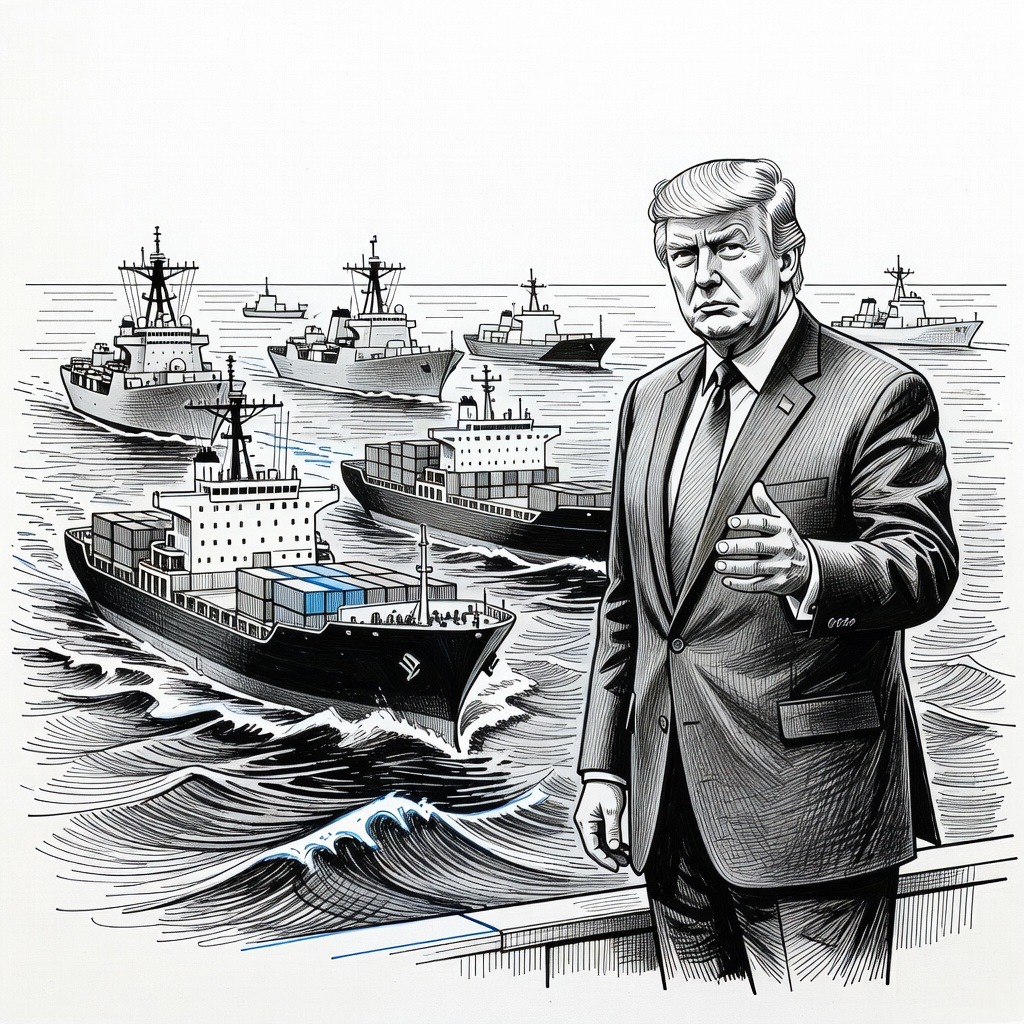
• Gamble of Unilateral Escalation Launching "Project Freedom" with 15,000 service members and a massive naval presence is viewed as a dangerous accelerant in an already volatile region. By enforcing a strict blockade and flooding the strait with warships and drones, the strategy invites the exact kinetic responses it claims to prevent. Iranian commander Ali Abdollahi’s immediate warning that foreign forces will face attacks illustrates how aggressive military posturing predictably hardens adversarial resistance.
• Prioritizing Diplomatic Off-Ramps Genuine stability is achieved through negotiation rather than overwhelming military theater. The Pakistani-mediated release of the 22 MV Touska crew members serves as a vital confidence-building measure that intrinsically lowers the regional temperature. The fact that Iran is actively reviewing a U.S. counter-proposal proves that mediated dialogue and measured concessions can yield tangible conflict resolution without risking human lives.
• Catalyst for Asymmetric Warfare Heavy-handed militarization fundamentally risks sparking an uncontrolled regional conflict through miscalculation. The drone strikes on the Emirati energy tanker highlight how conventional naval blockades inevitably push adversaries toward unpredictable, asymmetric retaliation. Relying on overwhelming force creates a perpetual cycle of provocation, ultimately threatening the very commercial shipping lanes the operation purports to protect.
How it may affect me
As a U.S. reader:
• The deployment of 15,000 U.S. service members to the Strait of Hormuz places American military personnel and their families at immediate risk of exposure to kinetic attacks or asymmetric warfare.
• In the short term, the ability of U.S. forces to successfully escort vessels and deter threats will directly impact global economic stability and the uninterrupted flow of commercial shipping.
• In the long term, enforcing a strict naval blockade and increasing military presence risks drawing the United States into a broader, uncontrolled regional conflict if escalations or miscalculations occur.
• Ongoing diplomatic mediations and the current Iranian review of a U.S. counter-proposal could ultimately determine whether the United States faces an extended military commitment in the region or achieves a de-escalation of hostilities.