
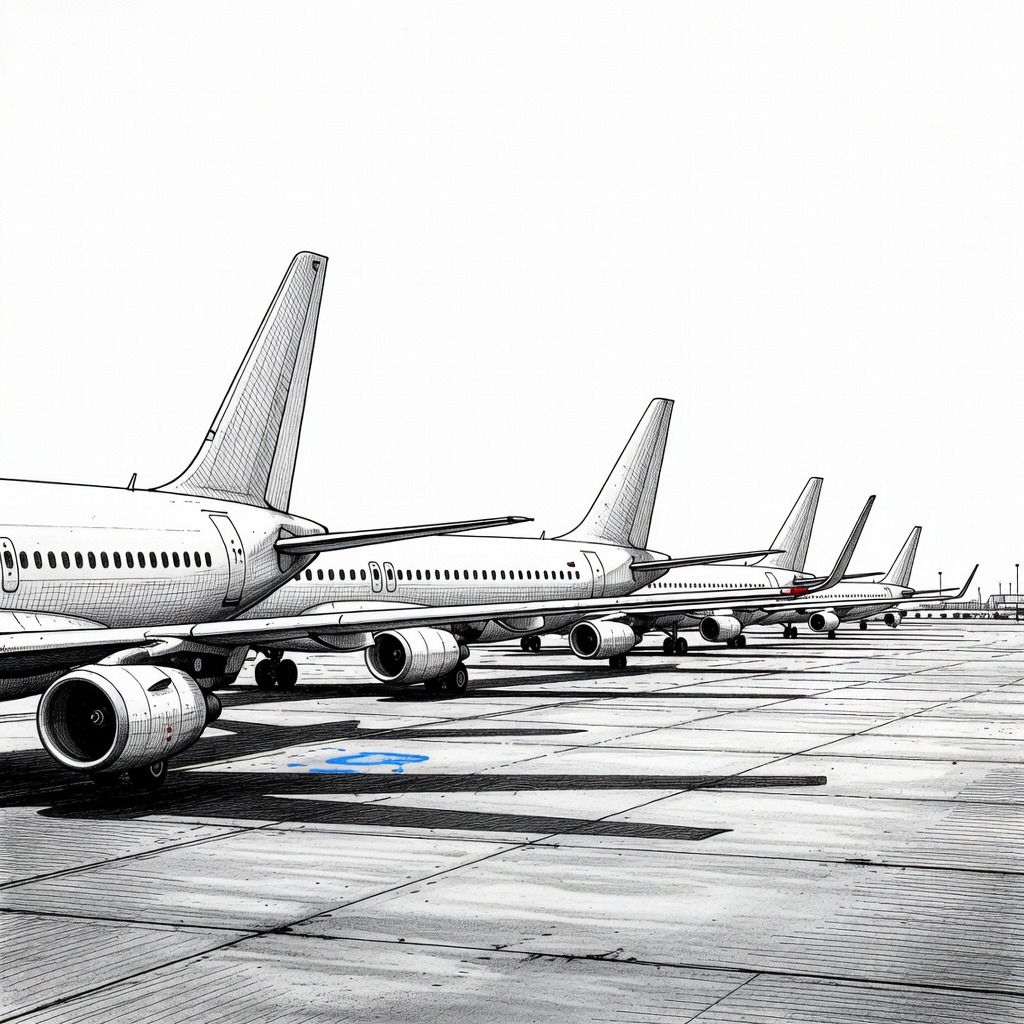
AI-generated illustration. Visual interpretation does not represent real individuals or scenes.
Spirit Airlines Ceases All Operations Following Failed Federal Rescue Deal
2026-05-02
The BareStory
Spirit Airlines has immediately shut down all operations, canceling all scheduled flights and instructing customers not to travel to airports. The sudden closure, which eliminates approximately 17,000 jobs, comes after the carrier failed to secure a $500 million federal rescue deal.
The airline stated that business pressures, increased oil prices, and a lack of additional funding forced the liquidation. While the federal administration indicated a final bailout proposal had been offered, the carrier was unable to reach the necessary agreement with bondholders to finalize the financial lifeline. The shutdown marks Spirit's second bankruptcy process in less than a year.
According to the airline, customers who purchased tickets directly with a credit or debit card will be issued automatic refunds, while travelers who used third-party agencies must request refunds through their booking entities. Compensation for tickets purchased with vouchers or loyalty points will be addressed later through the ongoing bankruptcy proceedings.
To assist stranded passengers and flight crews, the Department of Transportation noted that several major carriers are offering capped ticket prices. United, American, Southwest, JetBlue, and Frontier airlines have introduced rescue fares and expanded capacities. However, several industry experts have warned that the permanent loss of the budget carrier is expected to structurally raise airfares across the broader market.
Left Perspective
Prioritizing Capital Over Labor
Shielding the Corporate Treasury
Eradicating Market Affordability Defenses
Right Perspective
Terminating Artificial Market Life
Enforcing Contractual Financial Order
Catalyzing Natural Market Corrections
Left Perspective
• Prioritizing Capital Over Labor
The inability to finalize the $500 million federal rescue deal underscores a systemic flaw where financial leverage supersedes human livelihoods. Because bondholders refused to reach an agreement on the final bailout proposal, 17,000 employees were instantly stripped of their jobs. This outcome reflects a structural failure where the interests of creditors are insulated while the working class absorbs the ultimate cost of corporate liquidation.
• Shielding the Corporate Treasury
The immediate shutdown and subsequent refund process disproportionately burden the most vulnerable consumers by trapping their assets in bureaucratic limbo. While direct card purchases receive automatic refunds, passengers relying on vouchers, loyalty points, or third-party agencies are forced to navigate the complex bankruptcy proceedings to be made whole. This hierarchy of repayment prioritizes institutional debt frameworks while treating ordinary travelers as unsecured collateral damage.
• Eradicating Market Affordability Defenses
The permanent liquidation of this budget carrier represents a devastating blow to market accessibility and pricing equity. Industry experts explicitly warn that removing Spirit will structurally raise airfares across the broader market, effectively eliminating competitive downward pressure on prices. Relying on legacy carriers to offer temporary, capped "rescue fares" masks the long-term reality that the aviation sector will become increasingly monopolized, exclusionary, and expensive for everyday consumers.
Right Perspective
• Terminating Artificial Market Life
The collapse of the $500 million federal rescue deal demonstrates necessary fiscal discipline by preventing taxpayer funds from subsidizing chronic corporate insolvency. Enduring a second bankruptcy process in less than a year clearly signals that the airline's underlying business model was fundamentally unsustainable amid rising oil prices and operational pressures. Bondholders correctly executed their fiduciary duty by refusing to extend further capital to an entity incapable of organic profitability.
• Enforcing Contractual Financial Order
The structured dissolution of the airline reinforces the established legal frameworks that govern institutional risk and market stability. Mandating automatic refunds for direct card purchases while routing loyalty points and vouchers through formal bankruptcy proceedings ensures an orderly liquidation rather than an arbitrary scramble for assets. This strict adherence to legal precedent protects the foundational rules of debt markets, ensuring that contractual hierarchies are respected during a collapse.
• Catalyzing Natural Market Corrections
The immediate response from competitors like United, American, Southwest, JetBlue, and Frontier proves that private enterprise is fully equipped to absorb capacity shocks without permanent government intervention. While experts note that fares will structurally increase, this price adjustment reflects the true, un-subsidized economic cost of aviation in an era of intense business pressures. Eliminating an artificially cheap, failing carrier ultimately strengthens the systemic stability and realistic pricing mechanisms of the broader aviation industry.
How it may affect me
As a U.S. reader:
• Passengers with upcoming flights face immediate cancellations, with direct card purchases receiving automatic refunds, while those who used third-party sites, vouchers, or loyalty points will experience delays and must seek compensation through bankruptcy proceedings.
• Stranded travelers have short-term access to temporary, capped rescue fares and expanded flight capacities offered by competitors like United, American, Southwest, JetBlue, and Frontier.
• The national labor market is immediately impacted by the sudden elimination of approximately 17,000 jobs resulting from the airline's closure.
• Taxpayer money will not be utilized to subsidize the insolvent carrier, as the proposed $500 million federal rescue deal was ultimately rejected.
• In the long term, everyday consumers can expect structurally higher airfares across the broader aviation market, as the permanent loss of this budget carrier removes competitive downward pressure on flight prices.