
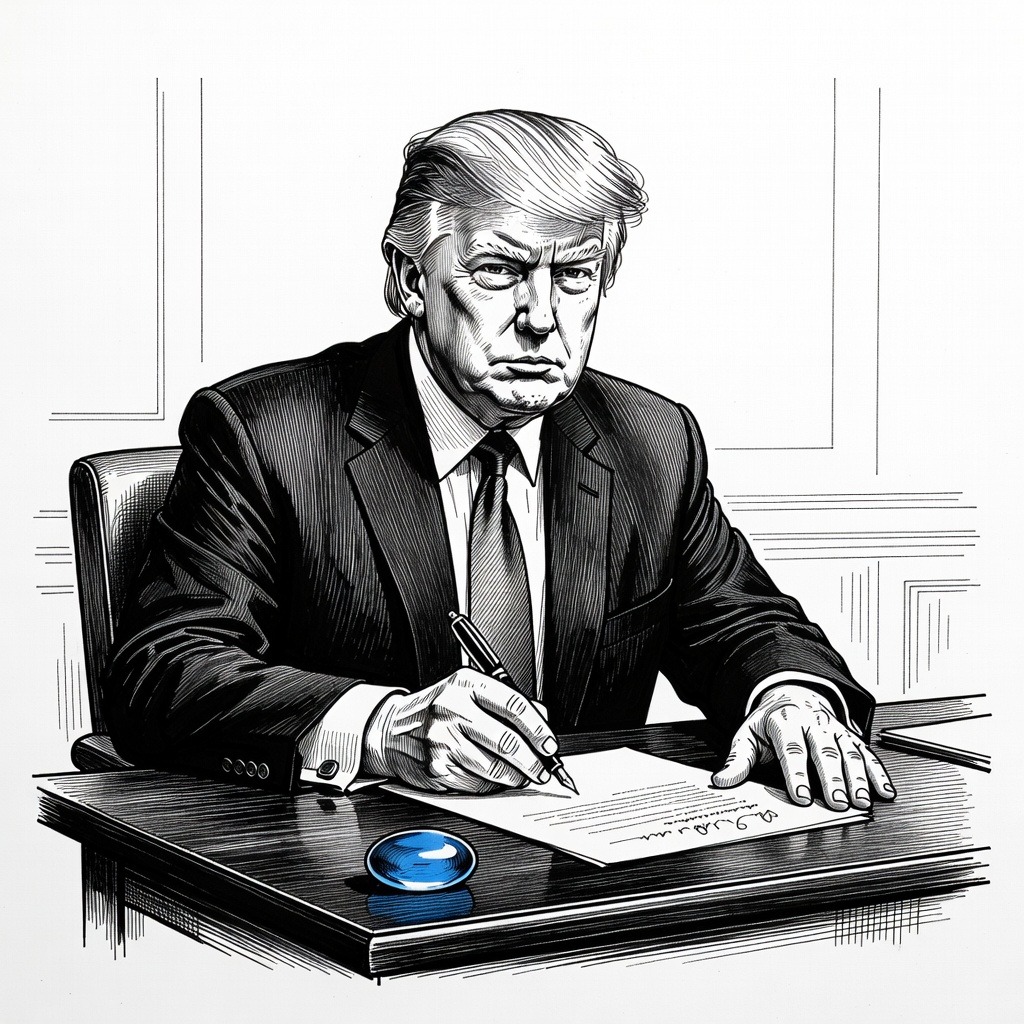
• Shielding Democratic War Powers For institutional reformers, government accountability requires strict adherence to the 1973 War Powers Resolution to prevent unchecked military escalation. Senator Tim Kaine and allied legal scholars view the administration's attempt to "pause" the 60-day clock based on an April 7 ceasefire as a dangerous circumvention of the law. They argue that executive branch maneuvers cannot unilaterally bypass the statutory requirement for legislative consent, viewing this interpretation as a direct assault on democratic oversight.
• Unmasking the Blockade Fiction This camp prioritizes international law and transparency in statecraft, flatly rejecting the assertion that hostilities have effectively terminated. Pointing to the active naval blockade in the Strait of Hormuz and the deployment of 50,000 troops, they emphasize that blockades are universally recognized as acts of war. Treating a massive military encirclement as peacetime is viewed as a deceptive legal fiction designed to mask ongoing, unauthorized coercion.
• Checking Unitary Executive Overreach The underlying fear for reformers is the permanent erosion of constitutional checks and balances regarding military intervention. President Trump’s explicit assertion that the War Powers Resolution is unconstitutional signals a push toward a unitary executive model capable of waging indefinite shadow wars. They warn that allowing the Department of War to dictate hostility definitions without Congress risks rendering the legislative branch entirely obsolete in matters of international conflict.
How it may affect me
As a U.S. reader:
• In the short term, 50,000 American service members will remain deployed in the Middle East to enforce an active naval blockade, keeping these troops in an operational, combat-ready posture despite the declared ceasefire.
• The public faces the immediate possibility of a return to active military conflict, as defense officials confirm that U.S. forces are prepared to resume strikes if current peace negotiations with Iran collapse.
• In the long term, the executive branch's move to pause the 60-day statutory clock and its assertion that the War Powers Resolution is unconstitutional could establish a precedent that permanently limits the ability of Congress to oversee, authorize, or halt future military interventions.