
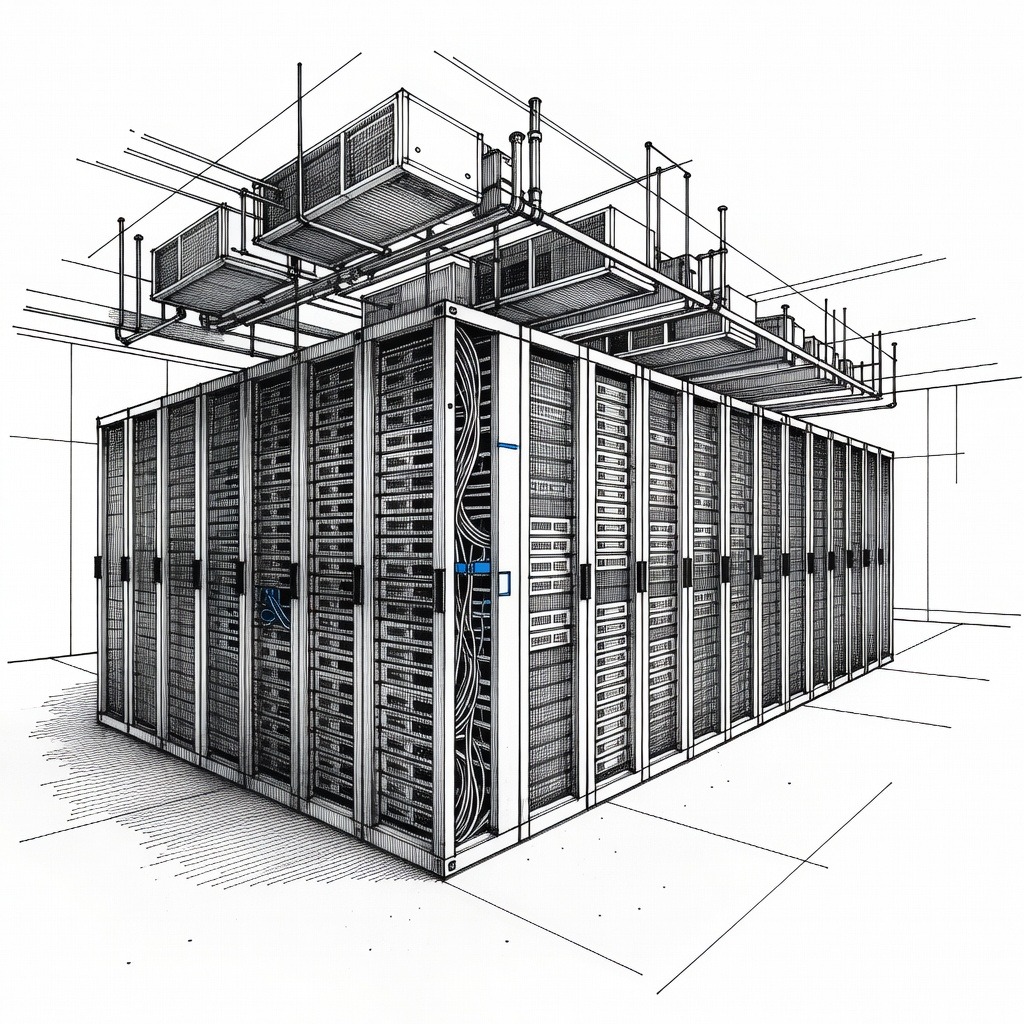
• Consolidation of Digital Architecture Unprecedented cloud infrastructure growth—highlighted by Google Cloud's 63% surge to $20.03 billion and AWS reaching $37.6 billion—signals a dangerous monopolization of the modern economy. Protecting market equity requires preventing a handful of mega-corporations from owning the foundational layers of artificial intelligence. These revenue spikes do not reflect organic economic health, but rather the rent-seeking capacity of an entrenched tech oligopoly extracting wealth from smaller enterprises entirely dependent on their infrastructure.
• Misallocation of Societal Capital The projected $1 trillion in AI capital expenditures by 2027 represents a colossal diversion of global resources driven entirely by corporate self-interest rather than public need. Prioritizing social equity demands scrutinizing how four companies can unilaterally dictate an $800 billion to $900 billion infrastructure buildout by 2026. This massive capital concentration risks exacerbating wealth inequality, as these expenditures prioritize automated corporate expansion over human-centric labor investments or public goods.
• Vulnerability to Speculative Hype The erratic financial responses to these earnings expose the fragility of an economy tethered to speculative technological arms races. Meta's dramatic free cash flow collapse from $26 billion down to $1.2 billion demonstrates how unchecked executive gambles on unproven AI demands can vaporize capital. The resulting S&P 500 highs create an illusion of systemic prosperity, masking the underlying risk that a centralized AI infrastructure bubble could eventually trigger widespread economic fallout for ordinary consumers.
How it may affect me
As a U.S. reader:
• In the short term, the massive expansion of AI data centers will stimulate business and employment opportunities in traditional sectors such as manufacturing, networking, and utilities that provide the necessary power and cooling systems.
• Short-term fluctuations in major technology stocks and the S&P 500 reaching all-time highs will directly impact the value of everyday investment portfolios, 401(k)s, and retirement accounts tied to the broader financial market.
• Over the long term, the concentration of cloud infrastructure ownership among a few large tech companies could leave smaller local enterprises heavily dependent on them, potentially impacting the costs and availability of digital services for consumers.
• The unprecedented projection of $1 trillion in AI capital expenditures introduces a long-term financial vulnerability, where an infrastructure bubble driven by unproven technological demands could eventually burst and trigger broader economic fallout for the general public.