
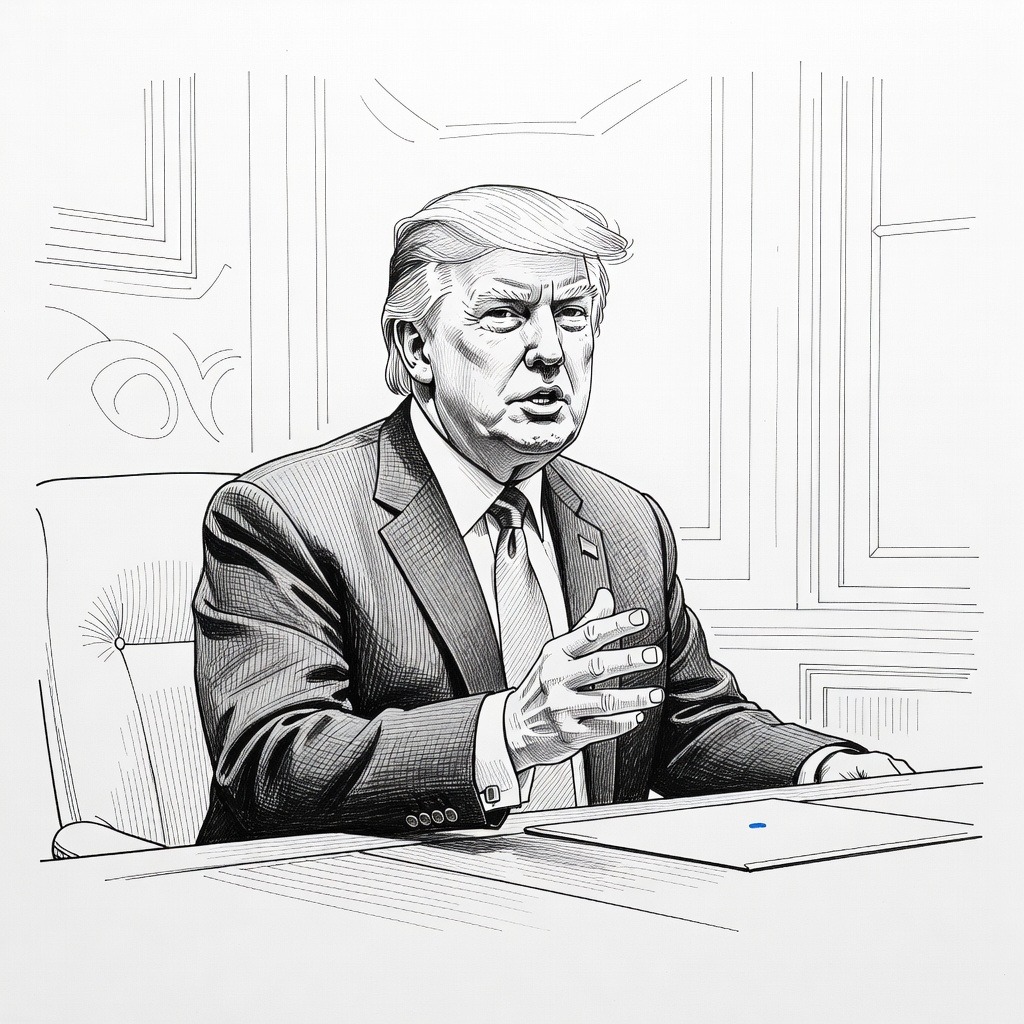
• Demand for Institutional Transparency The contradiction between ongoing official investigations into potential friendly fire and Trump’s premature assertion that law enforcement did not fire the shot highlights a concerning gap in government accountability. Reformers prioritize empirical fact-finding over political narrative, viewing executive attempts to bypass or pre-empt official federal investigations as a threat to institutional integrity. They argue that protecting public trust requires absolute transparency regarding how a heavily armed suspect breached a high-profile Washington event.
• Rejecting Optics Over Protocol Trump’s refusal to wear a protective vest because it would make him "appear heavier" is viewed as a dangerous prioritization of personal vanity over systemic stability. For this camp, ignoring standard security recommendations unnecessarily burdens the civil servants tasked with his protection—evidenced directly by the Secret Service officer who was shot and saved only because they followed protocol and wore a vest. Treating state security as a public relations exercise is seen as reckless behavior that jeopardizes both human life and institutional continuity.
• Escalating Threat to Stability The accumulation of violent incidents—from the Butler rally to the Florida golf club to this latest Washington dinner—signals a severe, escalating crisis in civic stability rather than a platform for projecting political bravado. There is a deep concern that dismissing these repeated, heavily armed breaches as mere occupational hazards normalizes political violence. Reformers fear that treating an assassination attempt involving shotguns and knives as an issue of optics fails to address the urgent, systemic rot of domestic extremism.
How it may affect me
As a U.S. reader:
• Discrepancies between ongoing law enforcement investigations and the president's statements regarding the source of the gunfire may lead to short-term public confusion and impact long-term trust in government transparency.
• The accumulation of violent incidents and armed security breaches at public events signals an escalating trend in political violence, potentially affecting long-term civic stability and altering public perceptions of safety at high-profile gatherings.
• The executive decision to refuse protective gear due to visual optics may increase the immediate physical risks and operational burdens placed on the civil servants and law enforcement personnel tasked with securing public spaces.
• The swift detention of the armed suspect and the administration's commitment to maintaining standard routines without adopting a bunker mentality may offer short-term reassurance to the public that judicial systems and daily government operations remain robust and uninterrupted.