
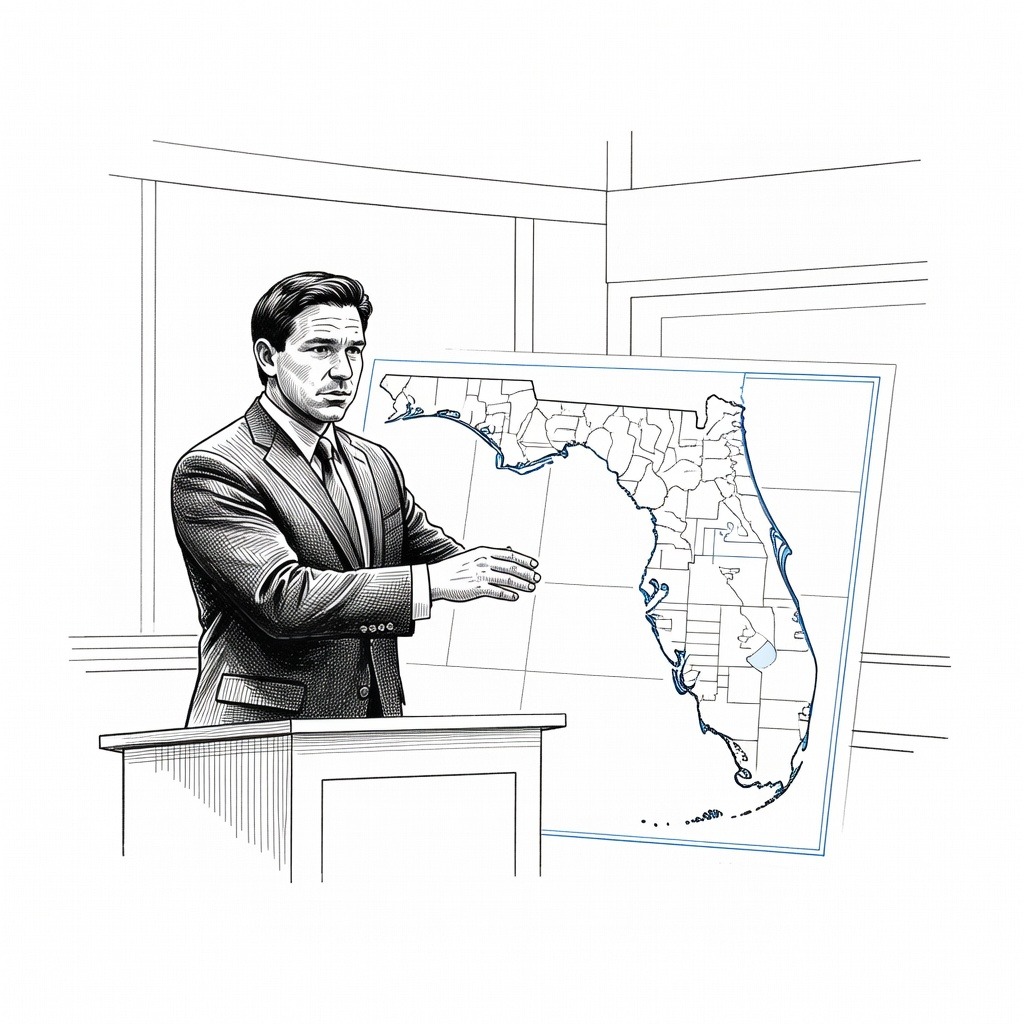
• Shielding Minority Voting Power Prioritizing civil liberties and social equity, this camp views the dismantling of racial redistricting requirements as a direct assault on minority representation. The defense of the 2010 Fair Districts Amendments is rooted in the belief that these laws are essential shields against systemic disenfranchisement. For reformers, state-level mandates are required to protect vulnerable populations from having their voting power diluted by a dominant political party.
• Challenging Institutional Power Grabs Interpreting the mid-decade redistricting effort as a subversion of government accountability, Democrats like State Senator Carlos Guillermo Smith view the rushed legislative process as inherently illegitimate. The projected four-seat Republican gain is seen not as a reflection of voter will, but as the result of an intentional, illegal gerrymander designed to protect the institutional status quo. This camp argues that altering maps outside standard census cycles deliberately circumvents democratic norms to secure partisan entrenchment.
• Eroding Core Democratic Baselines The reliance on a federal Supreme Court decision regarding Louisiana to bypass Florida’s constitution signals a dangerous erosion of local civil rights protections. Reformers fear that if these new boundaries survive legal challenges, it will establish a precedent where state-mandated minority protections can be unilaterally discarded by those in power. The long-term implication is a structural democratic deficit where a ruling party operates without binding oversight or accountability to fair representation.
How it may affect me
As a U.S. reader:
• In the short term, the national balance of power in the United States Congress may shift, as the approved map could allow the Republican Party to gain up to four additional seats ahead of the 2026 midterm elections.
• Florida residents will experience changes to their congressional districts, which will practically result in either representation adapted to recent population growth or the dilution of voting power for minority populations.
• In the long term, expected legal challenges against the map will test whether state-level minority voting protections and anti-gerrymandering rules can be legally overridden by federal rulings, potentially affecting civil rights standards in other states.
• The survival or failure of this legislation in court will also establish a long-term legal precedent regarding the validity of mid-decade redistricting efforts and the shift toward strictly colorblind map-drawing frameworks.