
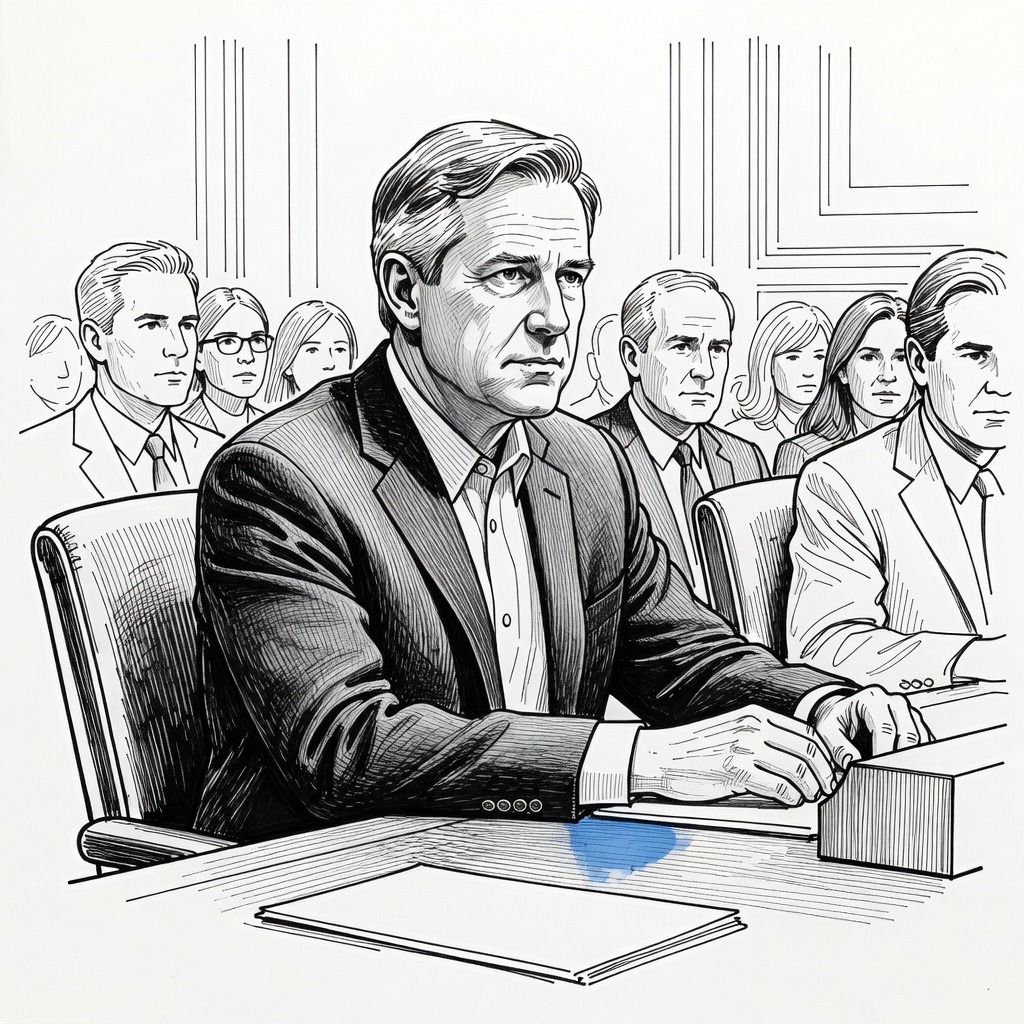
• Shielding the Autonomy Firewall Government accountability relies on absolute separation between executive ambitions and monetary policy. The Justice Department investigation into Jerome Powell over a headquarters renovation is viewed not as routine oversight, but as a weaponized pressure campaign designed to coerce favorable benchmark interest-rate decisions. By echoing Senator Elizabeth Warren's and Powell's own characterizations of the probe, this camp perceives an aggressive executive branch attempting to fracture the central bank's historical independence.
• Skepticism of Partisan Capture Institutional integrity is prioritized over verbal promises made during confirmation hearings. Despite Kevin Warsh’s explicit testimony asserting he would maintain strict independence and has not faced presidential pressure, the rigid 13-11 party-line vote signals a fundamental distrust of the nomination's underlying intent. This side views the transition as a political maneuver rather than an administrative necessity, fearing the nominee will ultimately act as a proxy for the executive branch.
• Gamble with Economic Guardrails The overarching fear is the erosion of long-term economic stability in favor of short-term political expediency. If the Federal Reserve is subjected to coordinated pressure campaigns, its ability to objectively manage monetary policy without political interference is severely compromised. This camp warns that breaking these institutional guardrails risks fostering politically engineered rate decisions that prioritize an administration's optics over systemic financial health.
How it may affect me
As a U.S. reader:
• In the short term, advancing the nomination helps prevent a leadership vacuum when the current chair's term concludes on May 15, ensuring the central bank avoids administrative paralysis and maintains operational stability during upcoming monetary policy meetings.
• Over the long term, the leadership transition could alter how benchmark interest rates are determined, depending on whether the incoming chair maintains strict independence or allows rate decisions to be influenced by executive branch pressure.
• Long-term systemic financial health and economic stability could be impacted if the central bank's institutional guardrails are weakened, creating a risk that future monetary policy might be engineered for political expediency rather than objective financial management.