
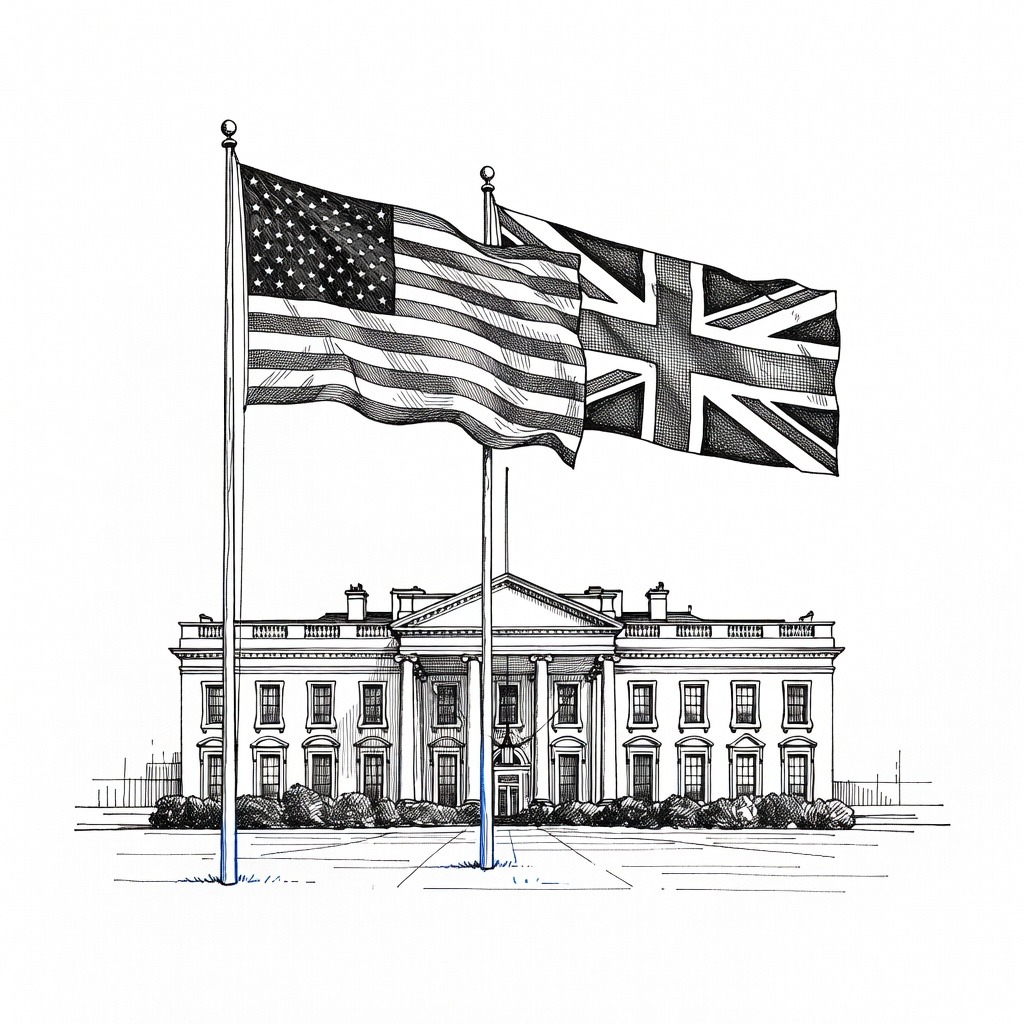
• Rejecting Executive Monarchism Government accountability relies on a strict firewall between democratic leadership and autocratic posturing. The White House officially framing the President and the British monarch as "two kings" triggers immediate alarms over the normalization of unchecked, centralized executive power. Reformers view the Republican accusations of hypocrisy not as a valid critique, but as a deliberate attempt to conflate an elected constitutional office with unaccountable sovereign rule. The inherent risk is the gradual erosion of democratic checks and balances through the casual, public embrace of monarchical imagery and status.
• Condemning Transactional Diplomacy Social equity and consumer protection require foreign policy to operate independently of domestic corporate influence. The prominent inclusion of major technology chief executives at the state dinner, paired with the administration's threat of tariffs to shield these tech platforms from the U.K.'s Digital Services Act, suggests diplomacy has been captured by monopolistic interests. Reformers interpret this dynamic as weaponizing international statecraft to protect corporate profit margins rather than advancing mutual democratic goals. The underlying fear is that legitimate foreign regulatory efforts are being actively stifled by executive leverage.
• Masking Multilateral Fractures Global stability demands cohesive, substantive multilateral strategies, particularly regarding volatile issues like Iran policy. Highlighting the ceremonial pageantry of a state dinner and the exchange of historical artifacts serves as an optical distraction from severe ideological rifts on international trade and diplomacy. Reformers see the standing ovation for the King's speech as a ceremonial facade that fails to address the administration's fundamentally combative approach to long-standing global agreements. The long-term implication is a hollowed-out alliance that looks robust in photographs but fractures under the weight of actual geopolitical problem-solving.
How it may affect me
As a U.S. reader:
• Short-term implementations of tariffs against the United Kingdom over its Digital Services Act could alter international trade costs and subsequently affect domestic consumer prices.
• The administration's diplomatic push to shield major U.S. technology companies from foreign regulations may shape long-term digital consumer protections and domestic market policies.
• Long-term national security and defense planning will be directly influenced by the continuation of joint military initiatives like the AUKUS submarine agreement.
• Unresolved differences regarding Iran policy and multilateral trade suggest the U.S. will face long-term diplomatic challenges in addressing broader global security and economic stability.
• Shifting rhetoric around executive legitimacy and monarchical comparisons may gradually alter long-term public expectations regarding presidential authority and domestic checks and balances.