
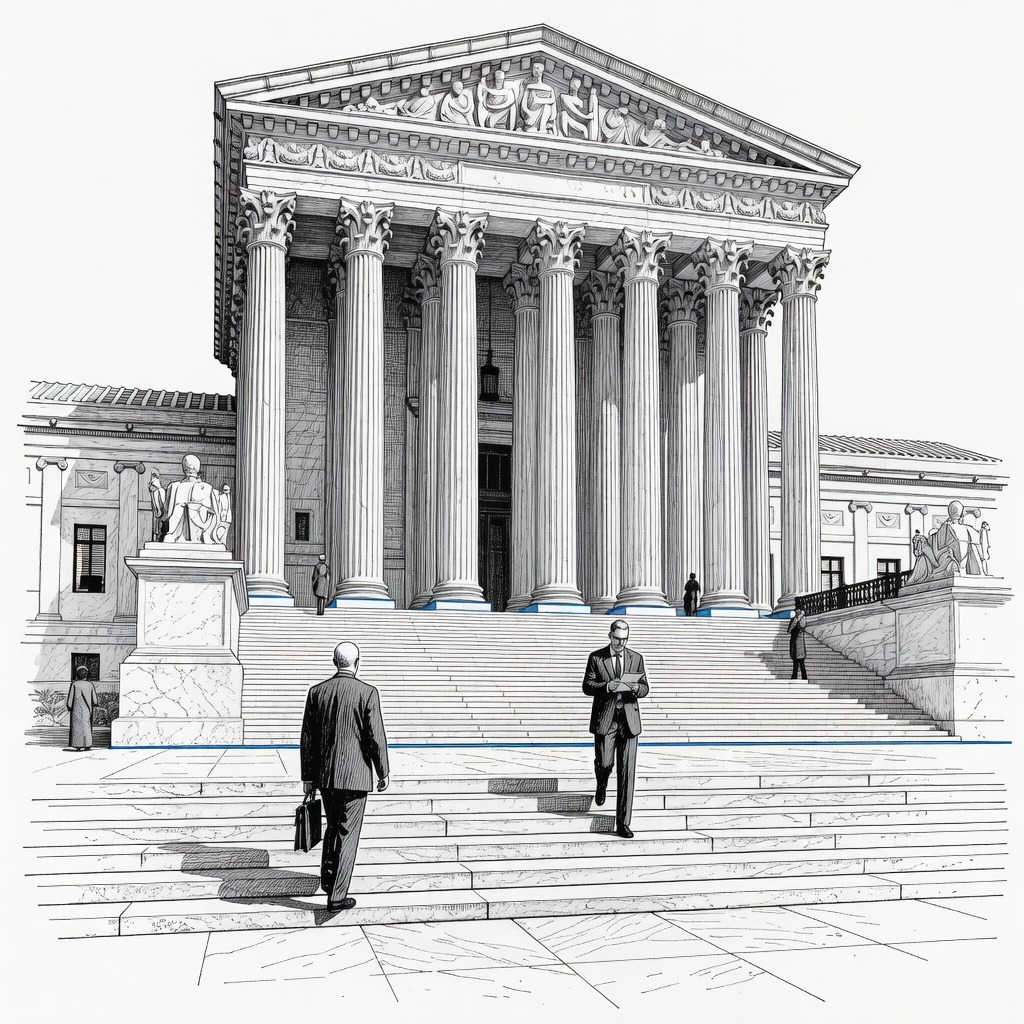
• Nullifying Civil Rights Guardrails Structural fairness dictates that political representation should reflect a population's demographic reality. By replacing the disparate impact framework with a stringent requirement to prove "intentional discrimination," the 6-3 ruling functionally eviscerates Section 2 of the Voting Rights Act. As Justice Kagan’s dissent highlights, demanding explicit proof of discriminatory motive creates an impossible legal standard that successfully shields lawmakers who quietly design maps to dilute minority voting power.
• Weaponizing Equal Protection Doctrine The Equal Protection Clause was historically forged to safeguard marginalized communities against systemic oppression. Using this exact constitutional provision to strike down a map deliberately designed to ensure fair representation—in a state where African Americans comprise a full one-third of the population—turns civil rights law completely upside down. This interpretation treats necessary race-conscious remedies as identical to racial prejudice, willfully ignoring the entrenched systemic inequities the map sought to correct.
• Greenlighting Systemic Disenfranchisement Robust federal oversight operates as the essential backstop against local and state-level abuses of democratic power. By removing previous federal constraints on state legislatures regarding redistricting, this ruling issues a blank check to state governments seeking to consolidate partisan power at the expense of minority voters. The immediate, long-term risk is a cascading erosion of minority representation in Congress, as states are now emboldened to draw deeply inequitable maps without fear of federal intervention.
How it may affect me
As a U.S. reader:
• Citizens and civil rights groups challenging future voting maps will face a significantly higher legal burden, as they must now prove explicit, intentional discrimination by lawmakers rather than showing statistical evidence of reduced minority voting power.
• Over the long term, voters will see state legislatures exercise greater authority and face fewer federal constraints when drawing congressional and local district boundaries.
• Minority voters may experience a long-term reduction in political representation, as state governments are no longer required by federal law to create majority-minority districts that reflect population demographics.
• In the short term, voters participating in the upcoming November midterm elections may face uncertainty regarding their specific district boundaries, as the ruling's immediate effect on contested maps outside of Louisiana remains unclear.