
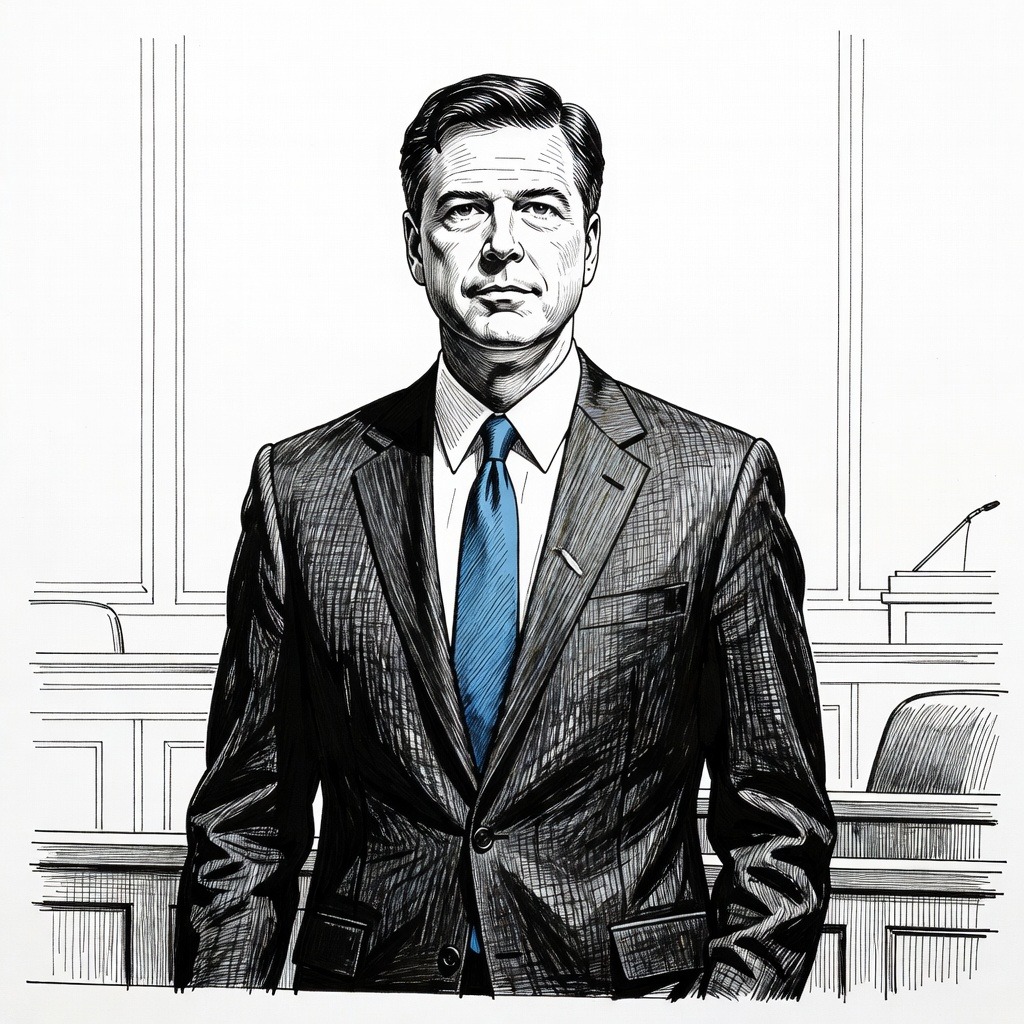
• Shield Against Executive Retribution The primary concern is protecting democratic norms from the weaponization of the justice system against political adversaries. By pursuing criminal charges over an ambiguous "86 47" seashell photograph, the administration appears to be directing Acting Attorney General Todd Blanche to execute a political vendetta. The fact that a previous indictment against Comey was dismissed due to an unlawfully appointed prosecutor reinforces the suspicion of systemic, retributive overreach rather than a genuine pursuit of justice.
• Safeguarding Protected Political Speech Civil liberties dictate that political rhetoric, even when distasteful to the ruling party, must remain insulated from criminal prosecution. The First Amendment defense here is anchored in the 2023 Supreme Court ruling requiring proof of a "conscious understanding" that a message would be perceived as a true threat. Because variations like "86 45" and "86 46" are normalized idioms frequently used on political merchandise, prosecuting this specific post is viewed as an arbitrary criminalization of established colloquial dissent.
• Chilling Effect on Dissent The core risk is the creation of a legal precedent that empowers the executive branch to parse metaphors and slang as actionable assassination threats. If a standard political idiom results in federal threat charges and interstate commerce indictments, ordinary citizens and high-profile critics alike will self-censor out of fear. This transforms the federal justice apparatus from an impartial arbiter of law into a tool of intimidation designed to silence opposition.
How it may affect me
As a U.S. reader:
• In the short term, citizens may feel a chilling effect on their public discourse and online expression, potentially self-censoring their use of political slang, metaphors, or phrases common on merchandise out of fear of federal prosecution.
• The outcome of this trial will clarify how the 2023 Supreme Court ruling on true threats applies to the general public, specifically determining the standard of evidence required to prove an individual consciously understood their coded message would be perceived as violent.
• In the long term, a conviction could establish a legal precedent that closes loopholes around plausible deniability, preventing individuals from using ambiguous terms or public slang to bypass federal threat statutes and incite real-world violence.
• The prosecution's approach will likely influence public trust in the federal justice apparatus, either reinforcing confidence that the system holds high-ranking elites to the same legal accountability as ordinary citizens or deepening concerns that the system is being weaponized to target political opponents.