
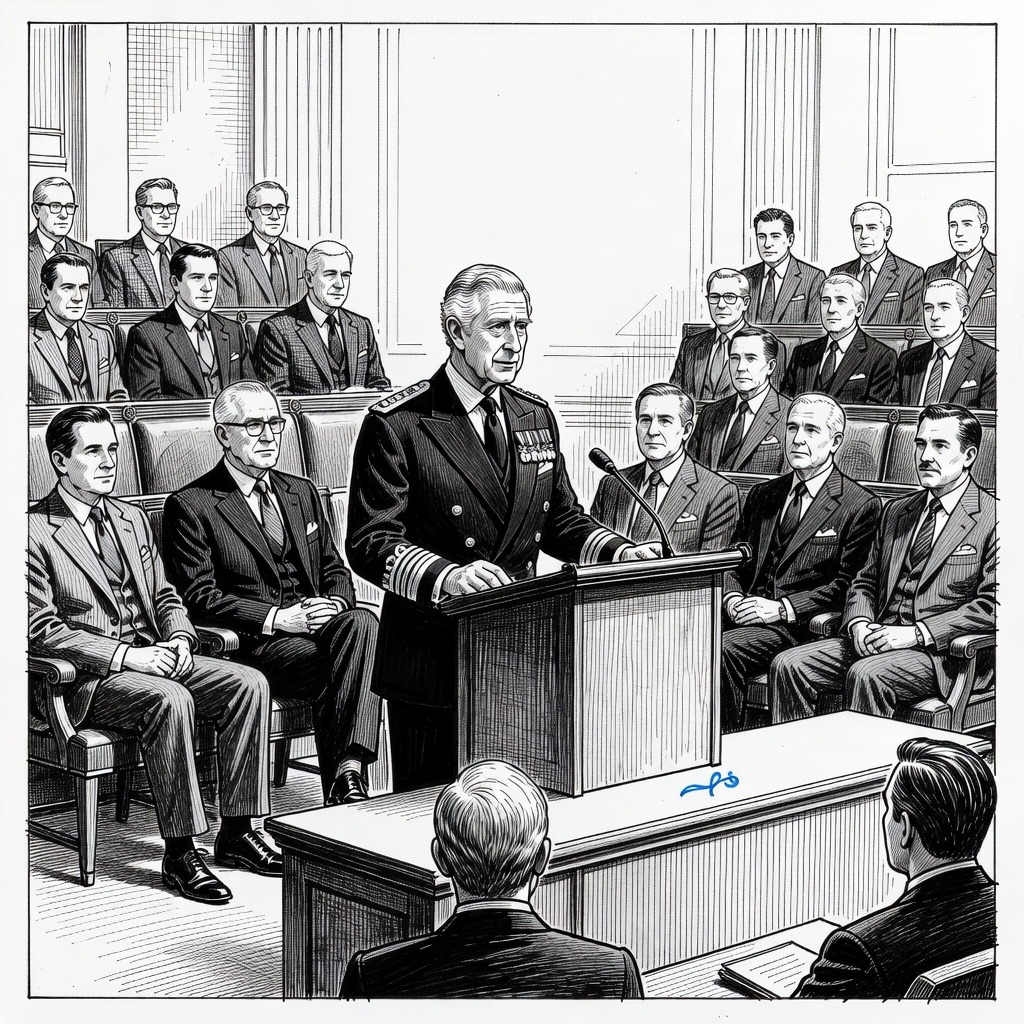
• Shield Multilateral Democratic Institutions Prioritizing multilateralism over isolationism is viewed as essential for maintaining global democratic stability. King Charles’s explicit warning against "inward-looking policies" and his advocacy for NATO and the defense of Ukraine serve as a vital institutional counterweight to nationalist political rhetoric. By elevating transatlantic alliances ahead of the U.S. 250th anniversary, this perspective values collective democratic defense over unilateral action, viewing the speech as a necessary reinforcement of the post-WWII liberal global order.
• Defend Vulnerable Civic Freedoms Protecting civil liberties and ensuring civic accountability are fundamental requirements for democratic survival. The monarch’s deliberate condemnation of the White House Correspondents' Dinner shooting is interpreted as a crucial, high-profile defense of the press and non-violent civic engagement. This camp views the resulting bipartisan standing ovation as a necessary reaffirmation of democratic norms, emphasizing that institutional leaders must actively protect vulnerable civil spaces against the rising threat of domestic extremism.
• Temper Unilateral Geopolitical Escalation Diplomacy and institutional resilience must guide complex geopolitical conflicts to minimize humanitarian and systemic risks. Set against the backdrop of President Trump’s recent ultimatums regarding the war in Iran, the King’s invocation of Prime Minister Keir Starmer’s pragmatism emphasizes that shared endeavors must survive "occasional disagreements." This reflects a deep underlying priority to manage international crises through cooperative restraint and shared resilience rather than unchecked executive brinkmanship.
How it may affect me
As a U.S. reader:
• Continued joint defense initiatives highlighted during the visit, such as F-35 fighter jet production and international submarine partnerships, point to long-term stability and ongoing investment within the domestic defense manufacturing sector.
• Reaffirmed bipartisan commitments to NATO and the defense of Ukraine indicate that U.S. national resources will likely remain dedicated to long-term overseas alliances rather than shifting toward strictly inward-looking or isolationist policies.
• The unified condemnation of the White House Correspondents' Dinner shooting by domestic lawmakers and foreign allies signals a likely short-term reinforcement of domestic security measures to protect vulnerable civic spaces and maintain public order.
• High-level diplomatic discussions regarding the war in Iran may determine whether the U.S. pursues cooperative international restraint or unilateral escalation, directly impacting long-term national security and the risk of broader overseas military engagement.