
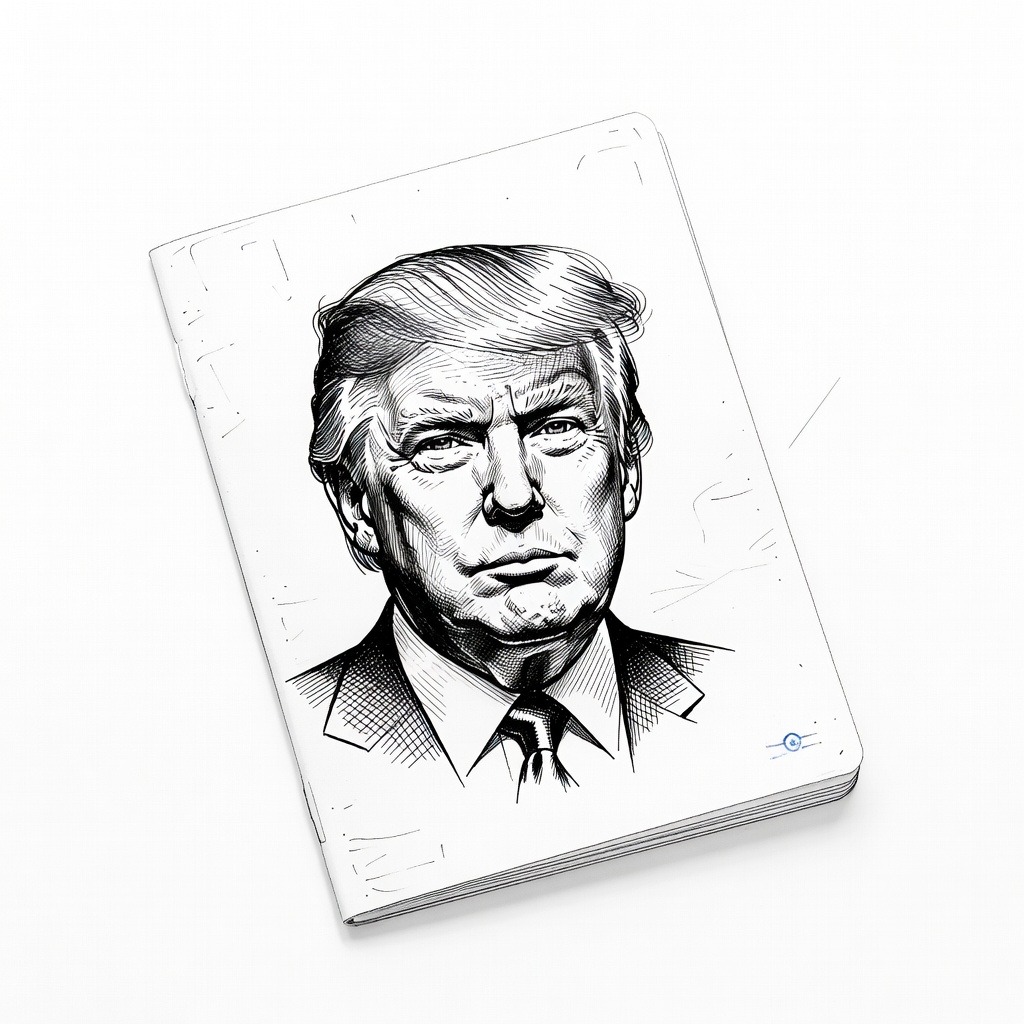
• Corroding Institutional Neutrality The Left prioritizes the strict separation between the state apparatus and individual political leaders. By placing the president’s portrait and signature on the commemorative 250th-anniversary passports—and extending this practice to paper currency and gold coins—this camp perceives a direct threat to government accountability. They argue that official state documents belong to the public rather than the executive, viewing the customization of federal currency and identification as a departure from democratic norms toward autocratic self-aggrandizement.
• Hijacking the Civic Narrative Reformers value collective civic progress and shared history over individual authority. They view the inclusion of the Declaration of Independence alongside the president's likeness as a calculated attempt to intertwine the nation's foundational ideals with a single politician. From this perspective, administration proposals like renaming the John F. Kennedy Center or hosting a Great American State Fair are seen not as inclusive patriotic celebrations, but as maneuvers to convert a nonpartisan national milestone into a taxpayer-funded branding exercise.
• Gambling Institutional Precedent A core priority for this camp is ensuring transparent, standardized, and equitable government operations. The localized rollout of these passports—restricted exclusively to the Washington Passport Agency with an undisclosed production cap—raises concerns about arbitrary bureaucratic execution. The primary long-term risk feared here is the establishment of a precedent where future administrations routinely weaponize the U.S. Mint, the Treasury, and the State Department for personal legacy-building, fundamentally degrading public trust in the neutrality of federal agencies.
How it may affect me
As a U.S. reader:
• In the short term, citizens who apply for a passport at the Washington Passport Agency will automatically receive the commemorative design featuring the president's portrait, while those applying elsewhere or online will continue to receive standard passports.
• Members of the public will eventually handle altered physical money, as the Treasury Department plans to include the president's signature on new paper currency and the U.S. Mint will issue a commemorative gold coin with his image.
• Short-term tourism and local activities in Washington D.C. will be affected by newly planned civic events, providing the public with opportunities to attend a state fair and sporting competitions on the National Mall and White House grounds.
• Over the long term, these initiatives could alter how the public views the neutrality of federal agencies by establishing a practical precedent for future administrations to customize standardized government documents and rename public landmarks to reflect the sitting executive.