
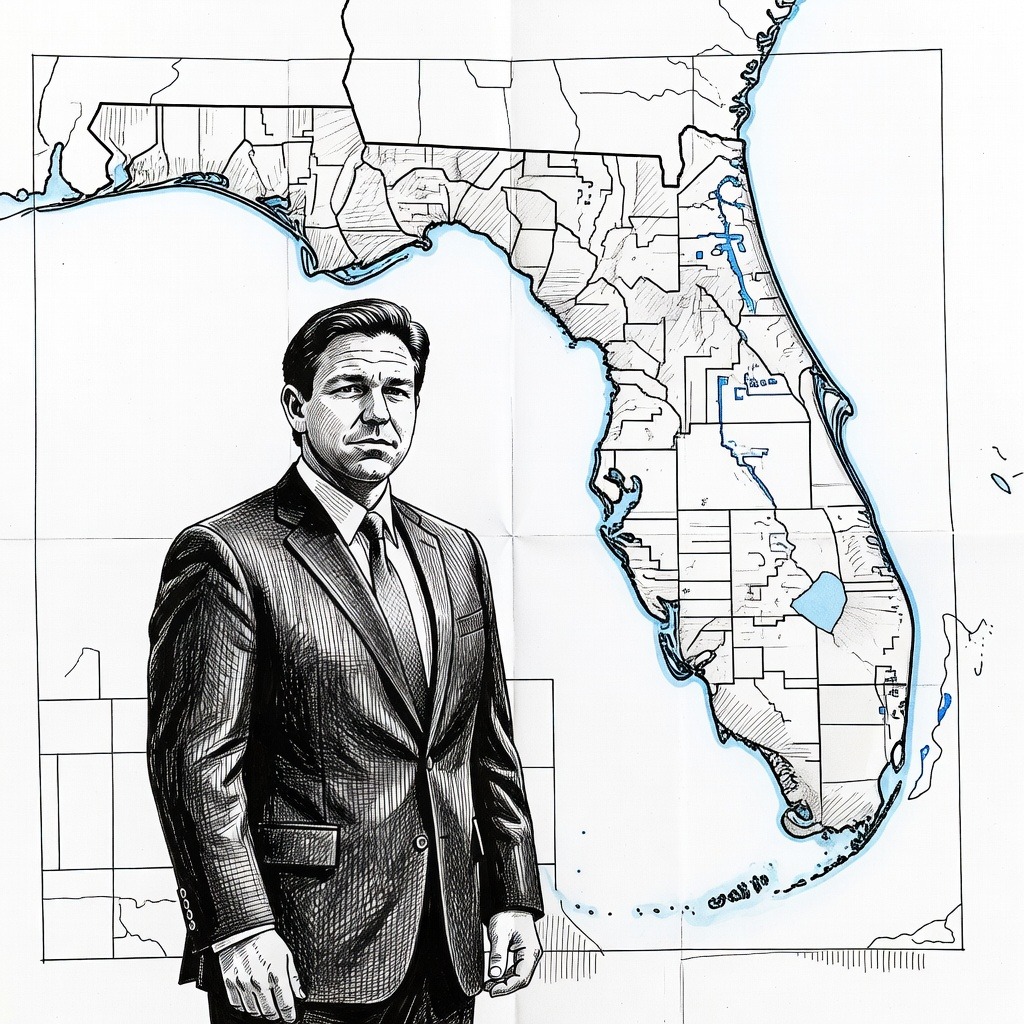
• Defending Minority Voting Power The foundational priority of equitable representation demands safeguarding minority communities against targeted political dilution. Representative Hakeem Jeffries’s accusation that the map violates the 14th Amendment reflects a deep concern that shrinking Democratic-leaning boundaries in Tampa, Orlando, and the southeast coast intentionally marginalizes voters of color. From this viewpoint, the redistricting is not a routine administrative update, but a deliberate dismantling of civil rights and fair electoral access.
• Challenging Executive Power Overreach Democratic accountability requires viewing unilateral mid-decade redistricting with high suspicion, categorizing it as an illegitimate consolidation of authority. Representative Debbie Wasserman Schultz’s characterization of the proposal as an unconstitutional partisan gerrymander highlights the belief that citing a 2020 census undercount is merely a pretext for political extraction. The core logic insists that manipulating district lines to secure up to four additional Republican seats fundamentally subverts the democratic process to engineer predetermined outcomes.
• Mobilizing Legal Accountability Measures Protecting the integrity of the electoral system necessitates aggressive pushback through judicial intervention and persistent political participation. The commitment of Democratic incumbents to seek reelection in newly hostile districts, coupled with impending legal challenges, demonstrates a strategic reliance on institutional checks and balances to fight the status quo. The profound long-term fear is that allowing these maps to stand will normalize mid-decade gerrymandering and permanently erode representative democracy.
How it may affect me
As a U.S. reader:
• A potential shift of up to four congressional seats from Democrats to Republicans in Florida would directly affect the partisan balance of power in the United States House of Representatives leading into the 2026 midterms.
• In the short term, residents in Tampa, Orlando, and the southeast coast will experience adjustments to their congressional district boundaries, which will alter the demographic makeup of their voting areas and change which candidates represent them.
• Impending lawsuits from lawmakers could create long-term national precedents regarding whether mid-decade redistricting to correct census undercounts and the use of race-neutral mapping standards are legally permissible under the 14th Amendment.
• Voters in the Orlando-area district currently represented by Daniel Webster will participate in an open congressional election this November following his retirement, though the seat is projected to remain under conservative control.