
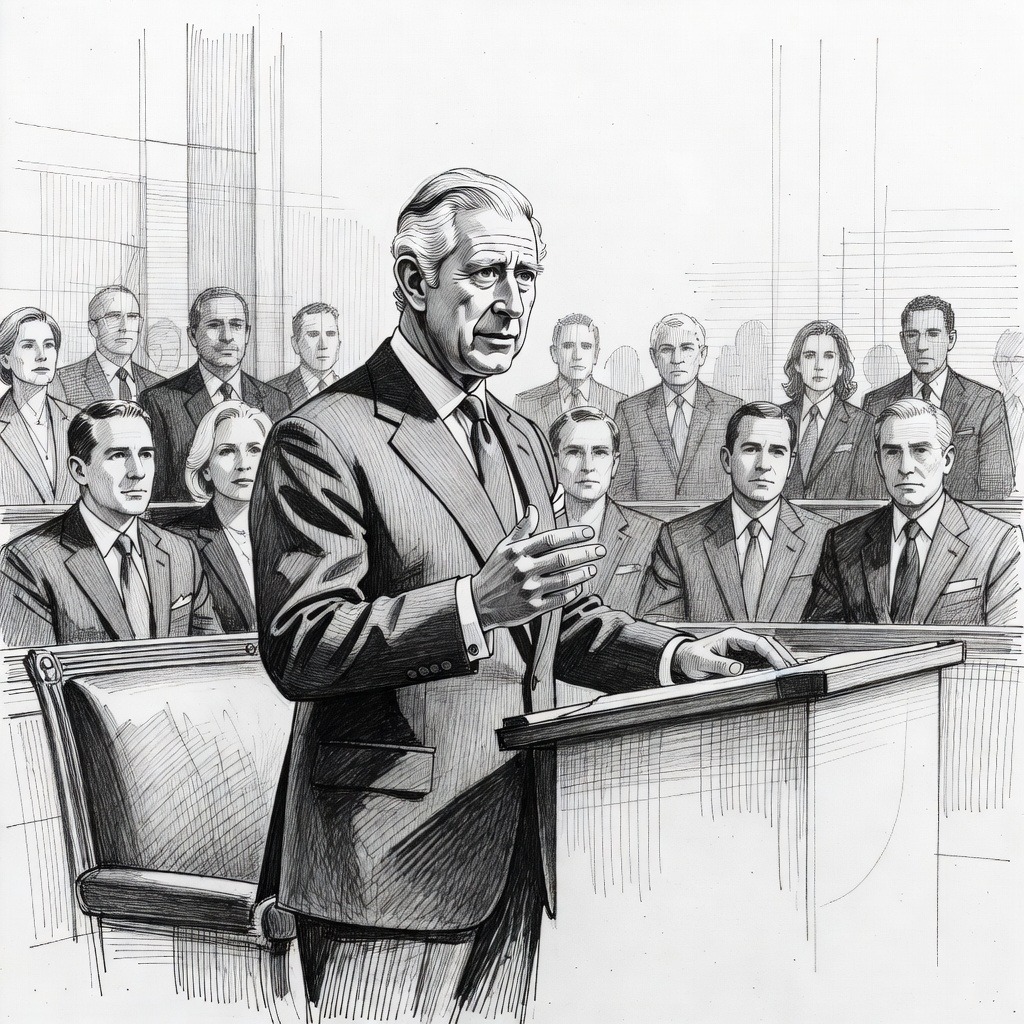
• Leveraging Diplomatic Soft Power Prioritizing international stability, this framework views King Charles III’s visit as a vital deployment of soft power to de-escalate geopolitical friction. By focusing a joint congressional address on historical ties rather than immediate military objectives, the state visit bridges the gap between Washington and London. Preserving the trans-Atlantic alliance through symbolic diplomacy during the 250th anniversary of American independence is seen as essential when the respective governments clash over hard-power tactics.
• Anchoring Restraint Over Aggression Valuing humanitarian caution and measured intervention, the U.K.’s stance on the Iranian conflict is interpreted as a necessary safeguard against unchecked escalation. Prime Minister Keir Starmer’s refusal to join U.S. military action and Deputy Minister Stephen Doughty’s opposition to blockade tactics represent a commitment to multilateral restraint. Choosing to collaborate solely to keep the Strait of Hormuz open demonstrates a targeted, defensive posture rather than an endorsement of broad-scale offensive operations.
• Fracturing Foundational Global Coalitions The primary risk identified in this view is the erosion of collaborative international frameworks due to unilateral diplomatic pressure. President Trump’s public criticism of allied leadership threatens to alienate crucial democratic partners who advocate for proportional responses. Punishing the U.K. for refusing to rubber-stamp aggressive military strategies risks isolating the United States on the global stage, stripping away the moderating influence of legacy allies during high-stakes Middle Eastern conflicts.
How it may affect me
As a U.S. reader:
• In the short term, the ongoing military conflict with Iran will proceed without full offensive support from the United Kingdom, leaving the United States to manage aggressive strategies and blockade tactics unilaterally.
• U.S. defensive operations will still receive British collaboration specifically to keep the Strait of Hormuz open, maintaining a baseline of allied support for targeted regional security.
• In the long term, continued public friction between U.S. and U.K. leadership risks fracturing foundational global coalitions, potentially isolating the United States diplomatically during high-stakes conflicts.
• A normalized lack of unified trans-Atlantic military commitment may also weaken long-term global deterrence, signaling a fragmented alliance that could embolden geopolitical adversaries.