
One Chicago Police Officer Killed, Another Critically Wounded in Hospital Shooting

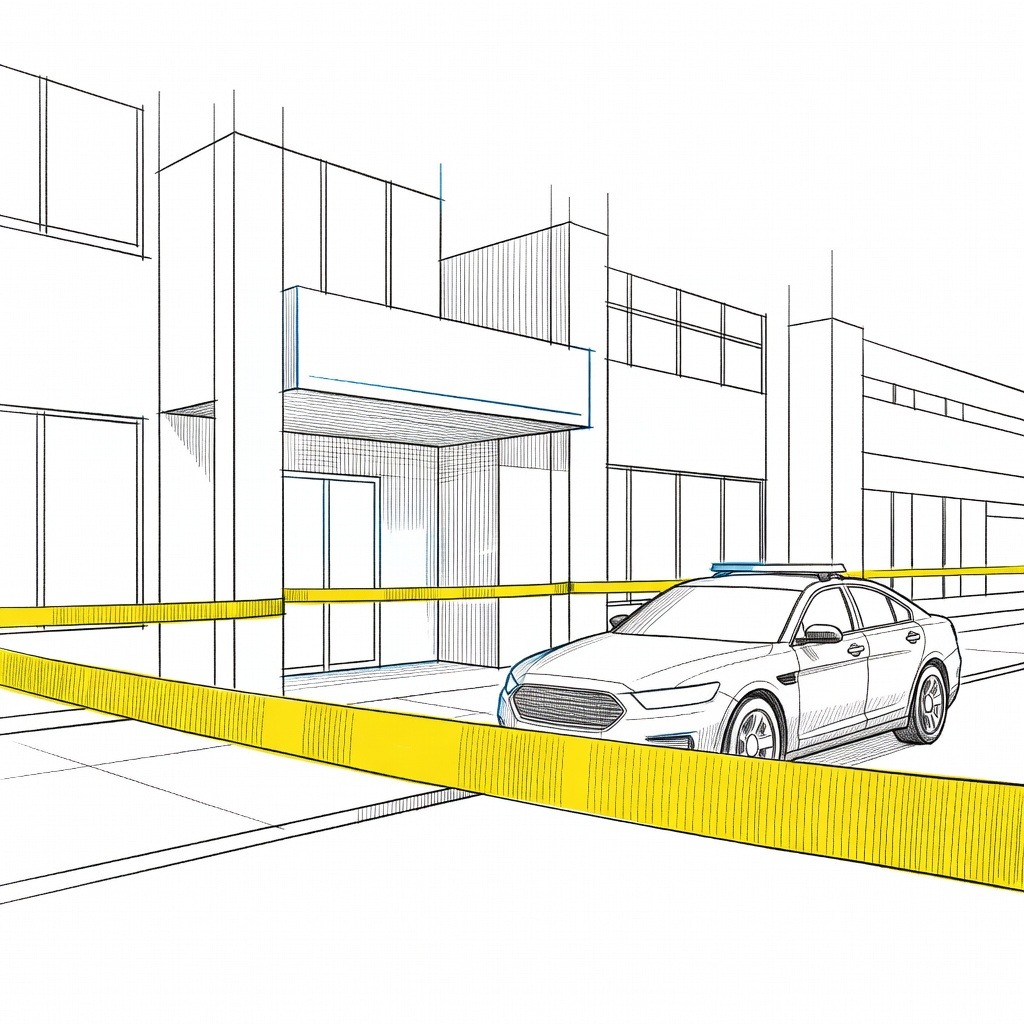
Illustration for: One Chicago Police Officer Killed, Another Critically Wounded in Hospital Shooting
AI-generated illustration. Visual interpretation does not represent real individuals or scenes.

THE BARE STORY

On April 25, 2026, a suspect in police custody opened fire inside Swedish Hospital in Chicago, killing one police officer and leaving a second in critical condition. The suspect fled the immediate area following the gunfire but was later apprehended by law enforcement. Both hospital representatives and police confirmed that no medical staff or patients were physically injured during the incident.

Police stated the unidentified suspect was initially brought to the medical facility for treatment around 9 a.m. According to law enforcement sources, the individual was originally arrested on suspicion of robbery. Hospital officials reported that security personnel scanned the suspect for weapons upon arrival. However, authorities stated the individual managed to obtain a firearm approximately two hours later, at which point the shooting occurred.

After fleeing the hospital, the suspect engaged in a standoff at a nearby residence before being taken into custody by SWAT teams, according to police. Chicago Police Superintendent Larry Snelling stated that the deceased officer was a 38-year-old with ten years of service, while the critically wounded officer is a 57-year-old veteran of the force. Authorities confirmed a firearm was recovered at the medical facility, and Snelling noted an additional weapon was found during the suspect's arrest.

Following the shooting, the hospital campus was closed to facilitate the ongoing police investigation. Chicago Alderperson Andre Vasquez, who had issued a shelter-in-place request while the suspect was at large, stated there is a need to review protocols regarding how the prisoner acquired the weapon. Chicago Mayor Brandon Johnson also addressed the incident, emphasizing the inherent dangers of law enforcement and the necessity of ensuring police have adequate resources.

Same Facts. Different Perspectives.

Two AI models. Two viewpoints. One factual foundation.

• Honor Law Enforcement Sacrifice Values civic duty, social order, and the preservation of established legal systems. The murder of a 38-year-old officer and the critical wounding of a 57-year-old veteran underscore the lethal, unpredictable realities of front-line police work. This camp views the incident as a grim validation that officers serve as the necessary, dangerous barrier between civilized society and violent anarchy, demanding unwavering public and political respect for their sacrifice.

• Contain Escalating Criminal Threats Prioritizes the rule of law and the aggressive management of violent offenders. The suspect's ability to transition from a robbery arrest to a lethal shooter, ultimately forcing a SWAT standoff at a nearby residence, highlights the severe, acute danger posed by brazen criminals. Interprets the discovery of multiple firearms on the suspect as proof that the primary societal focus must remain on neutralizing criminal aggression rather than scrutinizing the officers.

• Bolster Tactical Institutional Authority Focuses on institutional continuity and ensuring authorities possess the overwhelming power to maintain control. Mayor Johnson’s acknowledgment of the inherent dangers of policing is seen as a necessary admission that law enforcement requires robust, unrestricted tactical backing. Fears that prioritizing bureaucratic protocol reviews—as suggested by Alderperson Vasquez—will further hamstring officers, leaving them dangerously hesitant and vulnerable to hardened criminals who exploit any perceived weakness in authority.

How it may affect me

As a U.S. reader:

• Short-term access to community medical facilities and surrounding neighborhoods may be disrupted by lockdowns, campus closures, and shelter-in-place orders during security breaches involving suspects in police custody.

• Over the long term, the public may encounter stricter security screenings or altered procedures at civic health institutions as officials review and overhaul how detained individuals are processed and guarded during medical visits.

• Taxpayers may see shifts in local law enforcement budgets and policies, with resources either being prioritized for improved custody procedures and administrative oversight or directed toward increased tactical support and unrestricted readiness for front-line officers.

Read the story at

Note: All TheBareNews content is AI-generated. For additional context, reporting, and updates, you are invited to explore the news outlets linked above.