
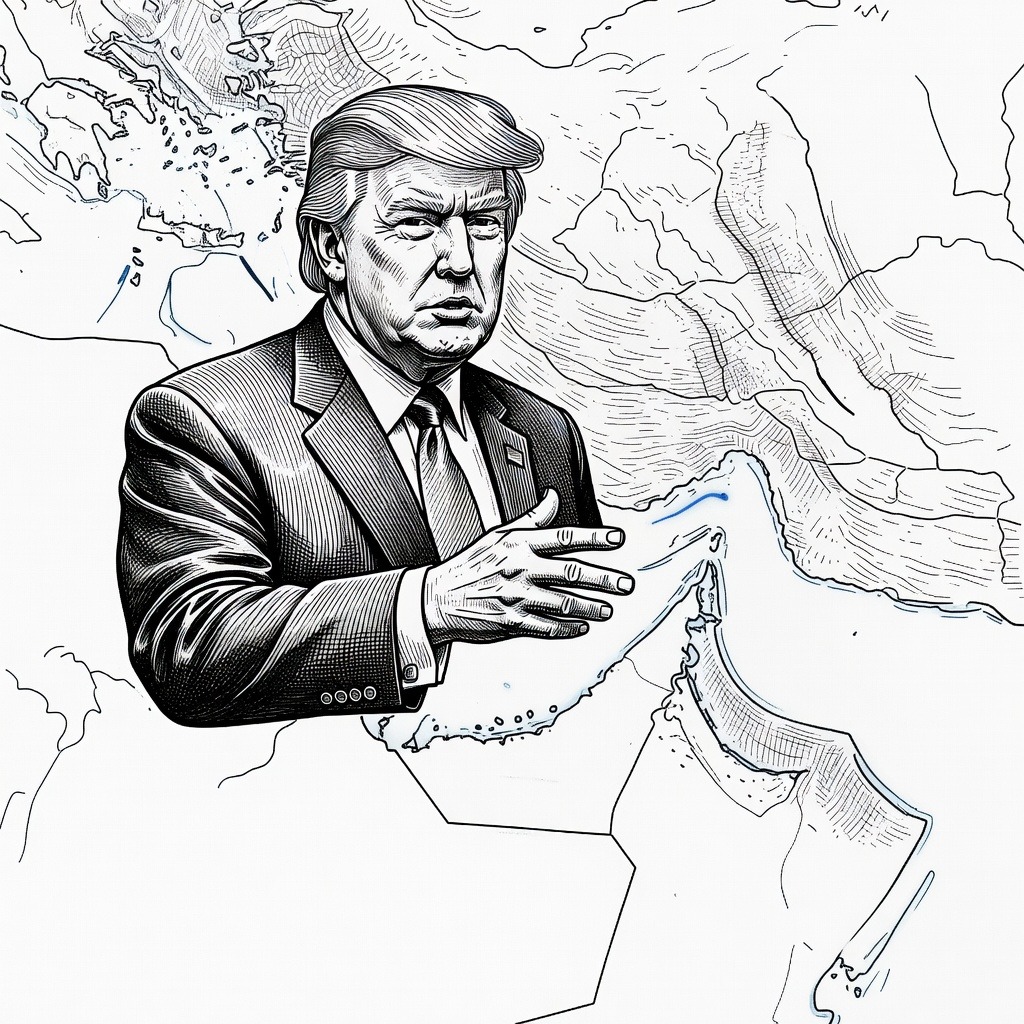
• Catalyst for Global Instability Valuing international stability over unilateral brinkmanship, this perspective views the spike in Brent crude to $105.07 as the direct, devastating cost of aggressive maritime blockades. Treating the Strait of Hormuz as a zone of exclusionary military control rather than a shared global waterway creates compounding economic friction that harms consumers worldwide. By enforcing maximalist blockades during a fragile ceasefire, the strategy risks collapsing the global energy market just to project political dominance.
• Sabotage of Diplomatic Offramps Prioritizing de-escalation, the tit-for-tat seizures of vessels like the *Touska* and *Majestic X* are seen as counterproductive provocations that destroy any foundation for dialogue. The reported resignation of Iran's top negotiator due to Revolutionary Guard interference is interpreted as a direct consequence of this pressure campaign. When external forces rely strictly on coercion and vessel interdiction, they inadvertently empower hardline military factions and systematically disempower the very moderates required to negotiate a lasting peace.
• Escalation Toward Endless Conflict Viewing military force as an inherently destabilizing tool, the prospect of the U.S. authorizing further Israeli operations against Iranian leadership signals a dangerous pivot away from conflict resolution. Following the assassination of Ayatollah Ali Khamenei at the war's outset, actively targeting the new leadership during a declared ceasefire guarantees perpetual cycles of retaliation. This approach abandons international law in favor of continuous regime-decapitation efforts, ensuring the region remains locked in a state of catastrophic humanitarian crisis.
How it may affect me
As a U.S. reader:
• You will likely experience immediate increases in the cost of fuel and consumer goods, as the standoff and vessel seizures have already driven West Texas Intermediate crude prices to nearly $96 per barrel.
• You face the long-term risk of severe economic friction and a potential collapse of the global energy market if the competing blockades continue to halt commercial tanker traffic through the strait.
• You can expect sustained deployment of U.S. military resources and tax dollars to the region, as the military actively enforces maritime supremacy, seizes international cargo ships, and manages transit permissions.
• You could be impacted by a broader, endless international conflict if the current fragile ceasefire breaks, particularly if the U.S. authorizes allied military forces to resume operations against Iranian leadership.