
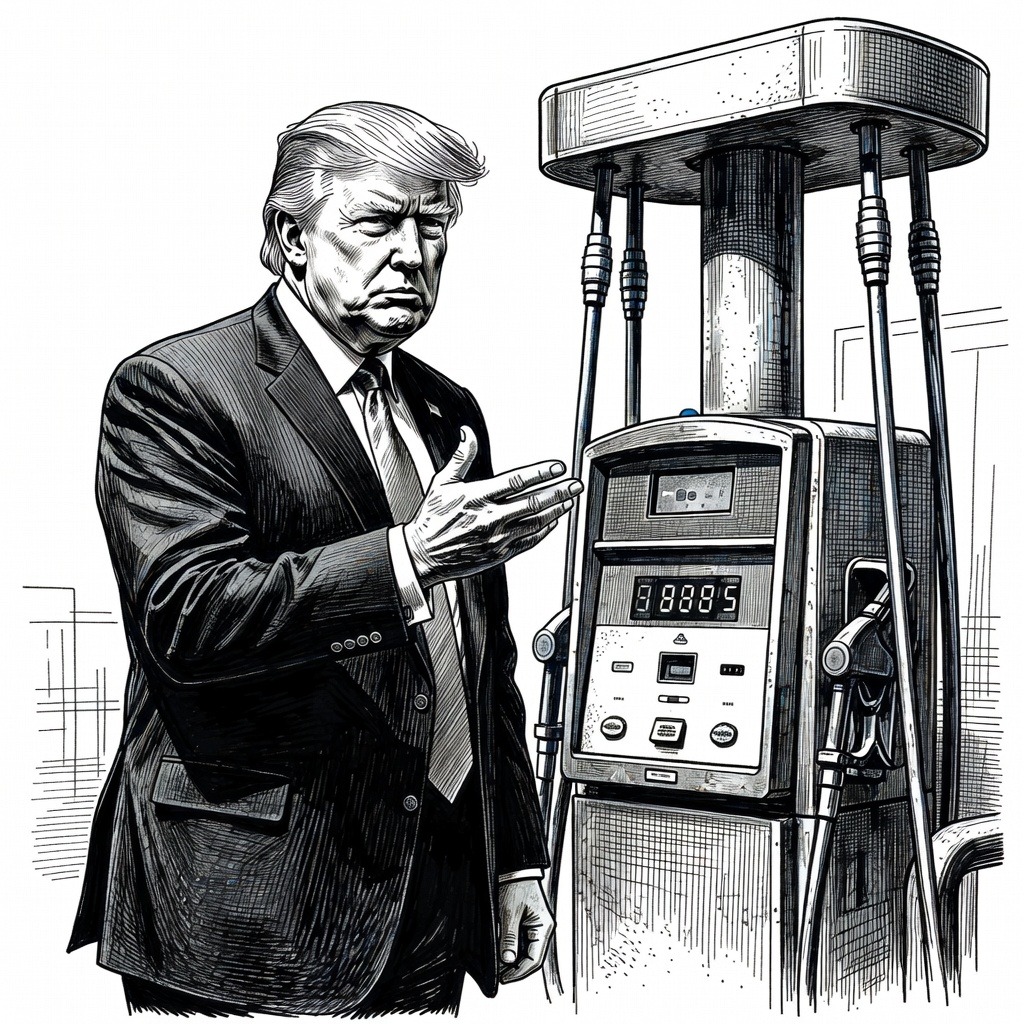
AI-generated illustration. Visual interpretation does not represent real individuals or scenes.
Survey Shows Americans Altering Spending Habits as Gas Prices Rise Ahead of 2026 Midterms
2026-04-23
The BareStory
Rising gasoline prices following a U.S. and Israeli military conflict with Iran earlier this year have prompted a large majority of Americans to alter their spending habits, according to recent survey data. Pump prices have increased by nearly 30 percent, with a mid-April poll indicating that approximately 80 percent of respondents have changed their financial behaviors in response to the costs.
The survey found that consumers are cutting back on entertainment and travel, while about 40 percent report decreasing their spending on essentials such as groceries and medical care. Experts attribute the fuel price spikes to supply shocks stemming from the ongoing war, though some lawmakers have warned of potential price gouging. Energy Secretary Chris Wright stated that gas prices might not drop below $3 per gallon until next year.
These economic pressures coincide with declining public approval of President Donald Trump's handling of the economy ahead of the 2026 midterm elections. The president has largely dismissed voter concerns over fuel costs, stating recently that gas prices are not very high and characterizing the rise in oil prices as minimal. In response to criticism that the administration is neglecting cost-of-living issues, a White House spokesperson said the president has addressed the economy through executive orders concerning housing, discounted medications, and tax refunds.
Republican strategists have expressed concern that the president's focus on non-economic topics could alienate voters needed in the upcoming November elections. Concurrently, Democratic strategists state they are adopting economic messaging to appeal to voters affected by inflation, although recent polling indicates that politicians from both major parties remain broadly unpopular with the public.
Left Perspective
Shielding Against Corporate Extraction
Condemning Executive Class Detachment
Pivoting to Structural Populism
Right Perspective
Accepting Global Supply Realities
Prioritizing Broad Macroeconomic Buffers
Risking Electoral Market Share
Left Perspective
• Shielding Against Corporate Extraction
Social equity demands that basic living standards remain accessible, making the 40 percent of Americans cutting essential groceries and medical care a systemic failure. This camp views the 30 percent spike in gas prices not merely as an unavoidable casualty of war, but as an opportunity for corporate price gouging. They prioritize strict market regulation, arguing that entrenched industries frequently use geopolitical conflicts as a smokescreen to artificially inflate consumer costs.
• Condemning Executive Class Detachment
Effective governance requires direct responsiveness to the material conditions and struggles of the working class. President Donald Trump’s characterization of the fuel cost increase as "minimal" is interpreted as a severe disconnect from the lived reality of the 80 percent of Americans who are actively altering their spending habits. Furthermore, they view the administration's patchwork of executive orders on housing and medications as inadequate deflections that fail to halt immediate wealth extraction at the pump.
• Pivoting to Structural Populism
A healthy democracy must provide tangible economic relief rather than empty political rhetoric to protect vulnerable populations. Democratic strategists are attempting to capture this systemic frustration by adopting targeted economic messaging ahead of the 2026 midterms. However, they recognize a profound long-term risk: because both major parties remain broadly unpopular, superficial campaign promises may fail to mobilize a cynical electorate exhausted by persistent, unmitigated inflation.
Right Perspective
• Accepting Global Supply Realities
Market efficiency dictates that commodity prices will naturally fluctuate in response to international volatility and physical scarcity. This camp interprets the 30 percent increase in pump prices as a direct, mathematical consequence of supply shocks resulting from the U.S. and Israeli military conflict with Iran. They largely dismiss allegations of price gouging as populist political theater that fundamentally misunderstands the mechanics of global energy markets and supply-and-demand realities.
• Prioritizing Broad Macroeconomic Buffers
Systemic stability relies on comprehensive economic policies rather than artificial, short-term market interventions that can disrupt future supply. In defense of the administration's record, they point to executive actions on tax refunds and discounted medications as sustainable methods of providing cost-of-living relief without price-fixing energy markets. Energy Secretary Chris Wright's projection that prices will remain above $3 until next year is viewed as pragmatic, data-driven transparency rather than a policy failure.
• Risking Electoral Market Share
Political capital must be actively managed to maintain the institutional continuity required to protect free-market policies. Republican strategists express deep concern that the president's dismissal of high gas prices ignores the immediate psychological toll inflation takes on consumer confidence and voter behavior. The strategic risk is that by pivoting to non-economic topics, the administration creates a messaging vacuum, allowing Democrats to capitalize on consumer anxiety and threaten the GOP's 2026 midterm prospects.
How it may affect me
As a U.S. reader:
• You will likely continue facing immediate financial pressures that require budget adjustments, as a large majority of consumers are currently reducing their spending on travel, entertainment, groceries, and medical care.
• Expect elevated transportation costs to persist in the long term, with energy officials projecting that gas prices will remain above $3 per gallon until at least next year due to international supply shocks.
• You may experience alternative forms of cost-of-living relief rather than direct reductions in fuel prices, as the current administration is addressing inflation through executive orders focused on tax refunds, housing, and discounted medications.
• In the lead-up to the 2026 midterms, you will be heavily targeted by shifting political campaigns, with Democrats focusing their messaging on economic anxieties while Republicans attempt to navigate voter frustration over fuel costs.