
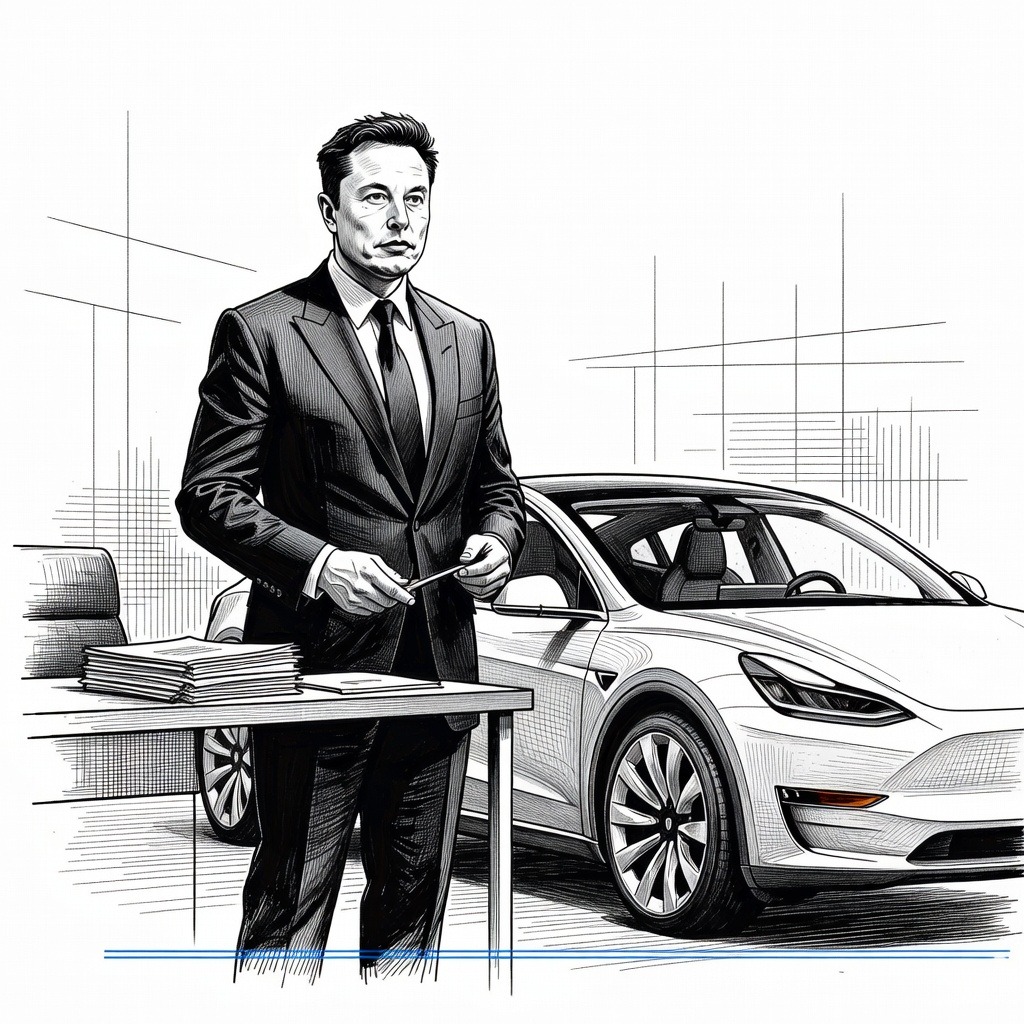
• Masking Core Business Stagnation Corporate accountability demands that executives deliver on their primary public mandates rather than pivoting to speculative hype to obscure weak performance. With Tesla's stock down 10 percent year-to-date and its Texas ride-hailing expansion generating no meaningful revenue, the aggressive shift toward AI and Optimus robots reads as a tactical distraction. Investors are being asked to accept promises of driverless technology to offset a modest 6 percent year-over-year increase in vehicle deliveries, shielding leadership from answering for the underlying health of the physical automotive operation.
• Breaching Corporate Governance Firewalls Healthy markets rely on strict operational boundaries to prevent executive self-dealing and protect minority shareholders. Tesla’s $2 billion investment into xAI—which has now converted into shares of SpaceX following a $1.25 trillion merger—represents a dangerous blurring of public and private corporate entities. This shuffling of capital between a single CEO’s overlapping ventures bypasses standard fiduciary guardrails, functionally treating a publicly traded automaker as a private bank to underwrite external aerospace and artificial intelligence ambitions.
• Cannibalizing the Capital Base Retail and institutional investors face severe systemic exposure when a chief executive's attention and financial gravity shift to a competing venture. The looming SpaceX initial public offering, targeting a massive $2 trillion valuation, actively threatens to drain liquidity from Tesla as capital competes for placement. Vanda Research’s data confirms the risk that shareholders will migrate their funds, leaving everyday Tesla investors holding a depreciated automotive stock while the CEO’s newest megaproject absorbs the market’s wealth.
How it may affect me
As a U.S. reader:
• Retail investors holding Tesla stock may experience short-term price volatility following the earnings report and could face long-term shifts in their stock value if the upcoming SpaceX public offering draws investment capital away from the automaker.
• Consumers and drivers can expect long-term changes to the user experience in Tesla products, as the company pivots away from traditional manufacturing to integrate new features like xAI chatbots and advanced driverless technology.
• Residents in Texas markets such as Dallas and Houston are seeing the short-term rollout of a newly expanding Tesla ride-hailing service, altering local transportation options as the company tests its automated networks.
• Everyday shareholders invested in Tesla now hold indirect financial exposure to the private aerospace market, as the company's $2 billion artificial intelligence investment was recently converted into SpaceX shares.