
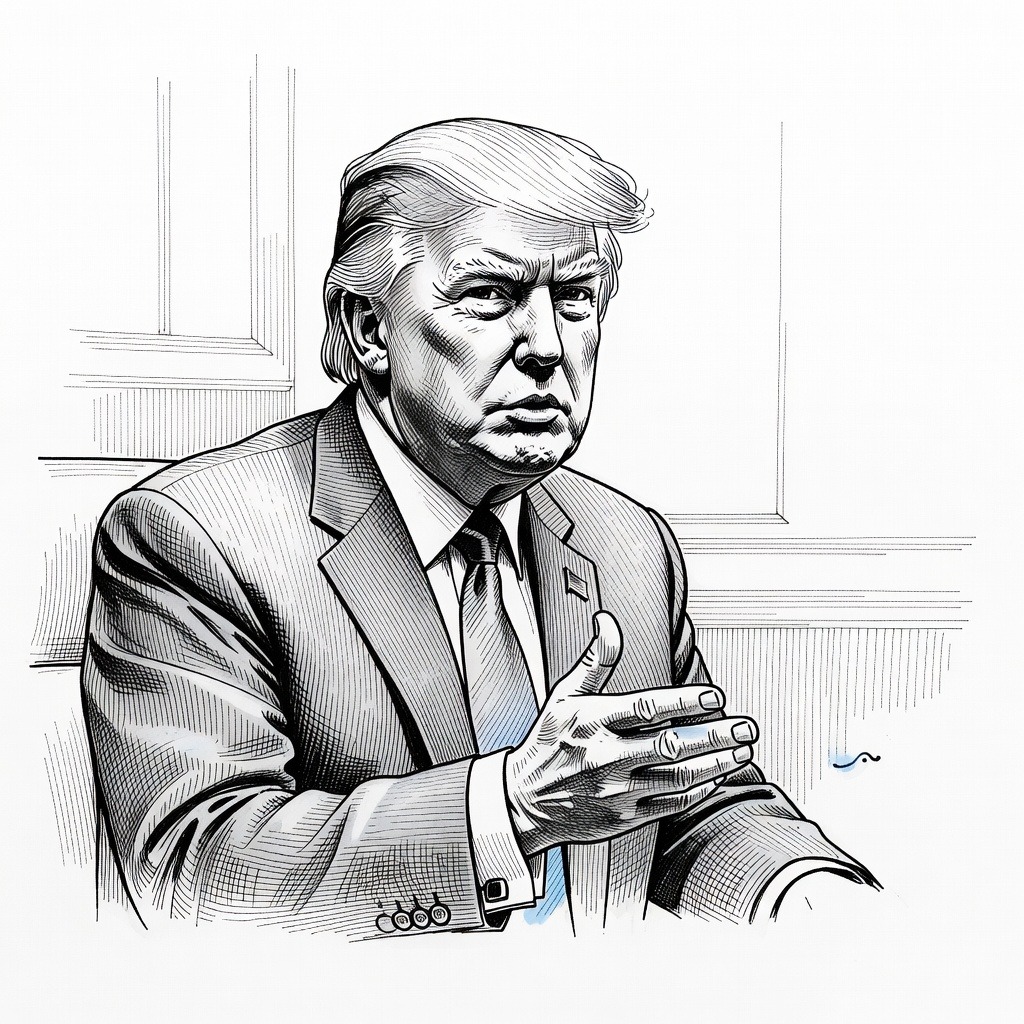
Spirit Airlines is facing possible liquidation as rising jet fuel costs, driven by an ongoing conflict involving the United States and Iran, add financial pressure to the discount carrier. In response to the airline's struggles, President Donald Trump stated that the federal government could potentially offer assistance and expressed support for a potential buyout of the company.
Transportation Secretary Sean Duffy stated he is reviewing the airline at the president's request and scheduled meetings with several discount carriers to discuss the business impact of elevated fuel prices, which have surged since February. Spirit Airlines released a statement declining to address market speculation, noting that its normal flight operations are continuing.
The airline has filed for bankruptcy protection twice in less than a year, including a filing last August, but announced earlier this year that it intends to emerge from bankruptcy by mid-2026. The carrier has also faced operational hurdles, including grounded aircraft due to engine issues and a blocked 2022 merger with JetBlue over monopoly concerns.
Industry analysts are divided on the airline's future and the potential market impact of a closure. Aviation executive Mike Boyd claimed the airline's financial decline is irreversible and its liquidation would largely not affect national passenger fares, though he noted it could cause localized market shifts. Conversely, economics professor Jan Brueckner stated that a closure would harm consumers by eliminating a competitor that pressures major network airlines to keep prices low.
Left Perspective
Shielding Consumer Price Levers
Rejecting Subsidized Corporate Mismanagement
Exposing Structural Resource Vulnerabilities
Right Perspective
Pruning Inefficient Market Actors
Mitigating Geopolitical Sector Distortions
Exposing Costs of Regulatory Overreach
Left Perspective
• Shielding Consumer Price Levers
Social equity relies on preventing monopolistic behavior that extracts wealth from middle- and lower-income demographics. Economics professor Jan Brueckner’s assessment that Spirit's closure would eliminate crucial price pressure on major network airlines aligns perfectly with this framework. The original federal decision to block the 2022 JetBlue merger was a necessary defense against corporate consolidation, ensuring budget carriers remain independent to keep travel broadly accessible.
• Rejecting Subsidized Corporate Mismanagement
Institutional accountability demands that public resources are not utilized to absorb the costs of private-sector failures. President Trump’s proposal to offer federal assistance or support a buyout targets an airline that has filed for bankruptcy twice in less than a year while battling internal operational hurdles like grounded aircraft and engine issues. Intervening to save a fundamentally broken corporate entity functions as a taxpayer-funded bailout for bad business practices rather than a legitimate mechanism for consumer relief.
• Exposing Structural Resource Vulnerabilities
True economic resilience requires protecting everyday consumers from the extreme volatility of global fossil fuel markets. The fact that rising jet fuel costs tied to the US-Iran conflict can push a major domestic carrier into liquidation reveals a dangerous systemic fragility. This dynamic guarantees that geopolitical shocks are immediately passed down to budget-conscious travelers, highlighting the underlying danger of anchoring basic transportation infrastructure to unstable international conflicts.
Right Perspective
• Pruning Inefficient Market Actors
Market efficiency relies on the natural elimination of unviable enterprises, which frees up capital and market share for healthier competitors. Aviation executive Mike Boyd diagnoses Spirit’s financial decline as irreversible, accurately noting that a liquidation would largely leave national passenger fares unaffected. From a fiscal discipline standpoint, an airline requiring two bankruptcy filings in under a year should be permitted to fail to facilitate necessary creative destruction.
• Mitigating Geopolitical Sector Distortions
Systemic stability occasionally requires executive action when foreign policy crises artificially destabilize otherwise functional domestic industries. Transportation Secretary Sean Duffy’s strategic review acknowledges that the recent surge in fuel prices is a direct external shock caused by the US-Iran conflict, rather than a normal market fluctuation. President Trump's openness to assistance or buyout facilitation operates as a macroeconomic stabilization tool to protect American infrastructure from aggressive geopolitical disruptions.
• Exposing Costs of Regulatory Overreach
Industry stability is best achieved by allowing businesses the freedom to adapt, consolidate, and scale against operational headwinds. The government’s decision to block the 2022 JetBlue merger over theoretical monopoly concerns directly stripped Spirit of a vital private-sector lifeline. By preventing a natural market consolidation that could have absorbed Spirit's engine issues and pooled capital, federal regulators inadvertently engineered the exact liquidation they are now trying to manage.
How it may affect me
As a U.S. reader:
• In the short term, immediate travel plans with Spirit Airlines remain unaffected because the carrier confirmed that its normal flight operations are continuing.
• Over the long term, you could face higher airfare across major network airlines if Spirit liquidates, as the market would lose a discount competitor that currently pressures larger carriers to keep prices low.
• Depending on your location, you might instead only experience localized shifts in flight availability and pricing, with overall national passenger fares remaining largely unchanged by the airline's closure.
• As a taxpayer, you may see public resources utilized if the federal government acts on current proposals to provide financial assistance or support a corporate buyout of the airline.
• You and other budget-conscious travelers may experience broader increases in ticket prices, as the ongoing geopolitical conflict involving the United States and Iran continues to drive up jet fuel costs for domestic carriers.