
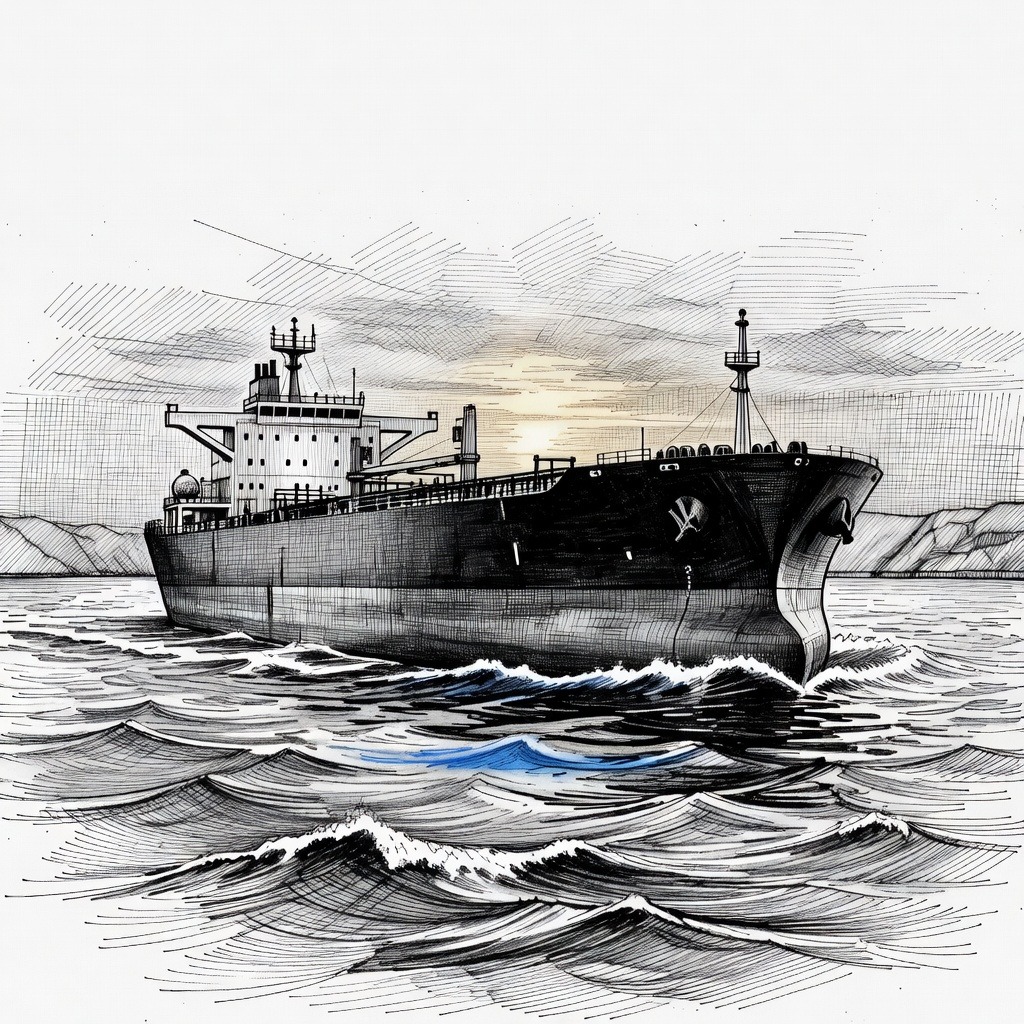
AI-generated illustration. Visual interpretation does not represent real individuals or scenes.
U.S. Extends Ceasefire with Iran Amid Ongoing Global Energy and Supply Disruptions
2026-04-22
The BareStory
U.S. President Donald Trump extended a ceasefire with Iran late Tuesday amid an ongoing conflict that has severely disrupted Middle Eastern energy shipments. The conflict, currently in its eighth week, has involved ship strikes and a blockade in the Persian Gulf, leading to conflicting reports regarding whether the Strait of Hormuz remains open to maritime traffic.
Regarding the political situation in Iran, Trump stated that the country's government is fractured and noted his envoys are negotiating with one group. Meanwhile, the Ayatollah’s faction and the Revolutionary Guard claim they continue to maintain authority. The regional instability has heavily impacted energy flows, with the United States Energy Information Administration estimating that 7.5 million barrels of oil per day were offline in March. Financial analysts reported that Iranian oil exports have dropped to near zero, projecting further global supply deficits and potential increases in crude oil prices if the disruptions continue.
The conflict has also caused spikes in global gasoline, airfare, and freight costs while threatening the supply of aluminum, helium, and petrochemicals. According to the United States Department of Energy, petrochemicals are essential for manufacturing over 6,000 consumer products. Industry organizations, including the Footwear Distributors and Retailers of America and the American Apparel and Footwear Association, reported immediate increases in raw material prices following the onset of the conflict, warning of projected retail price hikes for consumer goods and apparel later in the year.
Left Perspective
Pivot Toward Diplomatic De-escalation
Shield the Domestic Consumer
Gamble on Fractured Authority
Right Perspective
Exploit Adversarial Regime Fractures
Absorb Tactical Market Friction
Enforce Maritime Strategic Deterrence
Left Perspective
• Pivot Toward Diplomatic De-escalation
Extending the late Tuesday ceasefire represents a necessary withdrawal from militaristic brinkmanship in the Middle East. The ongoing eight-week conflict, characterized by perilous ship strikes and Persian Gulf blockades, demonstrates that kinetic engagement only yields immediate global instability. Prioritizing diplomatic off-ramps over military escalation is viewed as the only sustainable method to resolve the crisis without inflicting catastrophic collateral damage on the international community.
• Shield the Domestic Consumer
The economic fallout from this geopolitical standoff disproportionately taxes working-class citizens through unavoidable cost-of-living increases. With 7.5 million barrels of oil offline and petrochemical disruptions threatening over 6,000 consumer products, the systemic shock is already spiking gasoline, airfare, and freight costs. Securing a lasting peace is viewed as an urgent mandate to prevent the footwear and apparel retail hikes projected for later this year from crushing everyday buyers.
• Gamble on Fractured Authority
Engaging in backdoor negotiations with splinter factions poses a severe risk to long-term regional stability. Because the Ayatollah and the Revolutionary Guard still claim institutional authority over the state, attempting to bypass the established power brokers could collapse the fragile ceasefire entirely. This disjointed diplomatic strategy risks sparking accidental escalations in the Strait of Hormuz, ultimately dragging the globe back into a volatile conflict that further fractures international supply chains.
Right Perspective
• Exploit Adversarial Regime Fractures
The extended ceasefire is a calculated deployment of Realpolitik designed to maximize American leverage over a destabilized adversary. By driving Iranian oil exports to near zero over the past eight weeks, the pressure campaign has successfully starved a hostile state of its vital capital. Negotiating with a fractured government while the regime is severely weakened ensures the U.S. can dictate the terms of peace from a position of absolute strength.
• Absorb Tactical Market Friction
Temporary supply chain disruptions are accepted as the necessary cost of neutralizing a primary geopolitical threat. While the 7.5 million barrel-per-day deficit and rising raw material costs create short-term friction for industries like footwear and apparel, these are viewed as tactical sacrifices. Eradicating the overarching threat of a hostile power controlling Middle Eastern energy flows is the only way to guarantee the long-term systemic stability of global markets.
• Enforce Maritime Strategic Deterrence
Any pause in hostilities must maintain strict red lines regarding the freedom of international navigation. The uncertainty surrounding the Strait of Hormuz and ongoing ship strikes by the Revolutionary Guard highlight the persistent threat to global maritime commerce. If Iran utilizes this ceasefire to re-entrench its blockade capabilities in the Persian Gulf, the U.S. must be prepared to swiftly project overwhelming military force to restore order and protect vital supply routes.
How it may affect me
As a U.S. reader:
• In the short term, you will likely experience increased costs for gasoline, airfare, and shipping freight as regional Middle Eastern disruptions continue to keep millions of barrels of oil per day offline.
• Later in the year, you can expect to pay higher retail prices for apparel, footwear, and thousands of everyday consumer products made from petrochemicals, aluminum, and helium due to current raw material shortages.
• Long-term availability and pricing of these everyday goods remain volatile, as U.S. negotiations with a fractured Iranian government pose a risk of the ceasefire collapsing and further stalling international supply chains.
• If the ceasefire fails and maritime traffic in the Strait of Hormuz is again threatened by blockades, the U.S. may resort to military force to protect global shipping routes, which could trigger further economic and supply shocks.