
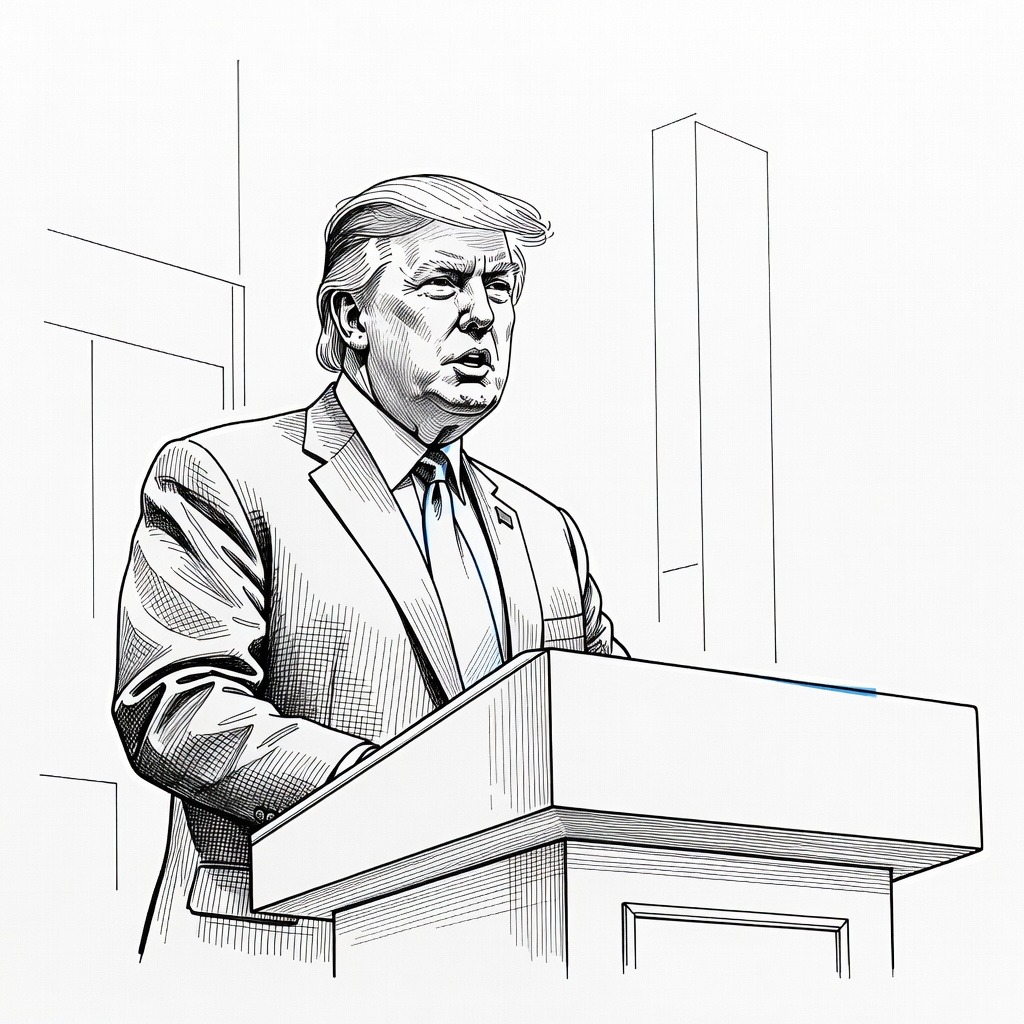
• Anchor on Multilateral Verification Valuing cooperative arms control over volatile unilateral pronouncements, this camp views the suspension of IAEA monitoring since last June as the foundational crisis. They interpret President Trump’s unverified claim of a bilateral extraction agreement as a premature diplomatic maneuver that alienates negotiating partners. Restoring international inspectors to independently account for the estimated 200 kilograms to 1,000 pounds of 60 percent enriched uranium is seen as the only reliable mechanism to ensure regional stability.
• Defuse Kinetic Escalation Traps Prioritizing de-escalation, this framework rejects the viability of using continued military force to resolve the physical impasse at the Isfahan facility. Following the 2025-2026 U.S. and Israeli strikes, Iranian Foreign Minister Araghchi’s assertion that the material is buried under rubble highlights the functional limits of kinetic intervention. Relying on former defense officials' assessments, they argue that any unilateral U.S. military extraction would require massive troop deployments, guaranteeing armed resistance and immediately collapsing Wednesday's expiring ceasefire.
• Shield Against Proliferation Vectors The ultimate fear for this camp is that sustained coercive isolation creates a far more dangerous security environment than a challenging diplomatic pact. Nonproliferation experts warn that if the standoff persists without a cooperative resolution, internal Iranian instability poses an immediate and catastrophic threat. They argue that without negotiated oversight for the buried stockpile, unaccounted highly enriched nuclear materials and displaced scientific expertise are highly likely to be diverted into the global black market.
How it may affect me
As a U.S. reader:
• In the short term, the expiration of the ceasefire this Wednesday raises the immediate risk of renewed conflict, which would directly affect U.S. service members and their families if the government orders a unilateral uranium extraction requiring massive troop deployments.
• Over the long term, an unresolved diplomatic standoff could contribute to internal Iranian instability, presenting a practical national security threat to the American public if unaccounted nuclear materials or scientific expertise are diverted to the global black market.
• Without a permanent agreement to secure or physically remove the estimated 1,000 pounds of enriched uranium, U.S. citizens face the ongoing global security risk of a hostile state retaining a perpetual nuclear breakout capacity, potentially guaranteeing further U.S. military entanglement abroad.