
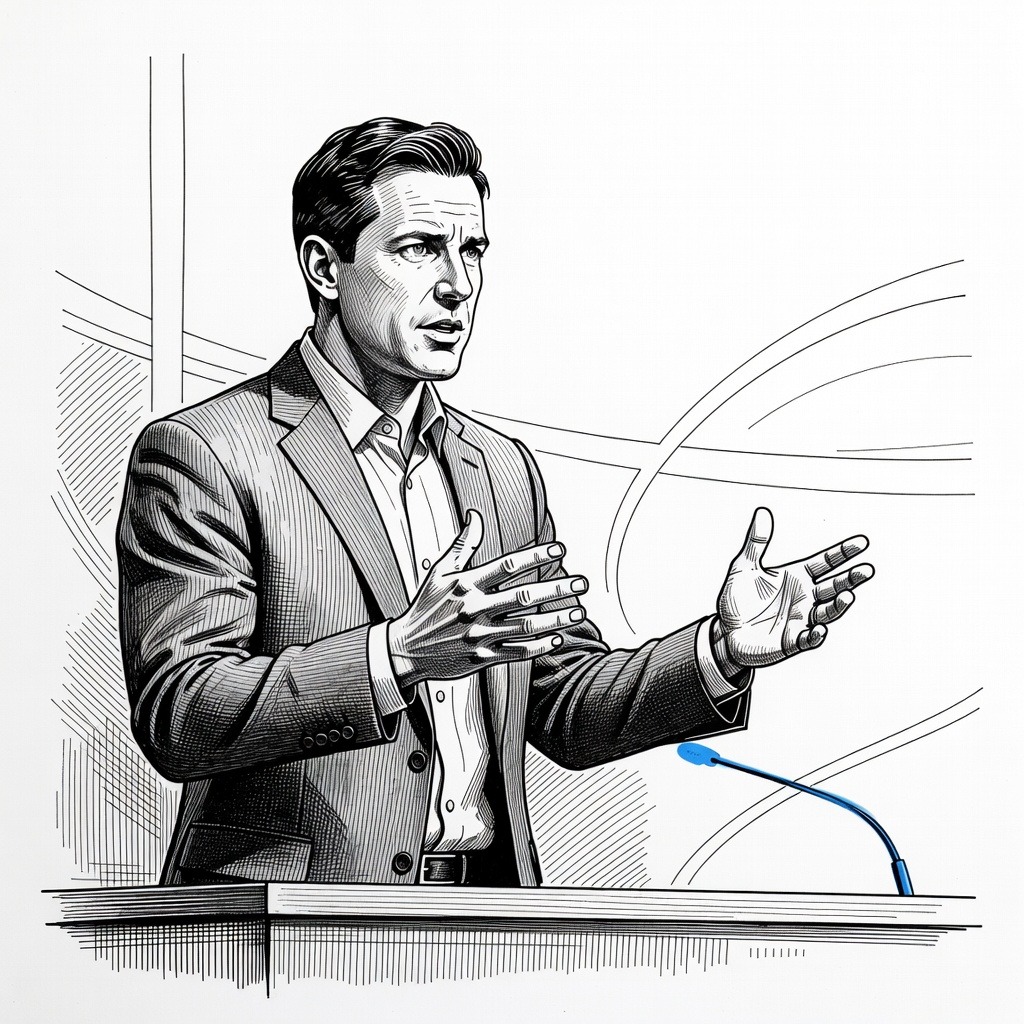
• Shielding Creative Labor Pools The protection of human workers from corporate automation remains a paramount priority in evaluating new technologies. Filmmaker Jason Blum’s assertion that artificial intelligence will not replace human filmmakers serves as a necessary defense mechanism for the creative class against executives seeking to slash overhead. This perspective views unchecked technological integration not as inevitable progress, but as an active threat to worker livelihoods, making industry pushback essential to preserving human-centric employment.
• Mandating Algorithmic Truth Safeguards Consumer protection dictates that technological infrastructure must be reliable and socially accountable before achieving mass integration. Axiom Math founder Carina Hong’s primary objective to correct the persistent inaccuracies of current AI models highlights the inherent systemic dangers of deploying flawed algorithms. From this viewpoint, a staggering $1.6 billion valuation driven by the desperate need to fix broken tech exposes a highly speculative market that prioritizes rapid deployment over factual integrity and public safety.
• Resisting Hyper-Commodified Biology Health and wellness initiatives must be driven by broad public benefit rather than private, extractive commercialization. Midi Health’s specialized AI office hours and Bryan Johnson’s hyper-focused remarks on hacking "biological age" and "healthy code" signal a troubling shift toward treating human biology as an exclusive tech product. The underlying fear is that deeply personal health metrics will be increasingly monetized by a small enclave at gatherings like San Francisco's "The Long Play," creating a dystopian tier of health services inaccessible to the general public.
How it may affect me
As a U.S. reader:
• In the short term, emerging artificial intelligence health optimization and biological tracking services may be introduced as exclusive, highly commodified products, while long-term market expansion could eventually make these technologies accessible to the general public.
• As companies actively recruit talent to correct existing inaccuracies in current artificial intelligence models, consumers will navigate a transitional period involving potentially flawed algorithms before these systems achieve mass integration as reliable infrastructure.
• Workers and consumers in the entertainment industry will likely experience a stable near-term environment where artificial intelligence is integrated to enhance current production workflows rather than immediately replacing human creative labor.