
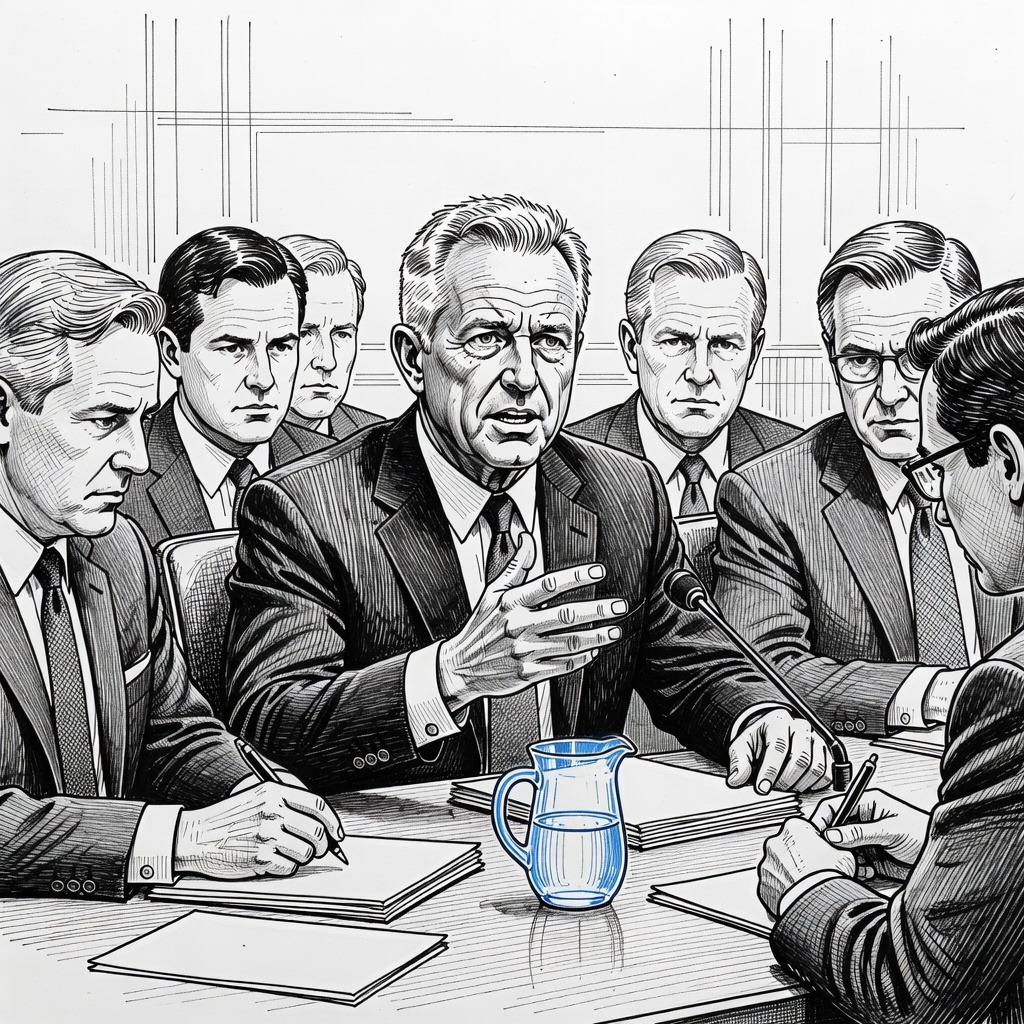
• Shielding the Social Safety Net The Left prioritizes social equity and views the government as the ultimate guarantor of public welfare. The proposed 12 percent ($16 billion) budget cut to federal health agencies and nutrition assistance is seen as a catastrophic abandonment of the vulnerable. Stripping Medicaid coverage from 15 million people is interpreted not as administrative efficiency, but as an abdication of the state's moral duty to protect marginalized populations from systemic harm.
• Defending Technocratic Health Consensus Evidence-based governance and technocratic expertise are foundational to this framework's vision of public safety. Kennedy’s attempts to alter childhood vaccine schedules and his promotion of debunked claims linking Tylenol to autism are viewed as dangerous medical populism. For this camp, substituting verified scientific research with fringe theories actively degrades public health infrastructure, directly fueling preventable crises like the recent surge in measles cases.
• Exposing Populist Deflection Tactics Institutional accountability requires leaders to answer for the outcomes of their governing policies. Kennedy’s assertion that Democrats are acting on behalf of pharmaceutical companies and causing a chronic disease epidemic is seen as a bad-faith deflection. This rhetoric is perceived as a dangerous smokescreen designed to distract from the tangible harm of gutting foundational health infrastructure and defying federal court rulings.
How it may affect me
As a U.S. reader:
• Up to 15 million individuals could lose Medicaid coverage in the short term due to proposed funding cuts and the enforcement of work requirements and immigration status restrictions.
• You may experience long-term changes to grocery options and public food benefits as the administration seeks to alter federal dietary guidelines, remove artificial food dyes, and reduce nutrition assistance funding.
• The proposed $16 billion reduction in federal health agency budgets could lead to long-term delays in medical research at institutions like the National Institutes of Health, while parallel efforts attempt to lower consumer prescription drug prices.
• Potential changes to federal childhood vaccine schedules could impact short-term public health outcomes and local disease prevention, as evidenced by recent increases in measles cases.
• Pregnant individuals might encounter conflicting public health messaging regarding the safety of over-the-counter medications like Tylenol, despite established research rejecting claims that its use causes autism.