
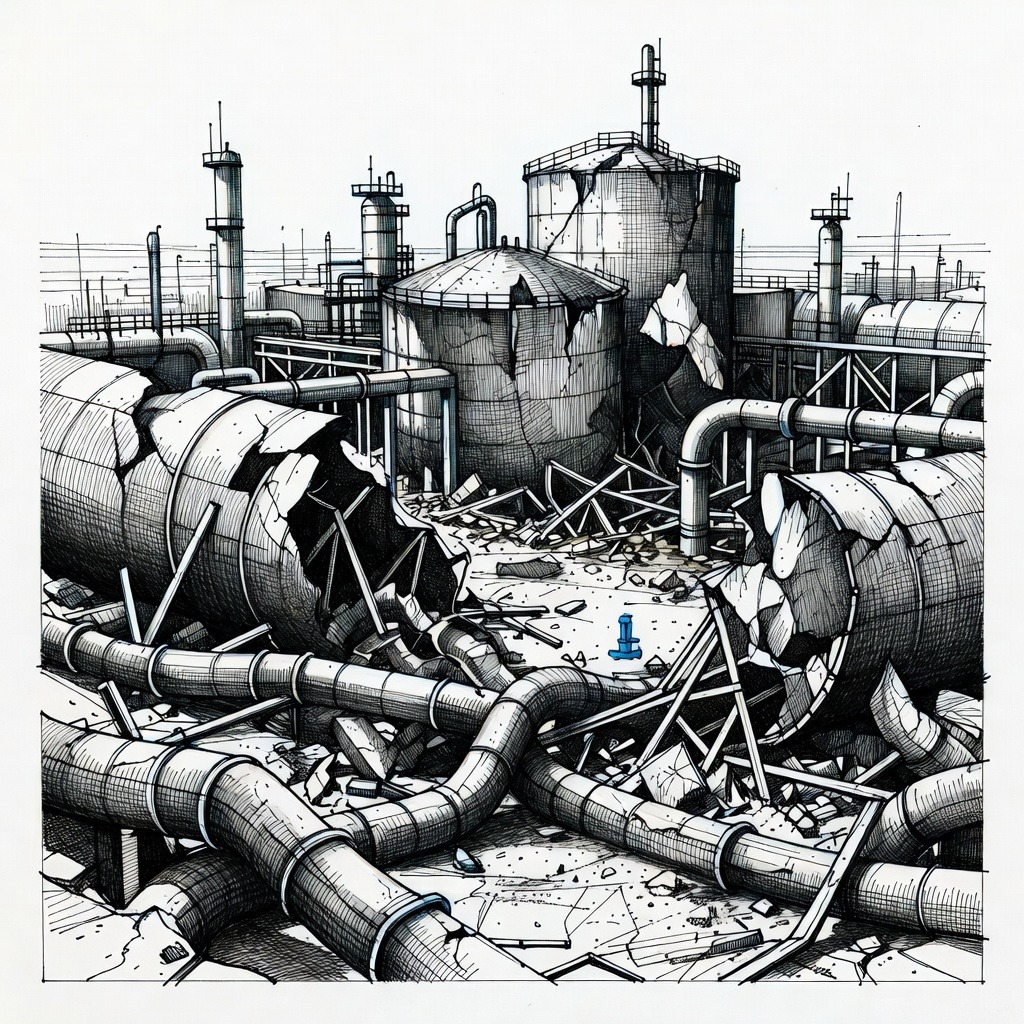
• Cycle of Destructive Escalation Prioritizing regional stability requires recognizing the catastrophic material and human toll of prolonged military engagement. The destruction of over 80 energy facilities and up to $58 billion in infrastructure damage across five nations illustrates how militarized containment strategies inevitably sprawl out of control. This camp views the sweeping physical devastation not as an unavoidable byproduct, but as a compounding regional crisis that destabilizes neighboring states and ultimately harms civilian populations dependent on these economies.
• Global Economic Shockwaves Emphasizing collective security and economic equity means protecting the global public from the fallout of kinetic warfare. The 90 percent drop in Strait of Hormuz tanker transits and massive oil supply disruptions function as a direct tax on ordinary global consumers. Left-leaning analysts argue that enforcing a blockade on Iranian shipping has backfired by strangling the global energy market, demonstrating that aggressive military posturing often creates worse socio-economic instability than the initial threat it sought to neutralize.
• Blank Check Militarism Government accountability dictates that prolonged military action must be transparently justified and strictly budgeted to prevent endless warfare. Office of Management and Budget Director Russell Vought’s refusal to provide Congress with a total cost estimate for operations since February 28 signals a dangerous lack of fiscal and democratic oversight. The humanitarian perspective fears that an open-ended, un-costed war effort will drain domestic resources while locking the U.S. into an indefinite, escalating Middle Eastern quagmire despite the failure of temporary ceasefires.
How it may affect me
As a U.S. reader:
• You will likely experience short-term increases in fuel prices and everyday goods, as the destruction of over 80 Middle Eastern energy facilities and a 90 percent drop in Strait of Hormuz shipping have severely disrupted global oil supplies.
• Long-term domestic public resources and tax dollars may be redirected to sustain this conflict, as the administration is funding ongoing military operations without a finalized budget, cost estimate, or spending cap.
• U.S. service members face immediate and sustained operational hazards, as Navy warships are actively deployed to enforce blockades and clear suspected sea mines in a highly volatile maritime corridor.